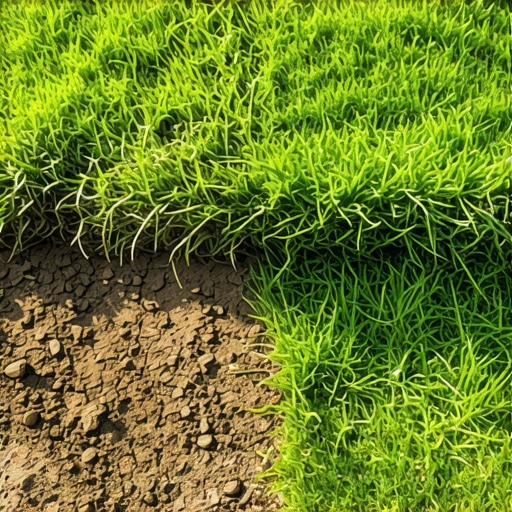
Stop 2026 Grass Creeping into Your Mulch Beds
Stop 2026 Grass Creeping into Your Mulch Beds
Grass is not a passive plant; it is a biological invader designed to colonize every available square inch of nutrient-rich soil. If you think a cheap plastic strip from a big-box store will stop a vigorous rhizome, you are effectively bringing a toothpick to a chainsaw fight. By the time 2026 rolls around, your mulch beds will be a tangled mess of Kentucky Bluegrass or Bermuda unless you understand the engineering behind soil separation. As a professional who has spent two decades excavating failed landscapes, I can tell you that the battle against creeping turf is won in the first four inches of the soil profile.
The Hardscape Autopsy: Why Your Edges Failed
To stop 2026 grass creeping into mulch beds, you must establish a 4-inch vertical physical barrier using 14-gauge steel edging or a deep spade-cut trench, combined with a pre-emergent herbicide application in early spring to neutralize wind-blown seeds and rhizome extension. I recently got called out to tear up a $30,000 patio that was sinking because the previous contractor failed to install a proper edge restraint between the turf and the pavers. The Kentucky Bluegrass rhizomes didn’t just grow over the top; they tunneled under the pavers, displacing the bedding sand and allowing water to infiltrate the base. The resulting hydrostatic pressure during the freeze-thaw cycle heaved the entire north corner. We had to excavate 12 inches of material just to fix a problem that started with a simple blade of grass. This is the reality of landscaping: if you don’t control the biology, the biology will destroy your engineering.
The Botany of the Invasion: Rhizomes vs. Stolons
Understanding your enemy is the first step in turf management. Most cool-season grasses, like Kentucky Bluegrass, spread via rhizomes—underground horizontal stems that can push through surprisingly dense soil. Warm-season grasses, like Bermuda or Zoysia, utilize both rhizomes and stolons (above-ground runners).
“A physical barrier must extend at least 4 inches below the soil surface to effectively intercept the horizontal growth of rhizomatous turfgrass species.” – Agricultural Extension Agronomy Manual
This is why a simple surface barrier is useless. The grass simply dives under and resurfaces eighteen inches inside your flower bed.
How deep should garden edging be to stop grass?
For professional-grade protection against creeping turf, an edging barrier must reach a minimum depth of 4 to 6 inches to intercept the majority of rhizome activity and prevent root-bridging. Any shallower and the grass will find a path under the material. In my firm, we don’t even look at plastic edging. It’s garbage. It expands and contracts with the sun, creates gaps, and eventually heaves out of the ground. We use 14-gauge structural steel or 3/16-inch aluminum. These materials are thin enough to be invisible but rigid enough to maintain a hard line against the turf’s lateral pressure.
| Material Type | Recommended Depth | Durability (Years) | Pros/Cons |
|---|---|---|---|
| 14-Gauge Steel | 4-6 Inches | 25+ | Permanent, clean lines, high cost. |
| Spade-Cut (Victorian) Edge | 4 Inches | 0.5 (Seasonal) | Natural look, zero material cost, high labor. |
| Professional Poly-Vinyl | 5 Inches | 5-10 | Flexible, easy install, prone to frost heave. |
| Stone/Paver Border | 8 Inches (with base) | 20+ | High aesthetic, requires concrete/polymeric sand. |
The Contrarian Truth: Why Mulch Isn’t Your Friend
Here is a piece of advice you won’t get from a sales clerk: Mulch does not stop grass. In fact, if your mulch is too deep—say, over 4 inches—it becomes the perfect incubation chamber for wind-blown weed seeds. We call this ‘mulch rot.’ When the organic matter breaks down, it creates a nutrient-rich layer of fine sediment on top of your soil. Grass seeds land there, germinate, and send roots straight down. You need exactly 2 to 3 inches of double-ground hardwood mulch. Any more, and you are just building a nursery for the very grass you are trying to kill.
The 2026 Turf-Free Protocol
If you want a clean line that lasts until 2026 and beyond, you need a systematic approach. Don’t skip the prep work. Don’t buy cheap materials. Follow this checklist precisely:
- Excavate a 4-inch deep ‘V’ trench at the interface of the lawn and bed.
- Install a rigid vertical barrier (Steel or Aluminum) if the budget allows.
- Apply a pre-emergent herbicide containing Prodiamine or Pendimethalin in late March.
- Maintain a 3-inch mulch depth, ensuring no mulch touches the stems of woody ornamentals (avoiding mulch volcanoes).
- Hand-pull ‘escapees’ immediately before they establish a secondary rhizome network.
Can I use landscape fabric to stop grass in mulch beds?
Landscape fabric is a fundamental failure in long-term garden design because sediment and organic matter accumulate on top of the weave, allowing grass roots to interlock with the fabric, making future weeding impossible without destroying the entire bed. I have spent hundreds of hours ripping out ‘professional’ fabric that was completely bypassed by Bermuda grass.
“The use of geotextiles in planting beds often leads to anaerobic soil conditions and promotes shallow rooting of desirable plants.” – Horticultural Science Standards
If you want to stop grass, use density and depth, not a piece of plastic cloth that will be covered in dirt in six months.
Chemical Warfare: The Role of Growth Regulators
Sometimes, mechanical barriers aren’t enough, especially with aggressive species like Bermuda. In these cases, we use Plant Growth Regulators (PGRs). These chemicals don’t kill the grass; they suppress the plant’s production of gibberellic acid, which is responsible for cell elongation. By slowing the vertical and horizontal growth, we make the edging’s job much easier. If you are dealing with a chemical nightmare where grass has already invaded, don’t just spray Roundup. Use a selective post-emergent like Fluazifop-p-butyl, which kills the grass but leaves your broadleaf shrubs untouched. Measurement is key here. We talk in ounces per thousand square feet, not ‘glugs per gallon.’ Accuracy saves your soil biology.
Seasonal Maintenance Schedule
Your job isn’t done once the edge is in. Soil moves. Gravity works against you. Every spring, you need to take a half-moon edger and ‘re-face’ any natural trenches. If you have steel edging, check for frost heave. Use a 3-pound sledge and a block of wood to tap the edging back down to the 1/2-inch reveal mark. If you see grass crossing the line, it is usually because the mulch has packed down and created a bridge. Break it up. Keep the edge clean. It’s a 15-minute job in April that saves you a 10-hour job in July. Don’t be lazy. The grass is waiting for you to blink.