Stop 2026 Lawn Patchiness with Proper Seeding Hacks
Stop 2026 Lawn Patchiness with Proper Seeding Hacks
The ground felt like cured concrete under my work boots. The turf was a mosaic of brittle, straw-colored stalks and patches of exposed, hydrophobic dirt that repelled water like a waxed car. It didn’t just look bad; it smelled of anaerobic decay and scorched earth. This is the visual and sensory autopsy of a lawn that has been failed by its owner. Most homeowners think patchiness is a seed problem. It is usually a biology problem. If you want a uniform stand of turf by 2026, you have to stop thinking like a weekend gardener and start thinking like a soil engineer. I see too many people throwing expensive seed onto dead ground. It is a waste of money.
The Anatomy of a Dying Lawn: Identifying the Root Cause of Patchiness
Identifying lawn patchiness requires a forensic analysis of soil compaction, thatch accumulation, and localized dry spots that prevent turfgrass establishment. By evaluating the root zone for hydrophobic soil and fungal pathogens, you can diagnose why previous overseeding attempts failed to produce a dense turf canopy.
A homeowner called me in a panic last September after they completely torched their front lawn by applying three times the recommended rate of a high-nitrogen quick-release fertilizer during a 90-degree heatwave. They thought they were feeding the grass. Instead, they created a chemical nightmare. The salts in the fertilizer literally sucked the moisture out of the plant cells. The lawn didn’t just turn yellow; it turned to ash. I could smell the ammonia gas coming off the turf. That is what happens when you treat your lawn like a garbage disposal instead of a biological system. We had to wait six weeks and flush the soil with heavy irrigation just to get the pH back to a range where a seed could survive. Do not be that person. Fertilizer is a tool, not a cure-all.
“A retaining wall doesn’t fail because of the stone; it fails because of the water trapped behind it.” – Hardscape Engineering Axiom
When I inspect a patchy lawn, I look for the ‘tells.’ Are the edges of the patches circular? That is likely a fungal load like Rhizoctonia. Is the ground sunken? That is a grading and drainage failure. Most of the time, the soil is so compacted that oxygen cannot reach the roots. In high-end landscaping, we measure this. If your soil has a bulk density higher than 1.6 grams per cubic centimeter, your grass is suffocating. It is that simple. You can throw all the ‘magic’ seed you want at it, and it will still die. You are fighting physics.
Why 2026 Success Starts with Soil Remediation
Achieving a uniform 2026 lawn requires soil remediation focused on correcting pH imbalances and compaction. By applying elemental sulfur or calcitic lime based on a soil test, you ensure nutrient availability for cool-season grasses, preventing the patchiness caused by localized nutrient lockout.
If you do not test your soil, you are guessing. And if you are guessing, you are failing. A standard soil test from a lab like Penn State or Texas A&M will tell you your Phosphorus (P) and Potassium (K) levels, but more importantly, it tells you your pH. Grass thrives at a pH of 6.5 to 7.0. If you are at a 5.5, your grass is starving even if the soil is full of food. The nutrients are chemically locked away. We use calcitic lime to move the needle up, but it takes months to work. That is why we start now for 2026. This is long-game engineering. Below is a breakdown of the materials we use for remediation.
| Material | Function | Application Rate |
|---|---|---|
| Calcitic Lime | Neutralizes acidic soil | 50 lbs per 1,000 sq ft |
| Elemental Sulfur | Lowers alkaline pH | 5 lbs per 1,000 sq ft |
| Core Aeration | Relieves compaction | Double pass pattern |
| Humic Acid | Boosts nutrient uptake | 5 oz per 1,000 sq ft |
How much seed do I need per square foot?
For a complete renovation, you need 6 to 8 pounds of Tall Fescue or 2 to 3 pounds of Kentucky Bluegrass per 1,000 square feet. Using too much seed causes seedling damping-off, where young plants compete for limited oxygen and die from fungal overcrowding. Accuracy is vital.
When is the best time to overseed for 2026?
The optimal window for overseeding is late summer to early fall when soil temperatures are between 50 and 65 degrees Fahrenheit. This timing allows root systems to develop before winter dormancy, ensuring the turfgrass survives the 2026 summer heat with a mature root flare.
The Step-by-Step Restoration Protocol
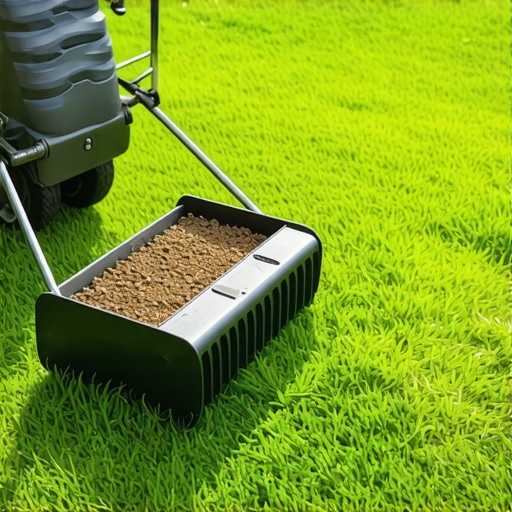
The seeding restoration protocol involves mechanical core aeration, slit seeding for seed-to-soil contact, and the application of a phosphorus-heavy starter fertilizer. This process eliminates thatch barriers and ensures that germination rates reach their maximum potential for a patch-free lawn in 2026.
- Rent a commercial-grade core aerator. Don’t use those spike sandals. They compress the soil more.
- Perform a double pass. You want 20 to 40 holes per square foot.
- Use a slit-seeder. This machine cuts a groove in the soil and drops the seed directly into it.
- Apply a starter fertilizer with a ratio like 18-24-12. New grass needs phosphorus for root growth.
- Topdress with 1/4 inch of screened compost or peat moss to retain moisture.
I always drill into my new crew members: if you don’t fix the soil grading first, every plant you put in the ground is just expensive compost. If you have a low spot where water sits, the seed will rot. If you have a high spot that dries out, the seed will desicate. You have to use a transit level. You have to ensure the water moves away from the house at a 2 percent slope. Hardscaping principles apply to lawns too. If the sub-base is soft, the surface will fail. Period.
“Proper seed-to-soil contact is the single most critical factor in germination success; seeds suspended in thatch will desiccate before they can establish a primary root.” – Texas A&M Agrilife Extension
Watering Engineering: Beyond the Sprinkler
Successful turf establishment depends on evapotranspiration management and frequent irrigation during the first 21 days of germination. Transitioning to deep, infrequent watering once the coleoptile emerges forces root elongation, which is the only way to prevent summer patchiness in 2026.
While the internet tells you to water every day, turf grass actually needs deep, infrequent watering exactly 1 inch per week to force roots to chase the water down. But that is for established grass. For new seed, you need to mist it three times a day. You are keeping the top 1/2 inch of soil moist, not soaked. If you see puddles, you are drowning the embryos. Once the grass hits two inches tall, you flip the switch. You stop the misting. You start the deep soak. You want that water to penetrate 6 inches deep. The roots will follow. If you keep the surface wet, the roots stay shallow. Shallow roots die in July. It is a biological certainty. Don’t skip this transition. It will rot if you over-water late in the game.
Maintenance is the final pillar. Stop scalping your lawn. Set your mower to 4 inches. Tall grass shades the soil, reduces evaporation, and out-competes weeds. Most ‘patchiness’ in 2026 will be caused by people cutting their grass like a golf course with a dull blade. A dull blade tears the leaf, leading to moisture loss and disease entry points. Sharpen your blades every 10 mows. No excuses.