5 2026 Best Shrubs for Zero Maintenance Retaining Beds
The Horticultural Reality of Retaining Wall Systems
I always drill into my new crew members: if you don’t fix the soil grading first, every plant you put in the ground is just expensive compost. I have watched too many homeowners drop five figures on hardscaping only to see their masonry crack and their low-maintenance shrubs die within eighteen months because they ignored the laws of physics. Retaining beds are not just planters. They are high-stress environments where drainage, soil compaction, and heat radiation from stone surfaces create a lethal cocktail for most nursery stock. In 2026, the standard for success is no longer just aesthetic. It is structural integrity combined with biological resilience. Don’t skip this. If your base layer is trash, your garden design is a ticking time bomb.
Why Engineering Precedes Planting in Retaining Beds
Successful retaining bed landscaping requires a 2 percent slope for drainage and a modified gravel backfill to prevent hydrostatic pressure from crushing root systems. In 2026, the best zero-maintenance shrubs are those that tolerate the high-pH environment of masonry runoff and localized heat pockets without requiring supplemental irrigation once established. When you build a wall, you are creating a micro-climate. The stone absorbs solar energy all day and radiates it back into the soil at night. This cooks the roots of standard plants. You need species that can handle the thermal load. Soil within these beds also tends to settle and compact faster than grade-level dirt. This limits oxygen availability. You are essentially managing a vertical ecosystem with restricted gas exchange.
“A retaining wall doesn’t fail because of the stone; it fails because of the water trapped behind it.” – Hardscape Engineering Axiom
The 5 Best Shrubs for Zero-Maintenance Retaining Beds in 2026
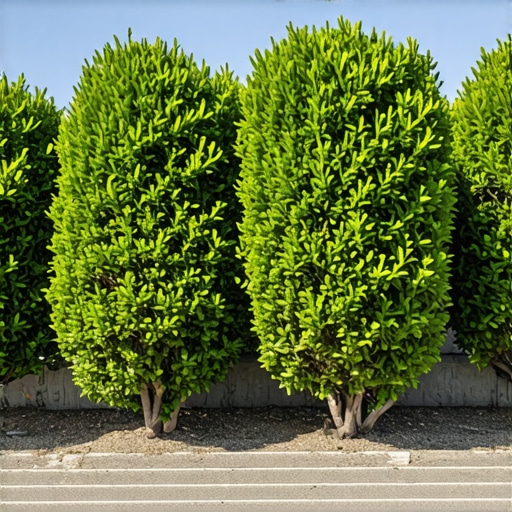
The top selections for hardscape planting prioritize drought tolerance, non-invasive root structures, and salt resistance to survive the 2026 climate shifts. These include Little Richard Abelia, Blue Star Juniper, Kodiak Orange Diervilla, Baby Gem Boxwood, and Russian Sage. These varieties survive in restricted soil volumes while providing structural integrity to your garden design. You must understand the growth habit of each. If a shrub gets too large, its root pressure can actually push the top courses of your wall out of alignment. We call this wall-creep. It is expensive to fix. Choose dwarf cultivars that have been bred for stability rather than rapid biomass production.
How deep should soil be in a retaining wall bed?
For most low-maintenance shrubs, you need at least 18 to 24 inches of viable topsoil depth, situated above a 6-inch layer of clean drainage aggregate. This ensures that the root flare remains oxygenated while the deeper taproots can access moisture during the peak heat of August. Without this depth, the soil dries out too quickly, leading to salt accumulation from fertilizers that will eventually scorch the foliage. It will rot if it sits in water. Use a silt-loam mix for the best results.
How often should you water new shrubs in a retaining wall?
New installs require deep soaking three times a week for the first 90 days to force roots to grow downward into the drainage layers. After the first year, these specific 2026 cultivars should rely almost exclusively on natural rainfall, provided you have used 3 inches of hardwood mulch to prevent evaporation. Avoid overhead spraying. It promotes fungal pathogens on the leaves. Use drip irrigation or a soaker hose buried under the mulch layer.
Technical Material Comparison for Retaining Bed Success
| Shrub Variety | Mature Width | Root Depth | Heat Tolerance | 2026 Resilience Rating |
|---|---|---|---|---|
| Little Richard Abelia | 36 Inches | Moderate | High | 9.5/10 |
| Blue Star Juniper | 24 Inches | Shallow | Extreme | 9.0/10 |
| Kodiak Orange Diervilla | 48 Inches | Deep | High | 8.5/10 |
| Baby Gem Boxwood | 30 Inches | Moderate | Medium | 8.0/10 |
| Russian Sage | 36 Inches | Deep | Extreme | 9.8/10 |
The Ground-Up Installation Checklist
To ensure these plants survive their first five years, follow this rigorous protocol. This is the difference between a contractor and a hack. Most guys just dig a hole and leave. We build systems. You must account for the Cation Exchange Capacity (CEC) of your soil. If the soil cannot hold onto nutrients, your plants will starve regardless of how much 10-10-10 you throw at them.
- Call 811 to mark all utility lines before excavation begins.
- Install a 4-inch perforated drainage pipe (SDR-35) at the base of the wall.
- Use non-woven geotextile fabric to separate the drainage stone from the planting soil.
- Amend the backfill with 20% organic leaf compost to boost microbial activity.
- Ensure the root flare of each shrub is 1 inch above the final soil grade.
- Apply a pre-emergent herbicide like Barricade to prevent weed germination.
- Top with 3 inches of double-ground hardwood mulch, keeping it away from the stems.
“Proper root flare exposure is the single most critical factor for long-term woody plant health in urban landscapes.” – Penn State Extension
Soil Chemistry and Masonry Leaching
Concrete blocks and mortar leach lime. This raises the soil pH over time, making it highly alkaline. Many shrubs, like Azaleas, will die in this environment because they cannot uptake iron at a pH above 7.0. The shrubs I have listed for 2026 are selected specifically because they are pH-adaptable. They won’t turn yellow (chlorotic) just because they are planted next to a Pavestone wall. If you ignore soil chemistry, you are fighting a losing battle against biology. Test your soil. A simple $20 test kit can save you $2,000 in replacement costs. Precision matters. Hardscaping and lawn care are inextricably linked by the way water moves across your property. If the wall isn’t right, the lawn will suffer from runoff erosion. If the plants aren’t right, the wall loses its visual anchor. Do it right the first time.