5 2026 Best Perennials for Modern High-End Suburban Yard
The Foundation of High-End Landscape Engineering
Building a high-end landscape requires prioritizing soil physics and horticultural science over aesthetic trends. Modern landscape design succeeds when it accounts for soil bulk density, drainage coefficients, and the long-term biological requirements of the plant material. Success starts 18 inches below the surface, where the chemistry of the root zone determines the longevity of your investment. I always drill into my new crew members: if you don’t fix the soil grading first, every plant you put in the ground is just expensive compost. I’ve seen $50,000 planting plans fail in three months because the contractor didn’t check the Cation Exchange Capacity (CEC) or ignored the fact that the developer buried construction debris under two inches of topsoil. We don’t just dig holes; we engineer micro-environments. If you aren’t testing for 811 utility markings or checking your soil pH against the specific requirements of each cultivar, you aren’t a landscaper—you’re a glorified gardener with a shovel. Don’t skip the site prep.
“Successful plant establishment is fundamentally tied to the physical properties of the soil, specifically the balance between macro-pores for drainage and micro-pores for water retention.” – Penn State Department of Plant Science
How do you prepare soil for high-end perennials?
To prepare soil for high-end perennials, you must achieve a soil bulk density of approximately 1.1 to 1.4 g/cm3 to ensure adequate root penetration and gas exchange. This involves deep aeration, the incorporation of organic leaf mold, and adjusting the pH based on a professional lab analysis rather than guesswork. Most suburban yards suffer from severe compaction. It will rot. You need to break up the subsoil to prevent the ‘bathtub effect’ where water sits in the planting hole and drowns the root system. We use a penetrometer to test for compaction layers. If the needle hits 300 PSI, roots stop growing. Period.
The 2026 Perennial Selection: Performance Over Fluff
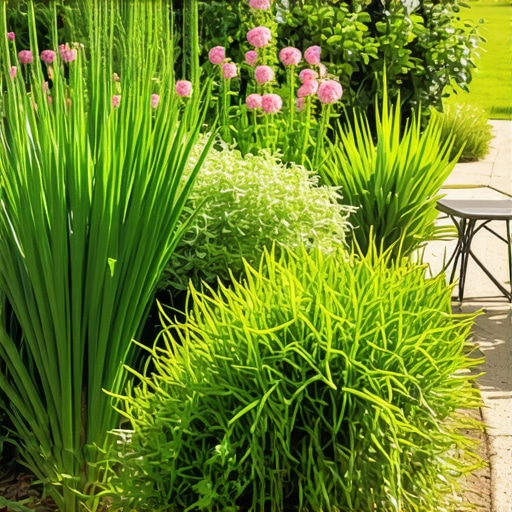
Selecting the best perennials for 2026 involves choosing cultivars that offer structural permanence, drought resilience, and multi-season interest without the need for high-nitrogen fertilizers or excessive water. We are moving away from delicate specimens toward ‘workhorse’ perennials that can handle the erratic weather patterns we are seeing in high-end suburban zones. [image_placeholder_1]
1. Amsonia hubrichtii (Arkansas Blue Star)
This perennial is a structural anchor for modern garden design because it provides finely textured foliage that transitions to a brilliant gold in autumn while maintaining a clean, mounded form that resists flopping. It is virtually pest-free. We plant these at 24-inch intervals to allow for mature spread. The root system is woody and deep, making it incredibly resilient once established. It hates wet feet. Ensure your drainage is laser-leveled.
2. Baptisia australis (False Indigo)
Baptisia is the ultimate low-maintenance perennial for high-end yards because its deep taproot system allows it to thrive in poor soils while providing a shrub-like presence that anchors the perennial border. Once you plant it, do not move it. The taproot is the lifeline. It provides height without the need for staking, which is critical for that clean, modern look. It fixes its own nitrogen. That is engineering at its best.
3. Paeonia ‘Itoh’ Hybrids
The Itoh Peony is a cross between garden and tree peonies, offering sturdy stems that do not require staking and a bloom period that lasts significantly longer than traditional herbaceous varieties. They are expensive, but they are an investment. They are resistant to peony wilt (Botrytis). We install these with the ‘eyes’ no more than two inches below the soil surface. Plant them too deep, and they will never flower. They need 6 hours of direct solar radiation. No exceptions.
4. Schizachyrium scoparium ‘The Blues’ (Little Bluestem)
Little Bluestem is a staple of the modern prairie aesthetic, offering upright architectural form and a blue-to-bronze color shift that provides winter interest in the suburban landscape. It is a bunchgrass. It prevents erosion. We use it to provide verticality in minimalist designs. It thrives in low-fertility soil. If you over-fertilize it, it will fall over. Less is more here.
5. Helleborus orientalis (Lenten Rose)
Hellebores are essential for high-end shade gardens because they bloom in late winter when the rest of the yard is dormant, providing evergreen foliage and extreme cold hardiness. They are deer-resistant. We plant them on a slight slope so the nodding flowers are more visible to the viewer. They require high organic matter. We top-dress these annually with compost. Do not bury the crown.
Engineering the Planting Bed for Longevity
Proper installation of high-end perennials requires a precise adherence to planting depths and irrigation protocols to ensure the root flare is exposed and the drip-line is positioned for maximum efficiency. Most contractors bury plants too deep. This is a death sentence. The root flare—the point where the roots meet the trunk or stem—must be at or slightly above the finished grade.
“Planting depth is the single most important factor in the long-term health of woody and perennial plants; planting too deep leads to stem girdling roots and eventual decline.” – International Society of Arboriculture (ISA)
How much mulch is too much for perennials?
For high-end perennials, mulch should never exceed two inches in depth and must be kept away from the direct contact with the plant’s stems to prevent fungal rot and pest harborage. Use triple-shredded hardwood or pine bark. Avoid ‘mulch volcanoes.’ They trap heat and moisture against the bark. It will kill the plant. We use a ‘donut’ method around the base. It’s more work, but it’s the right way to do it.
| Perennial Cultivar | USDA Zone | Sun Requirement | Height/Spread | Soil Preference |
|---|---|---|---|---|
| Amsonia hubrichtii | 5-8 | Full Sun | 36″ x 36″ | Well-drained Loam |
| Baptisia australis | 3-9 | Full Sun/Part Shade | 48″ x 48″ | Deep/Dry Soil |
| Itoh Peony | 4-9 | Full Sun | 30″ x 36″ | Rich/Neutral pH |
| Little Bluestem | 3-9 | Full Sun | 36″ x 18″ | Lean/Sandy Soil |
| Hellebore | 4-9 | Part/Full Shade | 18″ x 24″ | Moist/Organic |
Professional Planting Checklist
- Verify 811 utility markings before any excavation begins.
- Conduct a percolation test to ensure drainage is at least 1 inch per hour.
- Check the root ball for circling roots and perform a radial cut if necessary.
- Amend the entire bed, not just the individual planting hole.
- Set the crown exactly 0.5 inches above the surrounding soil grade.
- Install a pressure-compensating drip irrigation line 2 inches from the root ball.
- Apply a pre-emergent herbicide before mulching to prevent weed competition.
Maintenance: The First 365 Days
The first year of a new perennial installation is the most critical period, requiring consistent monitoring of soil moisture levels and the application of supplemental water during periods of low rainfall. We recommend a deep soak once a week rather than daily light watering. You want to force the roots to go deep. If you water the surface, the roots stay on the surface. When the heat hits in July, those plants will toast. Check the soil with your finger. If it’s dry two inches down, water it. If it’s wet, walk away. Don’t drown your investment. Proper horticultural management is the difference between a yard that looks good for a season and one that increases in value every year.