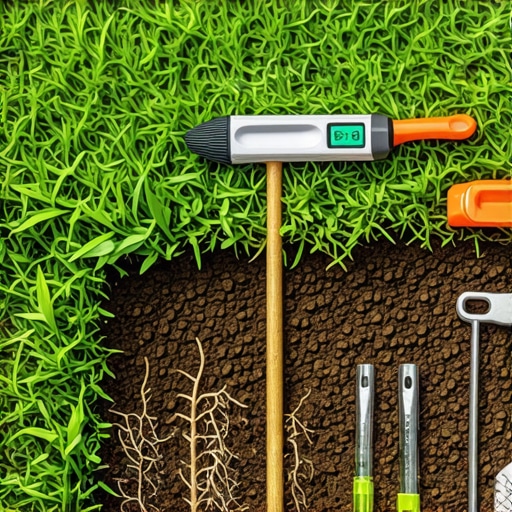
Stop 2026 Grass Thinning Under Large Oak Trees [Easy Fix]
Stop 2026 Grass Thinning Under Large Oak Trees [Easy Fix]
The ground beneath a mature oak tree is often a graveyard for turfgrass, characterized by dusty soil, patchy moss, and thinning blades that struggle to survive the spring. Most homeowners think the solution is more seed or more water, but that is exactly how you waste three hundred dollars on a weekend. The reality is that you are dealing with a biological conflict where a multi-ton organism, the Quercus species, is actively outcompeting a tiny plant for every drop of nitrogen and every photon of light. To fix this, you must stop treating the lawn as a separate entity and start managing the rhizosphere as a shared resource. I always drill into my new crew members: if you do not fix the soil grading and light penetration first, every plant you put in the ground is just expensive compost. You cannot fight the tree with sheer force; you have to outsmart its root system and light-blocking canopy with technical precision and the right species selection.
Why Grass Fails Under Mature Oak Canopies
Grass thinning under oak trees occurs due to a combination of Photosynthetically Active Radiation (PAR) deficit, allelopathic suppression, and hydrostatic competition. Oaks intercept nearly 90 percent of usable sunlight while their massive lateral roots deplete the top six inches of soil of essential Nitrogen, Phosphorus, and Potassium (NPK). This creates a high-stress environment where turfgrass cannot produce enough energy to sustain root growth.
I have seen this a thousand times. A client calls me out because their ‘expensive’ sod is peeling up like a wet rug. When I get down on my knees and dig into the soil, the problem is obvious: the tree has created a massive mat of feeder roots just two inches below the surface. These roots act like a sponge, sucking up every ounce of moisture before it reaches the grass. Furthermore, the tannins in fallen oak leaves can lower the soil pH, making it too acidic for standard Kentucky Bluegrass or Ryegrass to thrive. If your soil pH drops below 5.5, the grass roots literally stop absorbing nutrients. It does not matter how much fertilizer you throw at it. You are basically trying to feed a starving man while his mouth is taped shut. We have to open the mouth of the soil first.
“A lawn growing in shade requires a different management program than a lawn in full sun because the grass plants are physiologically different, often having thinner leaves and a more upright growth habit to capture limited light.” – Penn State Center for Turfgrass Science
How much shade can grass actually handle?
Most turfgrass varieties require a minimum of four to six hours of direct sunlight, but specifically, they need light within the 400 to 700 nanometer wavelength. When an oak tree canopy becomes too dense, it filters out the blue and red light necessary for photosynthesis, leaving only the ‘far-red’ light that grass cannot use. If your yard receives less than 20 percent of full sun, no amount of ‘easy fix’ products will work. You must either thin the tree canopy or switch to specialized Fine Fescue blends that have evolved for low-light environments.
The Anatomy of the Easy Fix: Step-by-Step Remediation
To stop 2026 grass thinning, you must implement a three-phase remediation strategy involving crown thinning, soil pH correction, and shade-tolerant cultivar integration. This process begins with professional arboricultural pruning to increase light penetration without damaging the tree’s health, followed by aggressive soil aeration to break up compaction. This is not a ‘mow and blow’ task; it is surgical landscaping. Don’t skip the soil test. You need to know exactly what you are fighting before you spend a dime.
| Grass Variety | Shade Tolerance | Drought Resistance | Best Use Case |
|---|---|---|---|
| Creeping Red Fescue | Very High | Moderate | Deep shade, low traffic |
| Chewings Fescue | High | High | Well-drained, sandy soils |
| Tall Fescue (RTF) | Moderate | Very High | High traffic, partial shade |
| St. Augustine (Palmetto) | Moderate | Moderate | Southern climates only |
Once you have selected your seed, the installation must be precise. I tell my guys to focus on the root flare of the oak. Never pile soil or mulch against it. This causes rot. Instead, use a mechanical core aerator to pull two-inch plugs out of the earth. This allows oxygen to reach the grass roots and breaks the surface tension of the compacted soil. Next, apply a layer of pelletized lime to counteract the acidity from the oak leaves. Only then do you seed. And when you seed, use a slit-seeder or a power-seeder to ensure seed-to-soil contact. Throwing seed on top of hard dirt is just feeding the birds. It will not grow. Period.
- Step 1: Soil Test to determine pH and NPK levels.
- Step 2: Crown cleaning/thinning of the oak (Consult an ISA Certified Arborist).
- Step 3: Core aeration to a depth of 3 inches across the entire drip line.
- Step 4: Top-dress with 1/4 inch of organic compost to improve soil microbiology.
- Step 5: Overseed with a high-quality Fine Fescue blend at 5 lbs per 1,000 sq ft.
- Step 6: Set irrigation to deep, infrequent cycles to force roots downward.
What is the best fertilizer for grass under oaks?
Avoid high-nitrogen fertilizers that promote rapid top growth at the expense of root health. For grass under oaks, use a slow-release organic fertilizer with a ratio like 10-0-10 or 12-4-8. You want the plant to build a deep, resilient root system that can survive the tree’s competition. Excessive nitrogen in the shade leads to succulent growth, which is highly susceptible to fungal diseases like Powdery Mildew and Leaf Spot. Less is more in the shade. Keep your nitrogen levels low and your potassium levels high to improve cell wall strength.
“Compaction is the hidden killer of urban landscapes, particularly under large trees where foot traffic and root expansion create a soil structure devoid of the macropores necessary for gas exchange.” – Agronomy Manual of Soil Management
The Maintenance Trap: Why Most People Fail
The biggest mistake homeowners make after the fix is scalping the grass. If you cut shade-grown grass too short, you remove its only way of making food. In the shade, you must keep your mower height at 3.5 to 4 inches. Every extra millimeter of leaf blade is another solar panel capturing light. If you cut it short, the grass will starve and die by mid-July. Also, stop over-watering. Constant moisture in the shade leads to moss and algae. Water once a week, deeply, at 4:00 AM. This allows the blades to dry during the day while the water reaches the deep root zone. If the soil stays soggy, the grass roots will suffocate. Air is just as important as water. If you can’t get grass to grow despite these steps, it’s time to stop fighting nature and install a hardscape or a mulch bed with shade-loving perennials like Hostas or Heucheras. Sometimes the tree wins. Accept it and design around it.
![Why Your 2026 Grass Stays Brown After Rain [Dormancy vs Dead]](https://lawnmajesty.com/wp-content/uploads/2026/05/Why-Your-2026-Grass-Stays-Brown-After-Rain-Dormancy-vs-Dead.jpeg)
![Fixing 2026 Yellow Lawn Patches [Pet Waste Fix]](https://lawnmajesty.com/wp-content/uploads/2026/07/Fixing-2026-Yellow-Lawn-Patches-Pet-Waste-Fix.jpeg)