5 2026 Best Shrubs for Compact Side Garden Bedding DIY
The Foundation of Side Yard Success
I always drill into my new crew members: if you don’t fix the soil grading first, every plant you put in the ground is just expensive compost. I have watched too many rookies drop a thousand dollars worth of nursery stock into a side yard that was essentially a drainage flume. They dig a hole, drop the plant, and walk away. Three months later, the homeowner is looking at a brown, shriveled stick because the water was either pooling at the root flare or bypassing the root ball entirely due to soil glazing. Side gardens are not just narrow strips of dirt; they are complex micro-climates affected by the thermal mass of your foundation and the rain-shadow of your roofline. You cannot treat them like an open meadow. You have to engineer them. You need to understand that the soil in a side yard is often the most compacted on the property, crushed by years of foot traffic and construction equipment. If you don’t break that compaction, your ‘compact shrubs’ will never reach their genetic potential.
Why Site Preparation Dictates Side Garden Success
Proper site preparation for compact side garden bedding requires soil decompaction, pH testing, and grading to ensure hydrostatic pressure does not push water toward the foundation. By excavating twice the width of the root ball and amending with organic matter, you create an environment where roots can establish quickly before the heat of 2026. This is the difference between a thriving hedge and a row of dying sticks.
“Soil compaction is the single greatest cause of plant failure in new landscapes, reducing pore space and preventing the gas exchange necessary for root respiration.” – Penn State Agricultural Extension
How do I improve drainage in a narrow side yard?
Drainage is physics. If your side yard is flat, you are in trouble. You need a minimum 2% slope away from the house. For heavy clay soils, we often install a French drain wrapped in geotextile fabric before we even think about plants. This prevents the ‘bathtub effect’ where your planting hole becomes a bowl that holds water and drowns the root system. We use a 4-inch perforated pipe buried in a trench of 3/4-inch clean crushed stone. This isn’t just landscaping; it is civil engineering on a small scale. Every shrub listed below depends on the soil having an infiltration rate of at least one inch per hour. If your soil doesn’t drain, your DIY project will fail before the first frost.
The 2026 Compact Shrub Selection
When selecting shrubs for 2026, we are looking for high Cation Exchange Capacity (CEC) tolerance and disease resistance. The following five species represent the best of modern breeding for compact garden design and hardscaping integration.
| Shrub Species | Mature Size (H x W) | Sun Requirement | Soil Preference |
|---|---|---|---|
| Little Lime Punch Hydrangea | 3′ x 3′ | Full Sun to Part Shade | Well-drained, Acidic |
| Strongbox Inkberry Holly | 2′ x 3′ | Full Sun to Part Shade | Moist, Slightly Acidic |
| Tiny Wine Ninebark | 3′ x 4′ | Full Sun | Adaptable, Neutral pH |
| Densiformis Yew | 3′ x 5′ | Full Shade to Part Sun | Strictly Well-Drained |
| Blue Chip Juniper | 1′ x 3′ | Full Sun | Dry, Sandy/Rocky |
1. Hydrangea paniculata ‘Little Lime Punch’
This isn’t your grandmother’s hydrangea. ‘Little Lime Punch’ is a structural powerhouse. In side yards, you need wood strength. This cultivar stays under 3 feet and doesn’t flop when the heavy rains of 2026 hit. We plant these 30 inches on center to create a solid mass. The key here is the pruning. You must prune these back by one-third in late winter to encourage the thick, structural stems that can support the blooms. It needs about 1 inch of water per week, delivered via drip irrigation, not overhead spraying which invites powdery mildew.
2. Ilex glabra ‘Strongbox’ (Inkberry Holly)
If you want the boxwood look without the boxwood blight, this is your plant. Strongbox stays tight and spherical without constant shearing. It is a native alternative that handles the wet feet often found in side yards better than Japanese Holly. I tell my clients: stop using Boxwoods in compact beds. The risk of blight is too high. Use Strongbox. It handles a pH of 5.0 to 6.5 and stays green through the harshest freeze-thaw cycles.
3. Physocarpus opulifolius ‘Tiny Wine’ (Ninebark)
Ninebark offers a dark purple foliage that provides a massive contrast against light-colored siding. ‘Tiny Wine’ is the most mildew-resistant dwarf Ninebark I have seen in twenty years. It adds a texture that most shrubs can’t match. It is a tough plant, but it hates being buried too deep. The root flare must be visible. If you bury the flare, the bark will rot. It is that simple. Don’t mulch up to the stems. Mulch volcanoes kill more shrubs than drought ever will.
4. Taxus x media ‘Densiformis’ (Dwarf Yew)
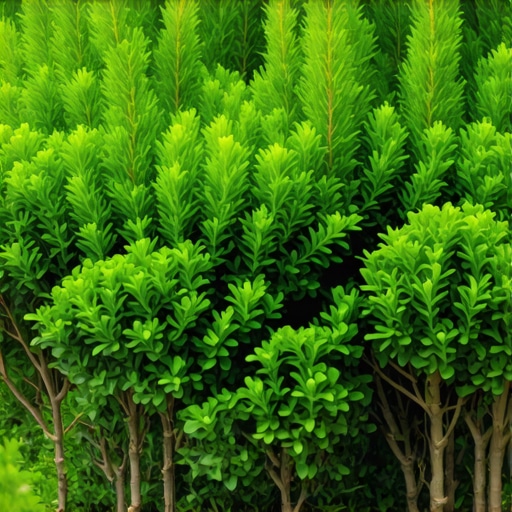
For the north-facing side yard where the sun never hits, the Yew is king. It is a slow grower, which is what you want in a compact space. However, Yews are the ‘canary in the coal mine’ for drainage. If their roots sit in water for even 48 hours, they will turn yellow and die. We often plant these in slightly raised berms, about 4 inches above the surrounding grade, to ensure the crown stays dry. They are the ultimate formal hedge for 2026.
5. Juniperus horizontalis ‘Blue Chip’
When you have a side yard that is basically a gravel pit or has high reflected heat from a concrete driveway, use Blue Chip Juniper. It stays low, maybe 10 inches tall, and spreads like a carpet. It is the best lawn care alternative for areas where grass won’t grow. It is drought-tolerant once established, meaning it needs zero supplemental water after the second year. It acts as a living mulch, suppressed weeds and cooling the soil.
“A retaining wall doesn’t fail because of the stone; it fails because of the water trapped behind it, and a shrub doesn’t die because of the sun; it dies because the roots can’t breathe.” – Hardscape Engineering Axiom
How much mulch do I need for a side garden bed?
For a standard side bed, aim for a 2-to-3-inch layer of triple-shredded hardwood mulch. Do not use those dyed wood chips from big-box stores; they are often made from old pallets and don’t break down into beneficial nutrients. You need organic matter. Calculate your square footage, multiply by 0.25 (for 3 inches), and divide by 27 to get your cubic yardage. Don’t guess. If you put down 6 inches of mulch, you will suffocate the soil and kill the micro-biology required for nutrient cycling.
The Professional Planting Checklist
- Step 1: Locate Utilities. Call 811. Don’t hit a gas line for a $40 shrub.
- Step 2: Dig the ‘$100 Hole’. Dig twice as wide as the root ball but no deeper than the root ball’s height.
- Step 3: Scarify the Walls. If you have clay soil, use a spade to roughen the sides of the hole so roots can penetrate.
- Step 4: Check the Flare. Ensure the point where the roots meet the trunk is 1 inch above the soil grade.
- Step 5: Backfill and Tamp. Use native soil. Do not heavily amend the hole or the roots will never leave it. Tamp with your hands, not your boots.
- Step 6: Initial Saturation. Water immediately to remove air pockets. Five gallons per shrub.
Maintenance and the 2026 Horizon
Your work isn’t done when the shovel hits the shed. The first year is the ‘settling in’ period. You must monitor moisture levels daily during the first summer. Use your finger; if the soil is dry two inches down, water it. If it’s wet, leave it alone. Over-watering is just as lethal as drought. By 2026, these shrubs will have established a deep root architecture that will allow them to survive with minimal intervention. Avoid the ‘mow-and-blow’ urge to shear everything into a ball. Prune for health, not just for shape. Follow the natural habit of the plant. If you do this right, your side yard will be a functional, high-value asset rather than a forgotten strip of weeds.