
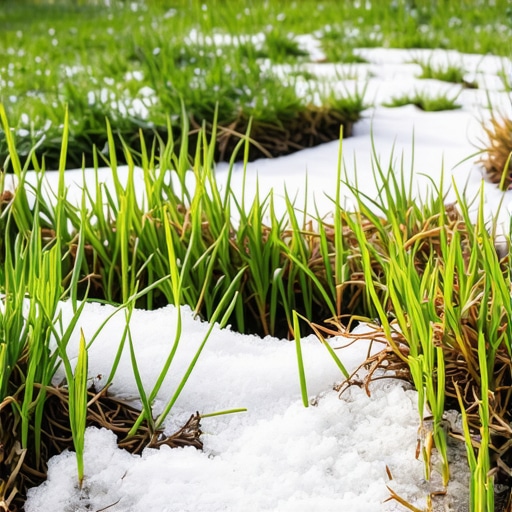
Reviving 2026 Dead Grass After a Winter Freeze
The crunch of brittle, tan blades under your boot in early March is a sound that makes any professional groundskeeper wince. It signals a potential catastrophe in the soil profile. After the record-breaking 2026 winter freeze, we aren’t just looking at dormant turf; we are looking at a landscape-scale physiological crisis. Most homeowners see brown and reach for the high-nitrogen fertilizer. That is a fatal mistake. You cannot force-feed a plant that has suffered cellular rupture. You will kill it. Hard. This is a forensic autopsy of your lawn, and if we want to bring it back, we start at the roots, not the leaves.
Diagnosing Winterkill vs. Dormancy in Turfgrass
To revive dead grass after a 2026 winter freeze, first identify if the crown of the plant is still viable by performing a tug test. If the base is white and firm, the lawn is dormant; if it is brown and mushy, winterkill has occurred, requiring core aeration, topdressing, and overseeding with cold-hardy cultivars. Most people misdiagnose this and waste thousands on water they don’t need.
A homeowner called me in a panic after they completely torched their front lawn by applying a heavy dose of 32-0-0 urea-based fertilizer the moment the snow melted. They thought they were giving the grass a ‘jumpstart.’ Instead, the high salt index of the synthetic fertilizer sucked the remaining moisture out of the desiccated crowns. They didn’t just have winterkill; they had chemical frostbite. I walked onto that property and it smelled like ammonia and regret. We had to strip three inches of topsoil just to get the pH back to a range where a seed could even germinate. Don’t be that guy. Nature doesn’t work on your timeline; it works on soil temperature and microbiology.
“Crown hydration occurs when a brief warm spell followed by a rapid freeze causes ice crystals to form within the plant’s vital tissues, leading to immediate cell death.” – Penn State Center for Turfgrass Science
How can I tell if my grass is dead or just dormant?
The tug test is your primary diagnostic tool. Grab a handful of brown blades and pull. If the entire clump comes out of the ground with no resistance, the roots have rotted or the crown is dead. If the blades break but the base stays firm, the plant is likely dormant. We also look for ‘pink snow mold’ or ‘gray snow mold,’ which are fungal pathogens that thrive under the snowpack. These require a specific fungicide protocol, not more water. Check the soil temperature with a digital probe. Until you hit a consistent 55 degrees Fahrenheit at a four-inch depth, that grass is staying asleep. Forcing it awake with chemicals is like waking a bear with a taser. It won’t end well.
| Condition | Visual Cues | Root Integrity | Recovery Potential |
|---|---|---|---|
| Dormancy | Uniform tan/gold color | White, fleshy, firm | High (Wait for 55°F) |
| Desiccation | Straw-like, brittle | Dry, snap easily | Moderate (Deep irrigation) |
| Crown Hydration | Black or dark brown base | Mushy, slime-like | Low (Requires Reseeding) |
| Salt Damage | Yellowing near edges | Stunted, shriveled | Moderate (Leaching required) |
The Soil Physics of Post-Freeze Recovery
The 2026 freeze was unique because of the rapid oscillation between freezing and thawing. This creates a phenomenon called frost heaving. When the water in the soil freezes, it expands by roughly 9%, physically pushing the grass crowns out of the earth. This exposes the delicate root flare to the wind. In hardscaping, this same force is what collapses retaining walls that lack proper aggregate backfill. In your lawn, it simply severs the connection between the plant and its nutrient source. We fix this with a heavy roller and core aeration to re-establish soil-to-root contact. You must address the physical structure before you address the chemical composition.
When should I start fertilizing after a hard freeze?
Wait until you see at least 20% green-up across the entire property before applying any nutrients. Applying nitrogen too early forces the plant to divert its limited carbohydrate reserves to top-growth (leaves) when it should be focusing on root repair. A slow-release organic fertilizer with a high potassium (K) ratio is better. Potassium regulates the osmotic pressure within the plant cells, effectively acting like an internal antifreeze for future cold snaps. Aim for an NPK ratio of 10-0-20. Avoid phosphorus unless a soil test specifically shows a deficiency, as it often just feeds the invasive poa annua that thrives in disturbed soil.
“A lawn is only as resilient as its soil microbiology; without active mycorrhizae, the plant is essentially on life support.” – Agronomy Manual of Standards
- Soil Test First: Don’t guess, test. You need to know your pH, Cation Exchange Capacity (CEC), and organic matter percentage.
- Core Aeration: Use a hollow-tine aerator to pull 3-inch plugs. This relieves compaction and allows oxygen to reach the suffocating root zone.
- Dethatching: If your thatch layer is thicker than 0.5 inches, it acts as a barrier to water and nutrients. Remove it.
- Topdressing: Apply a 1/4 inch layer of compost or leaf mold. This introduces beneficial microbes that eat the dead organic matter.
- Deep Watering: Instead of daily light misting, water for 60 minutes once a week. This forces the roots to grow downward to find moisture.
The Hardscape Connection: Drainage and Death
One thing people forget is that dead grass near patios or walkways is often caused by hydrostatic pressure and salt runoff. During the 2026 freeze, snowmelt sat against the edges of pavers. If your contractor didn’t install a proper 4-inch perforated drainage pipe or used the wrong polymeric sand, that water stayed trapped. It froze, expanded, and crushed the grass roots against the hardscape. If you see a strip of dead grass exactly 6 inches wide along your driveway, that is not a disease; it is an engineering failure. You need to regrade that area to ensure a 2% slope away from all hard surfaces. Dirt doesn’t lie.
While the internet tells you to water every day, turf grass actually needs deep, infrequent watering—exactly 1 inch per week—to force roots to chase the water down. This makes the plant drought-tolerant and freeze-resistant. If you baby your lawn with daily sips, you are raising a weak plant. It will rot. Deep roots are the only thing that will save you when the next freeze hits. Use a tuna can to measure your sprinkler output. If it takes 45 minutes to fill that can, that is your weekly watering schedule. Simple. Scientific. Effective. Stop listening to the kids at the big-box stores. They sell bags; I grow ecosystems. Get your soil right, or get used to looking at dirt.
![5 2026 Drought-Proof Grass Alternatives [Tested]](https://lawnmajesty.com/wp-content/uploads/2026/06/5-2026-Drought-Proof-Grass-Alternatives-Tested.jpeg)