3 Rules for Pruning 2026 Fruit Trees for Max Yield
The Engineering of Fruit Production: Why Pruning is Structural Biology
To maximize yield for 2026 fruit trees, you must implement structural pruning that focuses on apical dominance removal, ensures sunlight penetration to the lower canopy, and maintains a strict sanitation protocol to prevent the spread of bacterial canker and fire blight. I always drill into my new crew members: if you don’t fix the soil grading first, every plant you put in the ground is just expensive compost. Last season, I walked onto a job where a homeowner had spent four figures on heritage apple grafts but planted them in a topographical depression with zero drainage. The roots were suffocating in anaerobic soil before they even had a chance to push new growth. You cannot prune your way out of a bad foundation. Whether you are managing a small home orchard or integrating fruit trees into a larger landscaping plan, you have to treat the tree like a hydraulic system. Every cut you make redirects the flow of auxins and nutrients. If you don’t understand where that energy is going, you are just mangling wood. Real garden design is about managing the 10 year structural health of the specimen, not just looking for a quick harvest. This guide breaks down the three non negotiable rules for the 2026 season to ensure your trees produce high brix, nutrient dense fruit rather than a mess of vegetative water sprouts.
“A proper pruning cut must preserve the branch bark ridge and the branch collar to allow the tree to compartmentalize the wound effectively.” – ISA Arboriculture Standards
Rule 1: Master the Open Center and Light Interception
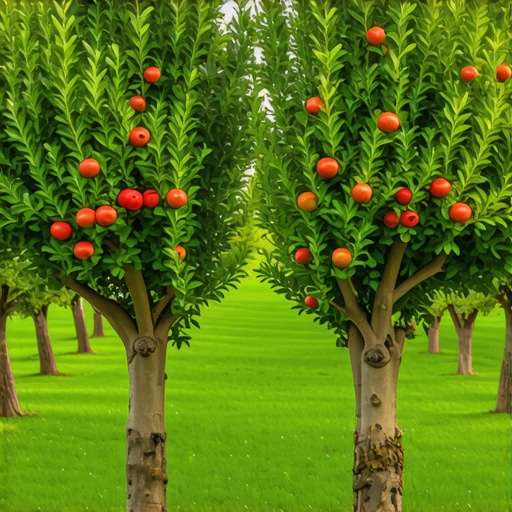
To achieve maximum yield, you must prune for light interception by maintaining an open center or central leader system that allows 40 to 60 percent of ambient sunlight to reach the interior fruiting spurs. If the interior of your tree is dark, the tree will naturally abort fruit production in those zones. We are looking for a 45 degree angle on primary scaffold branches. Anything tighter than that is a structural failure waiting to happen. Narrow crotch angles lead to included bark, which creates a weak point that will split under the weight of a heavy crop or high winds. [IMAGE_PLACEHOLDER] I use a spreader bar on young trees to force those limbs down. You want to see a clear path for air to move through the canopy. Stagnant air is a breeding ground for fungal pathogens like powdery mildew and apple scab. In 2026, we are seeing more volatile spring moisture patterns, so airflow is your primary defense. Stop thinking about the tree as a bush and start thinking about it as a solar collector. Every leaf that is shaded by another leaf is a net energy drain on the plant.
How much should I cut off my apple tree for maximum fruit?
You should never remove more than 25 to 30 percent of the total canopy in a single dormant season. Exceeding this threshold triggers a survival response where the tree produces water sprouts, which are fast growing, vertical shoots that consume massive amounts of nitrogen but produce zero fruit. This vegetative surge ruins your lawn care efforts by shading out the grass below and reduces the overall landscaping value of the tree.
Rule 2: Execute the Three D’s and Manage Nitrogen Bursts
Successful pruning requires the immediate removal of Dead, Damaged, and Diseased wood to prevent the tree from wasting resources on non viable tissue and to stop the spread of infection. This is where most DIYers fail. They leave a 2 inch stub that can’t heal. You have to cut just outside the branch collar. If you cut into that collar, you destroy the tree’s ability to seal the wound. In my 20 years of landscaping and hardscaping, I have seen more trees killed by improper pruning cuts than by actual pests. We also need to talk about the nitrogen cycle. If you hit your orchard with high nitrogen fertilizer and then prune heavily, you are asking for a disaster. You will get 6 feet of growth and zero apples. You want to focus on thinning cuts rather than heading cuts. A thinning cut removes an entire branch back to its point of origin, which maintains the tree’s natural shape and redirects energy to existing fruiting spurs. Heading cuts, where you just snip the ends of branches, result in a “witches broom” effect that ruins the structural integrity of the tree.
| Tool Type | Primary Function | Maintenance Requirement |
|---|---|---|
| Bypass Pruners | Precision cuts under 0.75 inches | Daily sterilization, weekly sharpening |
| Loppers | Structural limbs up to 2 inches | Check pivot bolt tension monthly |
| Pruning Saw | Large limb removal over 2 inches | Replace blade every season for clean tissue |
| Pole Pruner | High canopy maintenance | Lubricate chain/cable every 10 hours |
“Pruning at the wrong time can stimulate late-season growth that won’t harden off before the first freeze, leading to catastrophic vascular failure.” – Regional Pomology Manual
Rule 3: Timing and Sanitary Engineering
For the 2026 season, dormant pruning should be completed before the sap begins to flow in late winter, typically when temperatures are consistently above 20 degrees Fahrenheit but before bud break. This minimizes stress and reduces the risk of attracting pests like the borer beetle. However, for stone fruits like peaches and cherries, a light summer pruning is often necessary to manage vigor. You must sanitize your tools between every single tree. I don’t care if the tree looks healthy. Use a 70 percent isopropyl alcohol solution. If you move from a tree with latent fire blight to a healthy pear tree, you have just signed that tree’s death warrant. It is the same as a surgeon moving between patients without washing their hands. Most lawn care companies that offer “pruning services” don’t even own a bottle of alcohol. They are just vectors for disease. Clean cuts, clean tools, and proper timing are the only ways to ensure your garden design remains a productive asset rather than a liability.
When is the best month to prune fruit trees in 2026?
In most temperate zones, the ideal window is late February through early March. Pruning during this time allows the tree to begin the healing process immediately as it enters the spring growth flush, while the lack of foliage makes it easy to see the structural architecture of the branches. Avoid pruning in late fall, as this can stimulate new growth that will be killed by the first hard frost.
The Orchard Maintenance Checklist
- Sterilize all cutting surfaces with 70 percent alcohol or 10 percent bleach solution.
- Identify and remove all water sprouts and root suckers at the base.
- Thin out branches that are crossing or rubbing against each other.
- Ensure the central leader is not being outcompeted by co-dominant stems.
- Check the root flare to ensure it is not buried by mulch volcanoes or soil.
- Evaluate the 1 inch of water per week requirement for the coming root expansion.