Stop 2026 Lawn Grubs with This $30 Treatment
The Anatomy of a Dying Lawn: Why Your Turf is Failing
A failing lawn is rarely a mystery; it is a forensic crime scene of biological mismanagement and timing errors. When the turf pulls up like a cheap carpet, you are not looking at a watering issue—you are looking at a subsurface invasion of Scarabaeidae larvae, commonly known as white grubs. To stop the 2026 infestation, you must apply a preventative Group 28 insecticide like Chlorantraniliprole during the precise egg-laying window of early summer, which typically costs less than $30 for a standard 5,000-square-foot lot.
I recently walked a property where the homeowner had spent $4,000 on high-end Kentucky Bluegrass sod only to watch it turn into a brown, spongy graveyard within six months. They called me in a panic after they had already torched half the lawn by applying three different ‘rescue’ chemicals in 90-degree heat. The soil was chemically burned, and the grubs were still fat and happy four inches down. They had ignored the soil microbiology and the lifecycle of the Japanese beetle. It was a total loss. This is why I tell my crew: if you don’t understand the insect lifecycle, you’re just throwing money into the wind.
“Effective grub management relies on the synchronization of insecticide application with the first-instar larval stage, typically occurring in mid-summer.” – Penn State Department of Entomology
The Forensic Breakdown of the Grub Lifecycle
Grubs do not appear overnight. They are the larval stage of beetles like the Japanese Beetle or the Northern Masked Chafer. In late June and July, these beetles deposit eggs in moist, well-maintained turf. The eggs hatch into tiny larvae that immediately begin devouring the root zone. By the time you see brown patches in September, the damage is done. The roots are gone. The plant cannot hydrate. It dies. This is not about ‘fixing’ the lawn in the fall; it is about preemptive chemical intervention in the spring.
How do I know if I have grubs in my lawn?
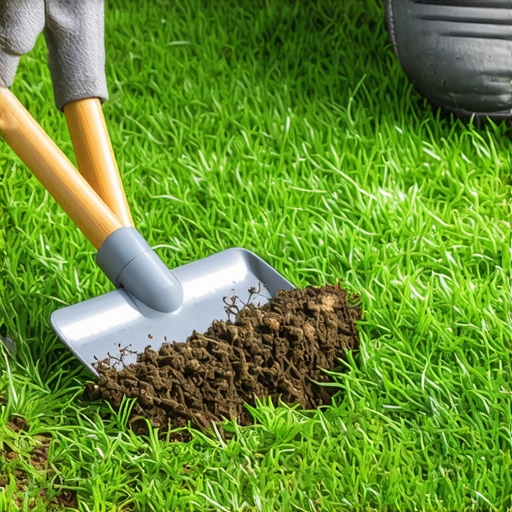
You must perform a square-foot soil autopsy to determine if your larval population exceeds the economic threshold of 6 to 10 grubs per square foot. Use a flat-head spade to cut a one-foot square of turf and peel it back. If the soil is crawling with C-shaped white larvae, your soil health is compromised. Look for secondary signs: skunks or raccoons digging up the yard at night. They aren’t trying to ruin your landscaping; they are hunting for protein. They are better at finding grubs than you are.
| Treatment Type | Active Ingredient | Application Window | Cost Est. |
|---|---|---|---|
| Preventative | Chlorantraniliprole | April – June | $25 – $35 |
| Curative | Dylox (Trichlorfon) | August – Sept | $50 – $70 |
| Biological | Milky Spore | Anytime (Warm Soil) | $100+ |
The $30 Preventative Strategy
Stop looking at the ‘rescue’ bags at the big-box stores. Those are curative treatments like Dylox, which are expensive, harsh on soil microbes, and only work for a few days. Instead, you need a long-residual preventative. A 14-lb bag of a generic Chlorantraniliprole product will set you back about $28 to $32. This chemical is a diamide. It targets the muscles of the larvae but has very low toxicity to bees and earthworms. You apply it in May or June. It sits in the soil. When the eggs hatch in July, the larvae take one bite and stop feeding. They die before they can destroy your root architecture. Don’t skip the watering. You must irrigate with at least 0.5 inches of water immediately after application to move the chemical through the thatch layer and into the rhizosphere.
What is the best month to put down grub control?
For 2026 prevention, the optimal window is late spring to early summer, specifically between May 15th and June 30th for most temperate zones. This ensures the active ingredient is fully integrated into the soil profile before the adult beetles begin their egg-laying cycle. If you wait until you see dead grass in August, you have missed the window. At that point, you’re performing landscape triage, not prevention.
“An integrated pest management (IPM) approach for turfgrass requires monitoring soil moisture and temperature, as drought-stressed turf can mask grub damage until it is irreversible.” – Texas A&M Agrilife Extension
The Engineering of Soil Grading and Grubs
Grubs thrive in compacted, poorly drained soil. If your hardscaping or garden design includes areas where water pools, you are creating a nursery for beetles. They love hydrostatic pressure in the soil because it keeps the eggs hydrated. When we install a French drain or a retaining wall, we aren’t just moving water; we are altering the micro-climate of the lawn. Proper soil grading that prevents standing water will naturally reduce your grub pressure. Drier soil in July is the best non-chemical defense you have.
- Core Aeration: Perform this in the fall to reduce thatch where beetles hide.
- Height of Cut: Mow your grass at 3.5 to 4 inches. Taller grass has deeper roots.
- Nitrogen Balance: Avoid high-nitrogen fertilizers in mid-summer; it makes the roots ‘soft’ and more palatable to larvae.
- Irrigation Logic: Water deep and infrequently. Force the roots to chase the water down 6 inches.
Landscaping is not a decoration; it is a biological system. If you treat your lawn like a green carpet, it will fail. If you treat it like a living ecosystem that requires precise chemical timing and engineering, you will have the densest turf on the block for thirty bucks. Don’t be the homeowner who spends three grand on a ‘rescue’ because they were too cheap to spend thirty on a preventative. It’s that simple.