5 Best Groundcovers to Replace Your High-Maintenance Grass
Why You Should Stop Fighting Your Lawn and Start Engineering a Groundcover System
Replacing high-maintenance turf with groundcovers involves selecting species that provide nitrogen fixation, drought resistance, and erosion control while minimizing inputs. Successful transitions require total eradication of existing weed seed banks and correcting soil compaction to allow root systems to penetrate deep into the subsoil horizon. I always drill into my new crew members: if you don’t fix the soil grading first, every plant you put in the ground is just expensive compost. I have seen contractors dump premium mulch over a drainage low-spot and act surprised when the sedge roots rot in two weeks. Soil physics does not care about your budget or your timeline. Most homeowners treat their lawn like a cosmetic rug, but it is actually a biological engine that is currently stalled out on high-nitrogen synthetic salts and excessive irrigation. Groundcovers offer a way to reset the ecology of your yard by utilizing plants that actually want to be there.
The Best Groundcovers for High-Performance Landscapes
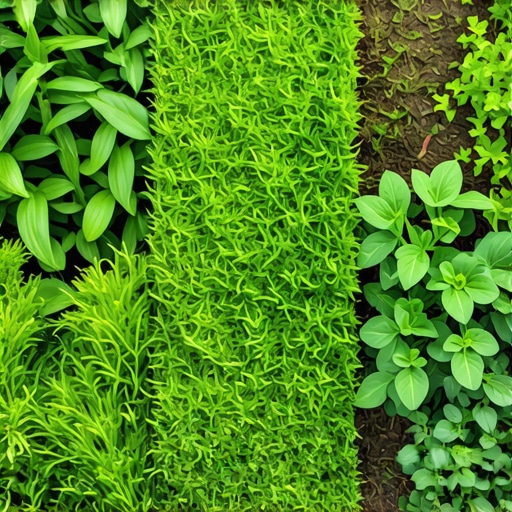
The most effective low-maintenance groundcovers include Microclover for nitrogen production, Creeping Thyme for high-drainage areas, and Kurapia for extreme drought tolerance. These selections outperform standard turf by establishing symbiotic relationships with soil microbes and requiring 70% less irrigation than Kentucky Bluegrass. Unlike turf, which requires constant mowing to prevent the plant from going to seed, these groundcovers are biologically programmed to maintain a low profile. This reduces the mechanical stress on the soil and eliminates the carbon footprint of weekly mowing. [image_placeholder_1]
1. Microclover (Trifolium repens ‘Pipolina’)
Microclover is not your grandfather’s white clover. It is a miniature cultivar that integrates with existing grass or stands alone as a dense canopy. The secret is in the Rhizobium bacteria that live in the root nodules. These bacteria pull nitrogen from the atmosphere and convert it into a form the plant can use. You are essentially growing your own fertilizer. It stays green through the heat of August when fescue turns to straw. Don’t expect it to handle heavy traffic like a football field, but for a standard backyard, it is superior to grass. It fixes the soil while you sleep.
2. Creeping Thyme (Thymus serpyllum)
If you have rocky, lean soil and full sun, Creeping Thyme is the structural solution. It is a woody perennial that thrives on neglect. It prefers a soil pH between 6.5 and 7.5 and requires excellent drainage. If you plant this in heavy clay without amending the site with expanded shale or grit, it will melt during the first rainy season.
“A successful groundcover establishment depends 90% on the eradication of perennial weeds before the first plug hits the soil.” – Agronomy Extension Guide
3. Kurapia (Lippia nodiflora)
Kurapia is a sterile hybrid that is changing the game in arid climates. It develops a root system that can reach depths of 5 to 10 feet. This allows the plant to tap into deep soil moisture that turf grass cannot access. It is highly resistant to foot traffic and stays low to the ground. Because it is sterile, it won’t become invasive in your neighbors yard. It is a professional-grade alternative for those who want a green look without the 5:00 AM sprinkler schedule.
4. Pennsylvania Sedge (Carex pensylvanica)
For the shade-heavy areas where grass goes to die, Pennsylvania Sedge is the answer. It is a native graminoid that grows in soft, tufted mounds. It creates a “mowed” look without ever needing a blade. It is particularly effective at preventing erosion on slopes under oak or maple canopies. It handles the acidic soil often found in forest floors and requires zero supplemental fertilizer once established.
5. Mondo Grass (Ophiopogon japonicus)
Mondo grass is a slow-growing evergreen that is nearly indestructible in zones 7-10. It is technically a member of the lily family, not a true grass. It handles deep shade and moderate foot traffic. The key here is patience. It spreads via underground rhizomes, and while the initial cost of plugs is higher than seed, the long-term maintenance savings are massive. No mowing. No edging. Just a consistent dark green carpet.
How do I kill my grass without chemicals?
The most effective non-chemical method for grass removal is sheet mulching or solarization. Sheet mulching involves layering cardboard over the turf and covering it with 4-6 inches of organic matter to starve the grass of light and oxygen. This process takes 3-6 months but results in superior soil tilth. Solarization uses clear plastic to cook the grass and weed seeds with solar heat, but it requires at least 4-8 weeks of high summer temperatures to be effective.
Which groundcover handles dog urine best?
Microclover and Kurapia are the most resilient options for dog owners. Turf grass typically dies from dog urine because of the high concentrated nitrogen load that causes “salt burn.” Microclover, being a nitrogen-fixer, is much more tolerant of these fluctuations. Kurapia’s deep root system and aggressive horizontal growth allow it to recover quickly from localized nitrogen spikes that would leave brown circles in a fescue lawn.
| Groundcover | Water Need | Traffic Tolerance | Sun Requirement |
|---|---|---|---|
| Microclover | Low-Medium | Moderate | Full Sun to Part Shade |
| Creeping Thyme | Very Low | Moderate | Full Sun |
| Kurapia | Very Low | High | Full Sun |
| PA Sedge | Low | Low | Part Shade to Full Shade |
| Mondo Grass | Medium | Moderate | Part Shade to Full Shade |
- Step 1: Conduct a soil test to determine pH and nutrient deficiencies.
- Step 2: Eradicate existing turf and weeds using sheet mulching or mechanical removal.
- Step 3: Correct any drainage or grading issues to prevent standing water.
- Step 4: Install plugs at the recommended spacing (usually 6-12 inches on center).
- Step 5: Water deeply and infrequently to encourage downward root growth.
“Turfgrasses are often the most irrigated ‘crop’ in the United States, yet provide the least ecological value per acre-inch of water used.” – Sustainable Landscape Manual