The Best Mulch for Vegetable Gardens: Straw vs. Bark
The Best Mulch for Vegetable Gardens: Straw vs. Bark
I always drill into my new crew members: if you don’t fix the soil grading and chemistry first, every plant you put in the ground is just expensive compost. I have seen guys spend thousands on high-end heirloom starts only to watch them yellow and stunt because they threw down the wrong mulch. Landscaping is not a cosmetic exercise; it is an engineering project where the components happen to be alive. You are managing a biological reactor. If you do not understand the carbon-to-nitrogen ratio of your surface cover, you are not a gardener; you are just a person making a mess in the dirt.
The Critical Verdict: Straw vs. Bark
The best mulch for vegetable gardens depends on your crop cycle; clean wheat straw is superior for annual vegetables due to its rapid decomposition and thermal insulation, while shredded bark is better for permanent paths or perennial crops because of its lignin content and long-term soil stability.
The Engineering of Decomposition
When you place an organic material on top of your soil, you are initiating a chemical reaction. Microorganisms, specifically bacteria and fungi, begin to break down that material to use its carbon as an energy source. To do this, they need nitrogen. Straw typically has a carbon-to-nitrogen (C:N) ratio of about 80:1. Bark can be as high as 500:1. If you till bark into your soil, the microbes will scavenge every available molecule of nitrogen from the root zone to process that wood, leaving your tomatoes starving. Don’t do it.
“A high C:N ratio material like wood chips can cause temporary nitrogen deficiency in the soil surface if mixed in, which impacts the growth of shallow-rooted vegetable crops.” – Penn State Agricultural Extension
Straw: The Annual Crop Workhorse
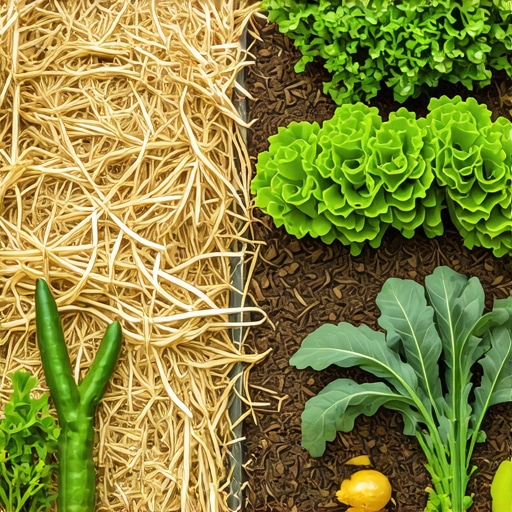
Straw is the gold standard for a reason. It is hollow. This trapped air creates a thermal buffer that keeps the soil five to ten degrees cooler in the peak of July. This prevents the root zone from hitting the 85-degree mark where many vegetables stop uptake of nutrients. It also reflects sunlight back up under the leaves, which can disrupt the lifecycle of certain pests like aphids. But you must buy ‘straw,’ not ‘hay.’ Hay contains seeds. If you buy hay, you are just planting a future weed nightmare. Clean wheat or oat straw is the requirement. It breaks down in a single season, adding organic matter that improves the tilth of your soil by next spring.
Bark: The Perennial Anchor
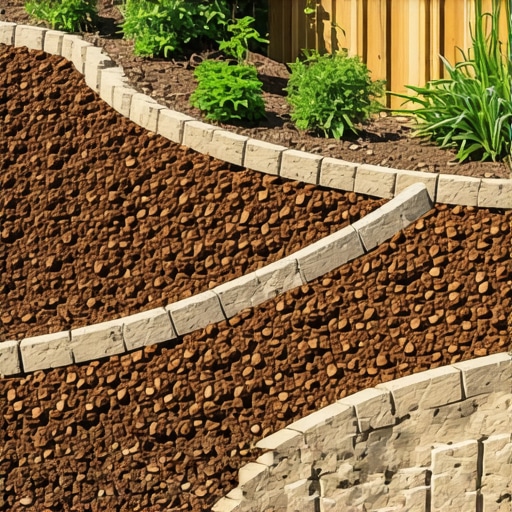
Bark is an engineering material. It is high in lignin and suberin, natural waxes that make it resistant to decay. This is excellent for a blueberry patch or an asparagus bed that won’t be tilled for years. Bark provides a heavier physical barrier that prevents soil erosion from heavy rain. However, the surface of bark can become hydrophobic if it dries out completely, actually shedding water away from your plants instead of letting it soak in. You have to monitor the moisture levels beneath the crust. It won’t rot quickly. That is both its benefit and its curse.
| Feature | Clean Wheat Straw | Shredded Bark Mulch |
|---|---|---|
| C:N Ratio | 80:1 | 300:1 to 500:1 |
| Thermal Insulation | Excellent (Hollow stems) | Moderate |
| Longevity | 4 to 6 months | 2 to 3 years |
| Weed Suppression | High (if thick) | Highest (physical weight) |
| Primary Use | Annual Veggies (Tomatoes, Peppers) | Perennials and Paths |
How much mulch do I need for a vegetable garden?
For vegetable production, you should maintain a layer of 3 to 4 inches of straw, or 2 inches of shredded bark. Any less and the sun will reach the soil surface, triggering weed germination. Any more and you risk creating an anaerobic environment where the soil can’t ‘breathe,’ leading to root rot. Use a tape measure. Don’t guess. Precision matters in the garden just as much as it does on a patio build.
Does wood mulch steal nitrogen from vegetables?
If left on the surface, wood mulch does not ‘steal’ significant nitrogen from the roots of deep-feeding plants. The nitrogen tie-up occurs only at the very thin interface where the wood touches the soil. However, for shallow-seeded crops like lettuce or radishes, this can be a death sentence. For these, stick to straw or leaf mold. If you see your plants turning pale green or yellow, you have a nitrogen lockout. Fix it with a liquid seaweed or fish emulsion application.
“Mulch prevents soil splashing, which is the primary vector for soil-borne fungal diseases like early blight in tomatoes.” – USDA NRCS Soil Health Manual
The Installation Checklist
- Test soil pH before mulching; bark can slightly acidify the surface over years.
- Ensure the soil is moist before applying mulch; never mulch over bone-dry ground.
- Leave a 2-inch gap around the base of plant stems to prevent rot.
- Check for ‘mulch volcanoes’—heaping material against the plant is a rookie mistake.
- Inspect straw for seed heads before spreading.
Hydrostatic Pressure and Soil Moisture
In my hardscaping work, I deal with hydrostatic pressure—water pushing against walls. In the garden, you deal with the same physics but in reverse. A thick layer of bark can create a barrier that prevents light rain from ever reaching the soil. This is the ‘shadow effect.’ Straw is more permeable. It allows water to trickle through the hollow tubes while still stopping evaporation. If you are in a high-heat, low-water environment, straw is the engineering winner every time.
The Information Gain: The 1-Inch Rule
While the internet tells you to water every day, turf grass and vegetables actually need deep, infrequent watering—exactly 1 inch per week—to force roots to chase the water down. Mulching is the only way to make that 1 inch last for seven days. Without mulch, you lose 60 percent of that water to evaporation within 48 hours. If you aren’t mulching, you are wasting money on your water bill and stressing your plants into an early grave. It is that simple.
The Bottom Line
Choose straw for your tomatoes, peppers, and squash. It supports the soil microbiology they need and disappears by winter. Save the bark for your garden paths and your perennial flower beds where you need a long-term solution. Stop buying the cheap bags of dyed mulch from the big-box stores; it is often ground-up pallets and construction debris. Get real forest products. Your soil is a living organism. Treat it like one.
![Stop 2026 Pine Needle Drop [Soil Nutrition Fix]](https://lawnmajesty.com/wp-content/uploads/2026/07/Stop-2026-Pine-Needle-Drop-Soil-Nutrition-Fix.jpeg)