Stop 2026 Crabgrass Before it Hits Your Lawn
The Forensic Autopsy of a Failed Lawn
A homeowner called me in a panic last June after they completely torched their front lawn by applying three different brands of weed-and-feed in a single weekend. The grass wasn’t just dead; it was chemically mummified. The soil pH had plummeted to 4.5, and the microbial life was non-existent. When I dug a 6 inch core sample, the soil smelled like a refinery. This is the cost of desperation. People ignore their turf all winter, see the first sign of Digitaria (crabgrass) in May, and then commit chemical warfare on their own property. By the time you see the crabgrass, you have already lost the battle for the season. To win in 2026, you have to stop thinking like a weekend warrior and start thinking like an agronomist. Crabgrass is an opportunistic survivor that thrives in the exact conditions that kill high-quality turf: high heat, compacted soil, and low nitrogen. It is a biological indicator of your past failures.
Understanding Crabgrass Germination Cycles
Crabgrass germination begins when soil temperatures consistently reach 55 degrees Fahrenheit at a 2 to 4 inch depth for five consecutive days, typically coinciding with the blooming of Forsythia bushes. This biological trigger activates thousands of dormant seeds in the upper soil horizon, making early spring intervention the only viable method for total control. If you miss this window, the seeds will produce tillers that can generate up to 150,000 seeds per plant by late summer. You are not just fighting this year’s weeds; you are fighting the seed bank built up over the last decade. Soil thermal mass dictates this timeline. Heavy clay soils hold cold longer than sandy loams, meaning your neighbor across town might need to treat their yard a full week before you do. Measurement is the only way to be sure. Get a soil thermometer. Don’t guess.
“A successful turf management program relies on the integration of cultural practices and timely chemical intervention to prevent the emergence of annual grassy weeds.” – Penn State Center for Turfgrass Science
How much pre-emergent do I need per 1000 square feet?
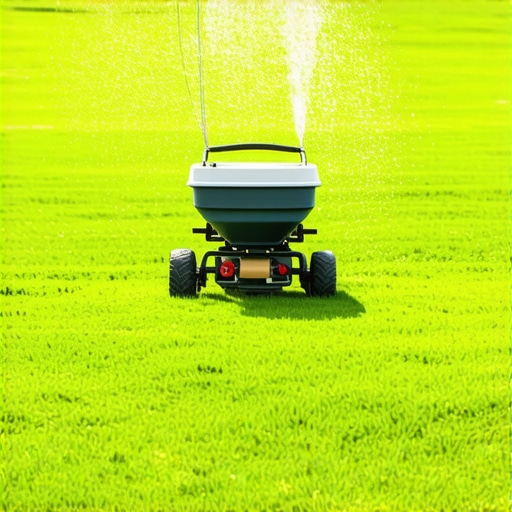
The standard application rate for common pre-emergents like Prodiamine 65 WDG is 0.18 to 0.55 ounces per 1000 square feet, depending on your turf species and the desired length of control. Over-application can lead to root clubbing and stunted turf growth, while under-application leaves gaps in the chemical barrier that crabgrass will exploit. You must calibrate your spreader before every season. A spreader that is off by just 10 percent can result in either wasted money or a lawn full of weeds. I tell my crew that a poorly calibrated spreader is a weapon of lawn destruction. We use the pan test to ensure even distribution across the entire swath. Precision is the difference between a professional result and a patchy mess.
The Chemistry of the Barrier
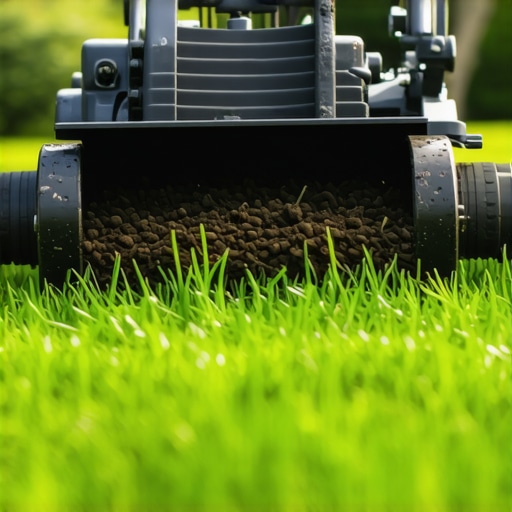
To stop crabgrass, you must establish a uniform chemical vapor barrier in the top 0.5 inches of the soil profile. Pre-emergent herbicides like Prodiamine or Dithiopyr do not actually stop the seed from germinating. Instead, they are microtubule inhibitors. As the seed germinates and the first root (the radicle) touches the treated soil, the chemical stops cell division. The seedling dies before it ever breaks the surface. This is why coverage is everything. If you leave a 1 inch gap in your application, or if you disturb the soil by raking or aerating after the application, you have broken the seal. The crabgrass will find that gap. It is a biological certainty. This is also why we don’t aerate in the spring. You don’t want to pull plugs through your fresh chemical barrier. Aeration is a fall job. Do it when the grass is aggressively growing and weed pressure is low.
| Chemical Agent | Common Trade Name | Application Window | Key Benefit |
|---|---|---|---|
| Prodiamine | Barricade | Early Spring | Longest residual control |
| Dithiopyr | Dimension | Early to Mid Spring | Early post-emergent control |
| Pendimethalin | Prowl / Scott’s Halt | Early Spring | Affordable for large areas |
| Mesotrione | Tenacity | At Seeding | Safe for new grass seed |
What is the best month to apply crabgrass preventer?
In most temperate climates, late March to mid-April is the optimal window for applying crabgrass preventer to ensure the chemical barrier is established before soil temperatures hit the 55-degree threshold. However, you must track local Growing Degree Days (GDD) to account for unseasonably warm winters or late-season cold snaps. Relying on a calendar is a rookie mistake. Use a soil probe. If the ground is still frozen or saturated with water, the chemical won’t bind to the soil particles. You need the soil to be moist but not waterlogged. Once the product is down, you need 0.5 inches of rain or irrigation to ‘wash it in’ to the root zone. If it sits on the surface for more than 48 hours without water, UV rays will start to break down the active ingredients.
The Role of Hardscaping in Weed Control
Most people don’t realize that their patio or walkway is a giant heat sink that accelerates crabgrass growth. The edges of your pavers can be 10 to 15 degrees hotter than the center of the lawn. This extra heat radiates into the soil, causing crabgrass to germinate along your hardscape edges weeks before the rest of the yard. This is why you always see the most weeds along the driveway. When we install a patio, we pay close attention to the hydrostatic pressure and drainage at the edges. Poorly installed hardscapes trap water, creating a muddy zone where turf dies and crabgrass thrives. If your pavers are shifting, they are creating micro-climates for weeds. Proper compaction of the modified gravel base is not just for structural integrity; it prevents the settling that leads to these weed-prone voids.
“Hydrostatic pressure is the primary driver of retaining wall failure and adjacent soil instability.” – Hardscape Engineering Axiom
Cultural Practices: The Ultimate Defense
Chemicals are a crutch; the real solution is a dense, healthy turf canopy. Crabgrass seeds need sunlight to thrive. If you mow your grass at 4 inches, you are shading the soil surface and keeping it cool. A thick lawn is the best herbicide on the market. Most homeowners scalp their lawn at 2 inches because they want it to look like a golf course, but they don’t have the irrigation or the sand-based root zone to support that. You are just inviting disaster. Mow high. Leave the clippings. Use a sharp blade. A dull blade tears the grass, creating an entry point for diseases like brown patch or dollar spot. Healthy grass outcompetes weeds. It is that simple. If you have thin spots, dormant seed in the fall so the turf is established before the spring weed rush.
Spring 2026 Lawn Preparation Checklist
- Test soil pH and adjust to 6.2 to 7.0 range using calcitic lime if necessary.
- Edge all hardscapes and garden beds to clear debris from the soil-paver interface.
- Monitor soil temperatures daily once air temperatures hit 50 degrees.
- Apply pre-emergent herbicide at the high-rate for 6 months of coverage.
- Calibrate your broadcast spreader to ensure even 50 percent overlap.
- Irrigate with 0.5 inches of water within 24 hours of chemical application.
- Set mower height to 3.5 or 4 inches for the entire spring season.
Soil Physics and Drainage
Crabgrass loves compacted, wet soil. If your yard has standing water, you are growing a weed nursery. We look at the soil horizons. If you have a heavy B-horizon of clay just 4 inches down, your roots can’t penetrate. They stay shallow and die in the July heat. You need to break that compaction. In my firm, we use deep-tine aeration or liquid soil conditioners to open up the soil structure. This allows oxygen to reach the roots and water to move through the profile. High hydrostatic pressure in the soil doesn’t just push against walls; it pushes the air out of the soil. Without air, your grass dies. The crabgrass moves in. Fix the grading, fix the drainage, and you fix 80 percent of your weed problems. It is engineering, not magic. Stop looking for a miracle in a bag and start looking at the physics of your land. [{“@context”:”https://schema.org”,”@type”:”Article”,”headline”:”Stop 2026 Crabgrass Before it Hits Your Lawn”,”author”:{“@type”:”Person”,”name”:”Veteran Horticulturist”},”datePublished”:”2025-05-20″,”publisher”:{“@type”:”Organization”,”name”:”High-End Landscaping Firm”}},{“@context”:”https://schema.org”,”@type”:”FAQPage”,”mainEntity”:[{“@type”:”Question”,”name”:”How much pre-emergent do I need per 1000 square feet?”,”acceptedAnswer”:{“@type”:”Answer”,”text”:”The standard application rate for common pre-emergents like Prodiamine 65 WDG is 0.18 to 0.55 ounces per 1000 square feet, depending on your turf species and the desired length of control.”}},{“@type”:”Question”,”name”:”What is the best month to apply crabgrass preventer?”,”acceptedAnswer”:{“@type”:”Answer”,”text”:”In most temperate climates, late March to mid-April is the optimal window for applying crabgrass preventer to ensure the chemical barrier is established before soil temperatures hit the 55-degree threshold.”}}]},{“@context”:”https://schema.org”,”@type”:”HowTo”,”name”:”How to Apply Crabgrass Pre-Emergent”,”step”:[{“@type”:”HowToStep”,”text”:”Test soil pH and adjust to 6.2 to 7.0 range.”},{“@type”:”HowToStep”,”text”:”Monitor soil temperatures until they reach 55 degrees.”},{“@type”:”HowToStep”,”text”:”Apply pre-emergent herbicide using a calibrated spreader.”},{“@type”:”HowToStep”,”text”:”Water the area with 0.5 inches of water to activate the barrier.”}]}]