Why Your Grass Stays Yellow Even After Rain
The Forensic Autopsy of a Dying Lawn
Yellow grass after a heavy downpour is a biological red flag. It tells me that your soil-plant interface is broken. I remember a call-out last July to a property where the homeowner, desperate for a green lawn, had dumped three bags of high-nitrogen urea on his turf just before a storm, thinking the rain would ‘sink it in.’ Instead, he created a chemical nightmare. By the time I arrived, the lawn wasn’t just yellow; it was chemically scorched, and the soil pH had plummeted so fast it locked out every micronutrient in the dirt. He’d spent six hundred dollars on fertilizer to kill a lawn that just needed a little air. Most people think rain is the ultimate cure-all for a struggling yard, but if your grass stays yellow after the clouds part, you aren’t looking at a water problem. You’re looking at a cellular-level failure of the root system to facilitate cation exchange.
The Hidden Physics of Hydrophobic Soil
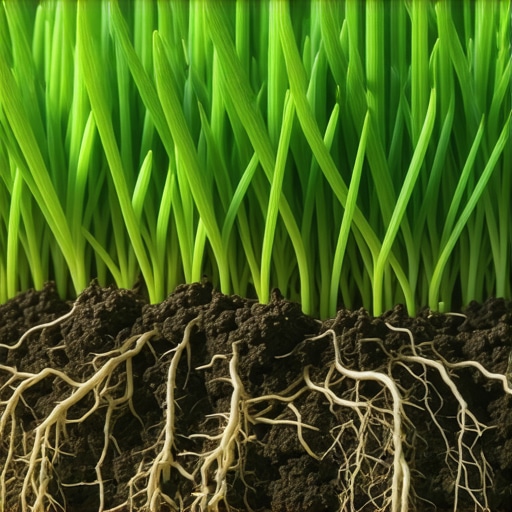
Yellow grass after rain often indicates hydrophobic soil or heavy compaction where water cannot reach the root zone. Instead of infiltrating, water sits on the surface or runs off, leaving the roots in a state of physiological drought despite the presence of moisture. This is common in clay-heavy regions where the soil particles are so tightly packed that there is no pore space for oxygen or water movement. When soil reaches a certain level of dryness, it can actually develop a waxy coating that repels water entirely. You see the puddles, but an inch below the surface, the dirt is as dry as a bone. This is where we look at the bulk density of your soil. If your soil density is too high, the roots can’t push through, and the plant essentially starves in a cage of its own making.
“Compaction is the primary cause of turf failure in high-traffic areas, reducing the available oxygen and increasing the resistance to root penetration.” – Penn State Center for Turfgrass Science
How much modified gravel do I need for a patio base?
While discussing drainage, homeowners often ask about hardscaping components that affect lawn health. For a standard residential patio, you typically need a six-inch base of compacted 21A or 3/4-inch modified gravel. Proper hardscape drainage prevents the lateral migration of water that often oversaturates adjacent lawn areas, leading to the very yellowing we are diagnosing. Poorly planned patios act like dams. They trap water. The grass dies. Don’t skip the transit level when setting your grades.
The Chemistry of Nutrient Lockout and pH Imbalance
Rainwater is slightly acidic, usually sitting around a pH of 5.6. While this is generally fine, a lawn that is already struggling with low pH (acidic soil) will see its nutrient availability drop off a cliff after heavy rain. At a pH below 6.0, phosphorus and magnesium become chemically bound to the soil particles. The plant can’t grab them. This is called nutrient lockout. You could have a gold mine of nitrogen in the ground, but if the pH is off, the grass can’t eat. Iron chlorosis is another common culprit. In alkaline soils (high pH), iron becomes insoluble. The grass turns a sickly, pale yellow because it can’t produce chlorophyll. No chlorophyll, no green. It is that simple. You need to pull a core sample. Stop guessing and start measuring. A soil test is the only way to see the invisible chemistry happening under your boots.
| Amendment | Primary Purpose | Application Metric | Target Outcome |
|---|---|---|---|
| Pelletized Lime | Raise Soil pH | 50 lbs / 1,000 sq ft | Neutralize Acidity |
| Elemental Sulfur | Lower Soil pH | 5 lbs / 1,000 sq ft | Correct Alkalinity |
| Gypsum | Soil Structure | 40 lbs / 1,000 sq ft | Break Up Clay |
| Humic Acid | Nutrient Uptake | 1 gal / 10,000 sq ft | Chelate Minerals |
Nitrogen Leaching and the Phony Rain Green-Up
Excessive rainfall or irrigation can actually flush soluble nitrogen out of the root zone, a process known as leaching. While rain typically provides a small dose of atmospheric nitrogen, it can simultaneously starve the turf by washing away stored mineral nutrients in sandy or porous soils. This is why ‘quick-release’ fertilizers are a waste of money for serious land management. They wash out with the first thunderstorm. You want slow-release, polymer-coated urea that stays in the top four inches of the soil profile where the roots actually live. If your grass turns yellow immediately after a three-day rain event, the water has likely pushed the nitrates below the rhizosphere. The plant is literally starving in a flood. You need to build organic matter to hold those nutrients in place. Compost top-dressing isn’t just a suggestion; it’s a structural necessity for sandy soils.
Why is my lawn yellow in spots after a storm?
Localized yellowing often points to micro-topography issues or subsurface debris. If a specific patch stays yellow, I can almost guarantee there is a buried rock, a discarded pile of construction concrete, or a localized fungal outbreak like Pythium blight. Check the drainage. If the water stands for more than four hours, the roots are suffocating. It is called anaerobic stress. The roots need to breathe. Without oxygen, the plant shuts down its metabolic processes. It will rot. You must ensure your landscape design accounts for a 2% minimum slope away from the primary turf areas.
“A retaining wall doesn’t fail because of the stone; it fails because of the water trapped behind it.” – Hardscape Engineering Axiom
The Remediation Checklist: How to Fix the Yellowing
Fixing a yellow lawn requires a systematic approach, not a shotgun blast of chemicals. Follow this protocol to restore the nitrogen cycle and soil structure:
- Core Aeration: Pull 3-inch plugs to break the surface tension and allow gas exchange.
- Liquid Soil Wetting Agents: Use surfactants to break the hydrophobicity of the soil.
- Chelated Iron Application: Provide an immediate green-up that bypasses soil pH issues via foliar absorption.
- Subsurface Drainage Inspection: Ensure French drains or catch basins are clear of debris.
- Soil Testing: Verify Cation Exchange Capacity (CEC) and base saturation levels.
Fungal Pathogens and the Humidity Trap
Rain doesn’t just bring water; it brings humidity and leaf wetness. If your grass is yellowing in a circular or hazy pattern, you are likely dealing with a fungal pathogen like Rhizoctonia solani (Brown Patch). When the blades stay wet for more than 10 hours, fungal spores germinate. These fungi don’t just sit on the leaf; they invade the vascular system of the grass. They choke the plant from the inside. Many homeowners see yellow grass and add more water, which is like throwing gasoline on a fire. You are feeding the fungus. In these cases, you need a systemic fungicide, but more importantly, you need to prune overhanging trees to increase airflow and sunlight. A lawn is a living organism. It needs to dry out. Over-watering is the hallmark of an amateur. Keep your mower blades sharp; ragged edges on grass blades are like open wounds for disease. Cut it high. Leave it at 3.5 to 4 inches. This shades the soil and protects the crown of the plant. Professional landscaping is about managing the environment, not just reacting to it. Fix your soil, and the grass will follow.