Best 2026 Plants for Clay Soil and Poor Drainage
The Forensic Autopsy of a Saturated Yard
Clay soil and poor drainage represent a structural failure of the landscape that leads to root rot, anaerobic soil conditions, and the eventual death of expensive nursery stock. Identifying the root cause requires analyzing soil compaction, hydrostatic pressure, and the Cation Exchange Capacity of the local earth to determine why water is not infiltrating the subgrade.
I always drill into my new crew members: if you don’t fix the soil grading first, every plant you put in the ground is just expensive compost. I have seen guys drop $15,000 on a plant list only to watch it drown within three months because they didn’t understand that a hole dug in heavy clay acts exactly like a ceramic bathtub. If there is no exit for the water, the roots will sit in a stagnant pool, the oxygen is displaced, and the plant suffocates. It is physics, not bad luck. Before you touch a shovel, you need to understand the dirt. Most new builds have zero topsoil; the developers scrape it off and sell it, leaving you with compacted subsoil that has the permeability of a parking lot. You are not just gardening; you are performing civil engineering on a micro-scale. [image_placeholder_1]
The Mechanical Reality of Clay Particles
Clay particles are microscopic, flat plates that stack tightly together, leaving almost no macropore space for air or water movement. This density creates high bulk density, making it physically difficult for roots to penetrate and for lawn care equipment to aerate effectively without specialized machinery. This isn’t just about ‘thick dirt.’ It is about the chemical bond of the particles. You can’t just throw sand on clay to ‘loosen it up’ either; that is how you make concrete. You need organic matter to bridge those plates and create structure.
“Soil compaction and high clay content reduce the macro-pore space, directly limiting the diffusion of oxygen to the roots, which is the primary cause of plant failure in urban landscapes.” – USDA Soil Quality Institute Technical Manual
How do I improve drainage in heavy clay soil?
To improve drainage in heavy clay, you must prioritize mechanical aeration and the injection of organic compost. By pulling 3-inch cores and backfilling with expanded shale or compost, you create vertical channels for water to bypass the compacted surface layer and reach the deeper subsoil.
Top 2026 Plant Selections for Saturated Clay
The 2026 garden design trends focus on resilient cultivars that can handle the ‘feast or famine’ cycle of clay soil: being waterlogged in spring and bone-dry in summer. Selecting species with aerenchyma tissues allows these plants to transport oxygen to their roots even when submerged, making them the only logical choice for low-lying areas. Here is a breakdown of the top performers for the 2026 season.
| Plant Species | Type | Light Requirement | Key Benefit |
|---|---|---|---|
| Quercus bicolor (Swamp White Oak) | Tree | Full Sun | Massive water uptake; thrives in heavy clay |
| Cephalanthus occidentalis (Buttonbush) | Shrub | Full/Part Sun | Pollinator magnet; tolerates standing water |
| Iris fulva (Copper Iris) | Perennial | Full/Part Sun | High anaerobic tolerance; architectural foliage |
| Aronia melanocarpa (Black Chokeberry) | Shrub | Full/Part Sun | Edible fruit; intense fall color; durable roots |
| Lobelia cardinalis (Cardinal Flower) | Perennial | Part Shade | Hummingbird favorite; loves wet feet |
Don’t fall for the big-box store trap of buying plants labeled ‘low maintenance.’ In clay, everything is high maintenance until the root system is established. Use native species whenever possible. They have spent ten thousand years evolving to handle your local soil chemistry. A Swamp White Oak will outlive your mortgage in a wet spot, while a standard Maple will develop girdling roots and die in a decade.
What are the best trees for clay soil and poor drainage?
The best trees for clay soil are those adapted to floodplain environments, such as River Birch, Bald Cypress, and Swamp White Oak. These species possess specialized root systems that can extract oxygen from saturated soils where other species would suffer from fungal pathogens and root death.
The Hardscape Drainage Protocol
If the biology can’t solve it, the hardscaping must. You cannot plant your way out of a 2-foot deep ponding issue. You need to manage hydrostatic pressure using French drains or dry creek beds. A French drain is not just a pipe in a hole; it is a system. You need a 4-inch perforated pipe, wrapped in a geotextile sleeve, buried in 3/4-inch clean washed stone. If you skip the sleeve, the clay fines will clog the pipe in two seasons. It will fail.
“A retaining wall doesn’t fail because of the stone; it fails because of the water trapped behind it.” – Hardscape Engineering Axiom
Landscaping Checklist for Wet Sites
- Call 811: Never dig without utility markings. Dig Safe saves lives and legal fees.
- Percolation Test: Dig a 12-inch hole, fill it with water, and time the drainage. If it takes more than 24 hours, you have a drainage emergency.
- Grade Check: Ensure the ground slopes at least 2% away from your foundation (1/4 inch per foot).
- Amend, Don’t Replace: Mix 3 inches of organic compost into the top 8 inches of clay. Do not just fill a hole with potting soil.
- Mulch Correctly: Use shredded hardwood, not nuggets. Hardwood stays put during heavy rain.
The Myth of Gypsum and Rapid Fixes
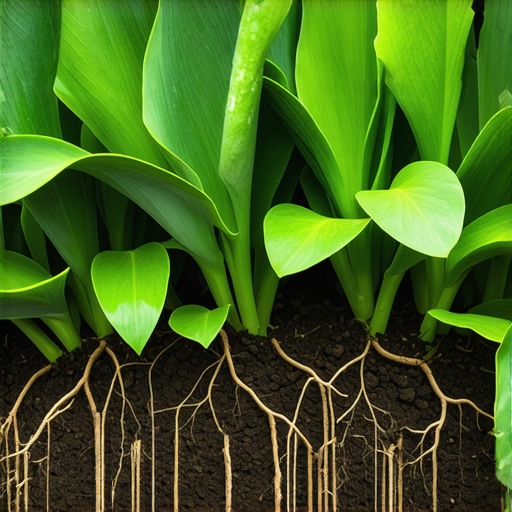
While the internet tells you to dump gypsum on your yard to ‘break up’ the clay, this only works on sodic soils—soils with high sodium content. For most residential yards, gypsum is a waste of money. You are better off investing in a broadfork or a subsurface aeration service. You need to physically move the earth or introduce biology. Earthworms are your best employees; they work for free, and their tunnels provide the exact macropore space your soil lacks. If your soil is dead, your plants are dead. Stop looking for a chemical solution to a physical problem. Hard clay requires sweat and organic matter. Nothing else works long-term. [image_placeholder_2]
Maintenance and Year-One Monitoring
Your job isn’t done when the mulch is spread. The first year is the ‘settling in’ period. Clay expands and contracts with moisture levels. This shrink-swell capacity can actually pull the roots of new plants apart if they aren’t properly hydrated during a drought. Water deep and infrequently. You want to force those roots to chase the moisture down into the subsoil. Shallow watering keeps roots at the surface, where the clay will bake them like a brick in July. Check your grading after the first big storm. If you see mulch migrating, your water velocity is too high; you need a bioswale or stones to slow it down. This is the difference between a contractor and a hack. We look at the water, not just the leaves.