Best 2026 Privacy Hedges for Small Backyards
Designing the High-Density Living Perimeter
Engineering a privacy hedge for a 2026 small backyard requires a shift from aesthetic gardening to precise biochemical site management and structural arboriculture. Success depends on selecting species with a vertical growth habit that maintain a narrow footprint while providing 100 percent visual opacity through dense branching architecture. I always drill into my new crew members: if you don’t fix the soil grading first, every plant you put in the ground is just expensive compost. I have seen too many rookies drop a $400 specimen into a hole that acts like a bucket, drowning the root system because they ignored the bulk density of the surrounding clay. You have to understand that a hedge is a living wall, and like any wall, its longevity is dictated by the foundation. For a hedge, that foundation is the rhizosphere. We are looking at 2026 climate projections that suggest more volatile evapotranspiration rates, meaning your soil prep needs to account for both hydrostatic pressure and moisture retention. Before you buy a single plant, you must perform a percolation test. Dig a hole 12 inches deep, fill it with water, and if it takes more than four hours to drain, you have a compaction issue that will kill a Thuja ‘Steeplechase’ or an Ilex in three months. Ground-up construction starts with the soil profile.
“Most woody ornamental failures are rooted in poor site preparation rather than plant genetics.” – University of Illinois Extension
What are the best narrow privacy hedges for small yards in 2026?
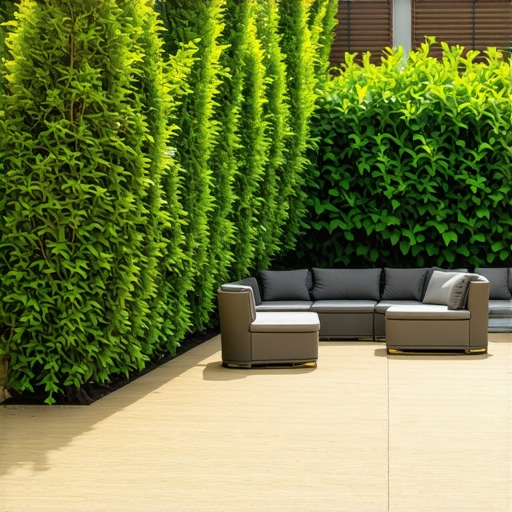
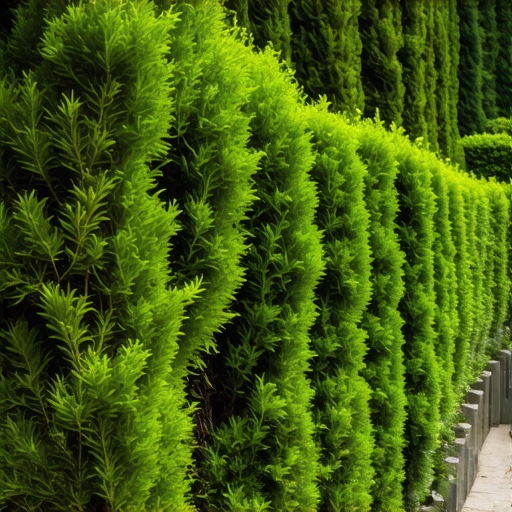
The best 2026 privacy hedges for limited spaces include Thuja occidentalis ‘American Pillar’, Taxus x media ‘Hicksii’, and Ilex x ‘Nellie R. Stevens’ due to their upright growth habits and high biomass density. These species allow for maximum screening in a footprint of less than three feet wide. [IMAGE_PLACEHOLDER] For a small backyard, you cannot afford the spread of a traditional Leyland Cypress. You need the biometric efficiency of a cultivar bred for columnar geometry. Consider the Taxus x media ‘Hicksii’. It is the workhorse of the shade-tolerant world. It handles heavy pruning with ease and thrives in pH levels ranging from 6.0 to 7.5. However, it cannot stand wet feet. If your yard has poor drainage, you will see phytophthora root rot within the first season. Then there is the American Pillar Arborvitae. This is the 2026 gold standard for fast growth. It hits 20 feet tall but stays only 4 feet wide. Unlike the Emerald Green, it resists winter burn better and grows twice as fast, roughly 3 feet per year once established. But speed comes at a price: nitrogen demand. You need a slow-release 10-10-10 fertilizer applied at the drip line, not the trunk, to avoid chemical desiccation of the bark.
| Species | Annual Growth Rate | Max Width | USDA Zone | Sun Requirement |
|---|---|---|---|---|
| Thuja ‘American Pillar’ | 36 inches | 4 feet | 3-8 | Full Sun |
| Taxus ‘Hicksii’ | 12 inches | 3 feet | 4-7 | Full Sun to Shade |
| Ilex ‘Nellie R. Stevens’ | 24 inches | 6 feet (prunable) | 6-9 | Full Sun to Part Shade |
| Juniperus ‘Skyrocket’ | 15 inches | 2 feet | 4-9 | Full Sun |
How deep should a privacy hedge trench be?
For a continuous privacy screen, you should avoid individual holes and instead excavate a trench that is twice as wide as the root ball but no deeper than the root flare. Excavating a continuous trench breaks up soil compaction across the entire row, allowing mycorrhizal fungi and fine feeder roots to bridge between plants more effectively. This creates a unified root system that is more resistant to wind-loading. I see people dig deep holes and fill the bottom with loose organic matter. This is a death sentence. As the organic matter decomposes, the plant settles. When the root flare sinks below the soil grade, the cambium layer rots.
“Proper root flare exposure is the single most critical factor for the long-term survival of container-grown shrubs in urban soils.” – Arboricultural Standard Manual
Engineering the Soil for Long-Term Screening
Successful garden design for privacy requires managing soil chemistry and pore space to ensure the living screen survives the 2026 micro-climate fluctuations. You must aim for a bulk density that allows oxygen diffusion to the roots while maintaining enough capillary action to hold water. If you are working with heavy clay, do not just throw sand into the hole. Sand plus clay equals concrete. Instead, incorporate composted leaf mold or expanded shale to create macropores. I always tell my clients that we are building a biological machine. The cation exchange capacity (CEC) of your soil dictates how well your hedges will hold onto nutrients like potassium and magnesium. Without these, your hedge will look chlorotic and thin, failing its primary job of privacy. Check your pH. If you are planting Ilex (Hollies) and your pH is 8.0, they will suffer from iron deficiency. You will need to amend with elemental sulfur or iron sulfate to bring that number down to a 5.5 or 6.5 range. This is the difference between a pro-grade install and a DIY disaster.
What is the fastest growing privacy hedge for small spaces?
The fastest-growing option for 2026 is the Thuja ‘Steeplechase’, a sport of the Green Giant that maintains a narrower pyramidal form while achieving growth rates of over 2 feet per year. It provides dense foliage that is more deer resistant than the standard Thuja occidentalis. The key to maintaining this speed is consistent hydration. In a small backyard, you cannot rely on overhead sprinklers. You need a low-volume drip irrigation system with pressure-compensating emitters. This delivers water directly to the soil-root interface, reducing evaporative loss and preventing fungal pathogens on the foliage.
- Step 1: Mark all utility lines by calling 811 to avoid hardscape or line damage.
- Step 2: Excavate a trench 3x the width of the root balls.
- Step 3: Scarify the sides of the trench to prevent root circling.
- Step 4: Position plants and ensure the root flare is 1 inch above the finished grade.
- Step 5: Backfill with native soil, tamping lightly to remove air pockets without destroying soil structure.
- Step 6: Apply 2 inches of double-shredded hardwood mulch, keeping it away from the stems.
Maintenance and Structural Pruning
Maintaining a privacy hedge in a 2026 small backyard requires precision pruning to ensure light penetration reaches the bottom interior branches. If you prune the top wider than the bottom, you create a shadow effect that causes the lower foliage to die back, leaving you with a privacy gap at eye level. Always taper your hedge so the base is wider than the top. This is horticultural physics. It allows photosynthesis to occur across the entire vertical plane. Use bypass pruners for clean cuts; dull shears crush the vascular tissue, leading to dieback. For Taxus and Ilex, you can perform rejuvenation pruning if they get too leggy, but with Conifers, if you cut back into the brown wood where there are no latent buds, it will never grow back. It will rot. You must be disciplined. Every pruning cut is a wound. Do it in late winter or early spring before the first flush of growth. This minimizes stress on the plant’s carbohydrate reserves. Don’t skip the winter protection in the first two years. Use a desiccant spray like Wilt-Pruf to stop the winter winds from sucking the moisture out of the needles while the ground is frozen. Real landscaping is about mitigating risk through engineering. Use these 2026 privacy hedge strategies to ensure your small backyard remains a private enclosure for decades.
![5 Drought-Tolerant Shrubs for 2026 Privacy Hedges [Zone 6]](https://lawnmajesty.com/wp-content/uploads/2026/07/5-Drought-Tolerant-Shrubs-for-2026-Privacy-Hedges-Zone-6.jpeg)