
![Build a $50 Vertical 2026 Herb Garden [Small Space]](https://lawnmajesty.com/wp-content/uploads/2026/06/Build-a-50-Vertical-2026-Herb-Garden-Small-Space.jpeg)
Build a $50 Vertical 2026 Herb Garden [Small Space]
Engineering the Vertical Framework for Maximum Biomass
A vertical herb garden utilizes structural verticality to maximize yield per square foot, requiring a moisture-wicking substrate and a secure mounting system to prevent hydrostatic load failure on exterior walls while optimizing photosynthetic photon flux density for small-scale culinary production. Forget the aesthetic Pinterest boards you have seen; this is about biomass production in a restricted footprint.
I always drill into my new crew members: if you don’t fix the soil grading and structural integrity first, every plant you put in the ground—or in a vertical pocket—is just expensive compost. I have spent 20 years watching DIY enthusiasts throw $200 of nursery stock into a $10 plastic hanging shoe rack only to have the roots rot within three weeks because they didn’t understand the physics of drainage. When we talk about a 2026-ready garden, we are talking about precision. You are building a life-support system. If the frame fails, the biology fails. We use cedar pickets because pressure-treated lumber can leach arsenic and copper into your basil. You do not want heavy metals in your pesto. We are aiming for a $50 budget, which means we scavenge for quality and spend where it matters: the substrate and the structural fasteners.
“Vertical gardens require precise moisture management because gravity forces water to the bottom tiers, leaving top-tier plants prone to rapid desiccation and root-zone salt accumulation.” – Penn State Agricultural Extension
How much weight will a vertical garden put on my fence?
A standard 4×4 vertical unit, when fully saturated with water and soil, can exert over 150 pounds of static load on your support structure. You must use stainless steel lag bolts driven into the center of wall studs or fence posts to prevent structural shear. Do not trust adhesive hooks or thin wire. The physics of wet soil is unforgiving. If you are mounting to a masonry wall, you need 3/16-inch Tapcon screws. It is not just about the weight; it is about the torque when the wind hits those leafy greens. If the mount gives way, the project is over. No excuses.
| Material Item | Estimated Cost | Quantity/Specs | Function |
|---|---|---|---|
| Cedar Fence Pickets | $14.50 | 5 units (5/8″ x 5.5″) | Rot-resistant structural frame |
| 3oz Geotextile Fabric | $9.00 | 10 sq ft | Soil retention and aeration |
| Exterior Grade Screws | $6.00 | 1 box (2-inch) | Mechanical fastening |
| Potting Mix (Peat-Free) | $12.00 | 2 cubic feet | High-porosity growth medium |
| Selected Herb Starts | $8.50 | 4-6 varieties | Biomass production |
The Chemistry of High-Density Soil Substrates
The best soil for a vertical garden is a soilless potting medium composed of shredded coconut coir, perlite, and vermiculite to ensure a pH of 6.0 to 7.0 while maintaining high cation exchange capacity and preventing compaction. Standard garden soil is too heavy and lacks the macroporosity required for containerized roots. When you cram plants into small vertical pockets, the roots compete for oxygen. If you use heavy clay-based soil, the pore spaces collapse. The roots suffocate. It will rot. You need a mix that allows for 20% air porosity even when saturated. We use coconut coir because it has better capillary action than peat moss, which becomes hydrophobic when dry. If your medium turns into a hard brick, water will just run off the surface and your plants will wilt while the bottom of the planter stays soggy.
What is the best soil for a vertical garden?
The ideal substrate for verticality is a blend of 60% organic matter (coir or compost) and 40% inorganic aggregates (perlite or calcined clay) to facilitate capillary lift. This ratio ensures that moisture moves laterally across the root zone rather than just plummeting to the bottom drainage holes. High-density planting requires frequent fertigation—applying water-soluble nutrients at a low concentration—because the small volume of soil cannot hold onto a full season’s worth of Nitrogen (N), Phosphorus (P), and Potassium (K). Aim for a 5-5-5 NPK ratio applied every 14 days at half-strength. Over-fertilizing leads to salt burn. It is a slow death for a plant.
Fluid Dynamics and Irrigation Frequency
Vertical irrigation systems must account for gravitational drainage by utilizing a staggered drip-line or wicking system that ensures the upper quadrants receive 15% more water volume than the lower quadrants to compensate for rapid evaporation. In a small space, you cannot just hose it down. You need a 1/4-inch microtubing system. If you’re on a $50 budget, you are the irrigation system. You must water from the top down, allowing the overflow to percolate through the lower tiers. Check the moisture at the 2-inch depth. If it is dry, water it. If it is damp, wait. Most homeowners kill their herbs with kindness—specifically, over-watering that leads to Pythium root rot.
- Daily: Inspect leaf turgidity and check for aphids or spider mites.
- Weekly: Rotate the unit if possible to ensure 360-degree UV exposure.
- Bi-Weekly: Apply liquid seaweed extract to boost microbial activity.
- Monthly: Flush the system with clear water to remove mineral salts.
“A retaining wall doesn’t fail because of the stone; it fails because of the water trapped behind it; similarly, a vertical planter fails because of the anaerobic conditions created by poor drainage.” – Hardscape Engineering Axiom
Selecting High-Yield Cultivars for 2026
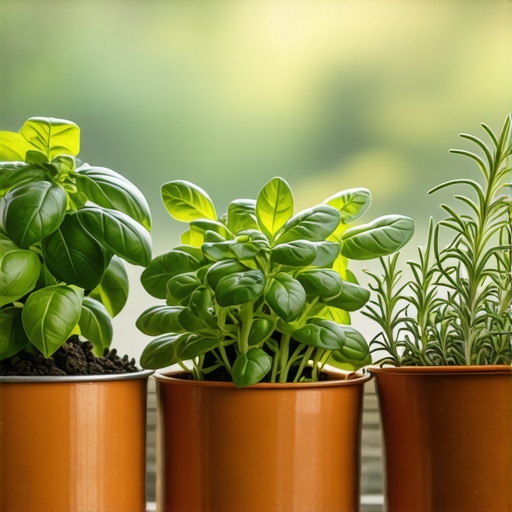
Herb selection for vertical systems should focus on determinate growth habits and drought-tolerant genetics, prioritizing Mediterranean varieties like Rosmarinus officinalis and Thymus vulgaris for the top tiers where heat is most intense. At the bottom, where moisture collects and sun might be filtered, plant your Mentha (mint) or Petroselinum crispum (parsley). Mint is invasive; keep it in its own pocket or it will choke out your cilantro. I have seen mint runners travel three feet through a vertical frame just to kill a rosemary plant. It is biological warfare in a 4-foot space. Don’t be a victim of poor planning. Group your plants by their water potential requirements. Putting a water-loving basil next to a desert-loving lavender is a rookie mistake. One will drown, or the other will shrivel. There is no middle ground in a small-space vertical garden.
How often do you water a vertical herb garden?
In peak summer temperatures, a vertical garden requires evaporative replacement watering once every 24 hours, or twice daily if using porous terracotta or felt pockets. The high surface-area-to-volume ratio of vertical containers accelerates soil desiccation. Use a moisture meter to maintain a consistent 40-60% saturation level. Anything less triggers the production of abscisic acid, which causes leaf drop and stunts your harvest. Precision is the difference between a grocery-store-sized harvest and a few sad sprigs of yellowing thyme.

![Build a $40 Raised Garden Bed [Cedar 2026]](https://lawnmajesty.com/wp-content/uploads/2026/06/Build-a-40-Raised-Garden-Bed-Cedar-2026.jpeg)

![Build a $200 Tiered Garden for 2026 Slopes [DIY]](https://lawnmajesty.com/wp-content/uploads/2026/06/Build-a-200-Tiered-Garden-for-2026-Slopes-DIY.jpeg)