How to Create a Moon Garden for Late-Night Enjoyment
Designing for Nocturnal Luminescence
A moon garden is a strategically designed landscape utilizing high-albedo plants and reflective hardscape materials to maximize visibility during nocturnal hours. By focusing on silver foliage, white blooms, and scented night-bloomers, these gardens provide aesthetic and sensory value without requiring high-intensity artificial lighting. Most homeowners think they can just scatter white impatiens and call it a night. They are wrong. Designing for the dark requires a deep understanding of light physics and plant physiology.
I always drill into my new crew members: if you don’t fix the soil grading first, every plant you put in the ground is just expensive compost. Last season, I watched a greenhorn try to install a moon garden in a low-lying clay pocket. The white flowers rotted within two weeks because he didn’t check the percolation rate. In this business, if you don’t respect the drainage, the dirt will humble you. Moon gardens rely on the reflection of ambient light—lunar or low-voltage LED—and that reflection is killed by muddy, poorly graded terrain. We build from the sub-base up, ensuring every square inch of the 1% to 2% grade carries water away from the root flares.
The Engineering of Albedo and Surface Reflection
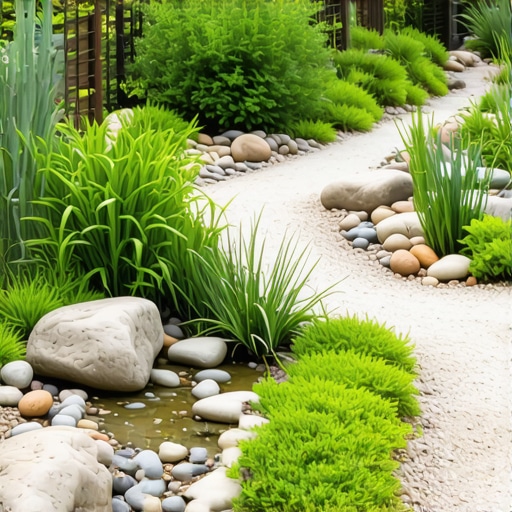
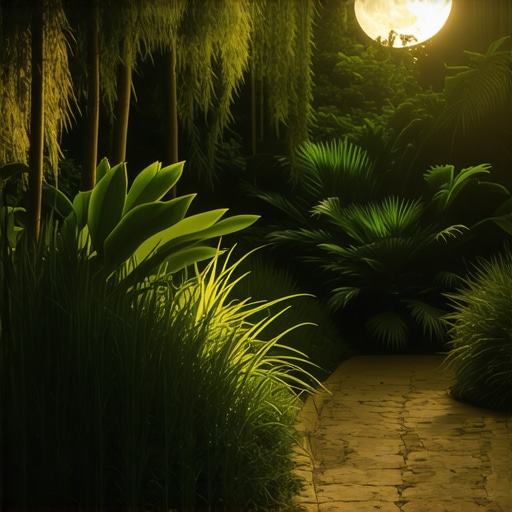
The success of a night garden depends on the albedo effect, which is the measure of how much light a surface reflects. In landscaping, we utilize materials with high albedo to ensure the garden remains visible under low-lux conditions. This starts with the hardscape. If you use dark slate or basalt, the garden disappears at 8:00 PM. We specify light-colored aggregates like crushed limestone, white granite, or silver-grey pavers. These materials act as a mirror for the moon. [IMAGE_PLACEHOLDER]
“Light-colored surfaces reflect more solar radiation, reducing the heat island effect and improving visibility in low-light conditions.” – Hardscape Engineering Axiom
How much modified gravel do I need for a patio base?
To calculate the modified gravel (2A or 2B sub-base) needed, multiply the square footage by the depth (standard 4-6 inches for patios) and divide by 324 to get cubic yards. For a 200-square-foot moon garden path, 6 inches of compacted base requires roughly 4 cubic yards of material. Do not skimp on the vibratory plate compactor. If your base isn’t hit until it rings, your pavers will shift, and your reflective lines will break. I don’t care how tired the crew is; we compact in 2-inch lifts. No exceptions.
Botanical Selection: Silver Foliage and Volatile Oils
In moon garden design, foliage is more important than flowers. Silver-leaved plants like Artemisia stelleriana or Stachys byzantina (Lamb’s Ear) are covered in tiny white hairs called trichomes. These structures are not just for drought resistance; they reflect light. If you over-fertilize with high-nitrogen salts, you’ll force the plant to grow too fast, resulting in larger, greener cells that lack these reflective hairs. Keep your N-P-K ratios lean—focus on potassium for cell wall strength rather than nitrogen for rapid growth.
“Planting site preparation is the most critical factor in plant survival and performance, particularly for species sensitive to drainage.” – Penn State Extension
What plants bloom at night for a moon garden?
Essential night-blooming species include Ipomoea alba (Moonflower), Nicotiana alata (Flowering Tobacco), and Oenothera biennis (Evening Primrose). These plants have evolved to open their corollas as light levels drop, releasing volatile organic compounds that attract nocturnal pollinators like sphingid moths. You need to site these near seating areas to catch the scent, but ensure the soil is a well-draining sandy loam with a pH between 6.2 and 6.8. If the pH is too high, micronutrients like iron become locked, and your silver plants will turn a sickly yellow.
Technical Material Comparison
| Material/Plant | Reflective Value | Maintenance Requirement | Engineering Function |
|---|---|---|---|
| Silver Granite Pavers | High | Low – Polymeric Sand Sweep | High-Albedo Walking Surface |
| Crushed Limestone (#10) | Very High | Medium – Weed Control | Light Reflection / Drainage |
| Artemisia ‘Silver Mound’ | High | Pruning after bloom | Structural Reflective Border |
| Ipomoea alba | Medium | Vertical Support/Trellis | Scent and Focal Luminescence |
The Infrastructure of the Night Garden
Installation follows a strict protocol. First, we excavate 8 inches. Second, we lay 4 ounces of non-woven geotextile fabric. This prevents the sub-grade clay from migrating into our clean #57 stone drainage layer. If you ignore the fabric, your reflective white gravel will be brown mud in three years. Third, we install the low-voltage lighting system. I use 2700K (Kelvin) lamps for a warm, natural moon-like glow. Anything over 3000K looks like a gas station parking lot. We hide the fixtures in the foliage to avoid direct glare; you want to see the effect, not the light source. We aim for 2-4 lumens per square foot. It is a garden, not a stadium.
Critical Pre-Installation Checklist
- Test soil drainage: Dig a 12-inch hole, fill with water, and ensure it drains within 4 hours.
- Verify 811/Utility marks before any excavation deeper than 6 inches.
- Check USDA Hardiness Zone: Ensure your night-bloomers can handle local frost dates.
- Screed the base: Ensure a consistent 1-inch bedding sand layer for all reflective pavers.
- Calibrate Irrigation: Install 0.5 GPH drip emitters to keep foliage dry and prevent fungal rot on silver leaves.
Irrigation is where most people fail. Overhead sprinklers are the enemy of the moon garden. Water droplets on silver foliage act like magnifying glasses in the sun, but at night, they trap moisture against the trichomes, leading to Botrytis or powdery mildew. Use 1/2-inch poly tubing with inline emitters buried under 2 inches of mulch. This keeps the water at the roots and the reflective leaves dry. It’s simple engineering, but the hacks always skip it because it takes more time to trench. We don’t skip it. We do it right the first time.
![Build a $50 Vertical 2026 Herb Garden [Small Space]](https://lawnmajesty.com/wp-content/uploads/2026/06/Build-a-50-Vertical-2026-Herb-Garden-Small-Space.jpeg)