How to Build a 2026 Gravel Path That Doesn’t Shift
The Engineering Reality of Permanent Gravel Pathways
To build a 2026 gravel path that doesn’t shift, you must prioritize subgrade engineering and mechanical compaction over aesthetics. A truly stable walkway requires a minimum 6-inch excavation, a non-woven geotextile layer for separation, and 4 inches of angular aggregate compacted to 95% Proctor density to prevent lateral displacement and rutting.
I recently got called out to tear up a $30,000 project that was sinking because the previous contractor thought ‘dirt is dirt.’ They laid expensive decorative stone directly over uncompacted topsoil. Three months of rain later, that path wasn’t a walkway; it was a drainage ditch. I spent two days with a mini-excavator just hauling out the mud they created. It’s a classic mistake made by ‘mow-and-blow’ hacks who don’t understand that landscaping is 90% civil engineering. If you don’t respect the physics of the soil, the soil will eventually claim your investment as compost. Don’t skip the base. Don’t trust the soil. It will fail you.
The Physics of Subgrade and Compaction
Soil is not a solid mass; it is a collection of pores, organic matter, and air. When you walk on a gravel path, you are applying downward PSI (pounds per square inch). Without a proper base, that pressure forces the stone into the soft soil, while the soil is forced up into the stone. This is called ‘migration.’ To stop this, we use the 2026 standard of geotextile separation. This isn’t your cheap plastic weed barrier. This is a heavy-duty, non-woven fabric that allows water through but stops soil particles dead. It creates a structural bridge. You need that bridge.
“Compaction of the subgrade and the base is the most critical element in the long-term performance of any flexible pavement system.” – Interlocking Concrete Pavement Institute (ICPI) Tech Manual
How much modified gravel do I need for a patio base?
Calculating aggregate volume for a gravel path or patio base requires multiplying your total square footage by your desired depth in feet (e.g., 4 inches is 0.33 feet) and dividing by 27 to find cubic yardage. For a stable 2026 path, always factor in a 20% compaction loss when ordering materials like CR-6 or 21A modified stone.
| Material Type | Compaction Rating | Drainage Coefficient | Recommended Use |
|---|---|---|---|
| 21A / CR-6 (Modified) | High (95%+) | Moderate | Primary Load-Bearing Base |
| #57 Clean Stone | Low (Voids) | Excellent | Drainage Layers / French Drains |
| Stone Dust / Screenings | High (Surface) | Poor | Top Level Leveling Only |
| Decomposed Granite | Moderate | Good | High-End Decorative Surface |
Selecting the Right Aggregate Sizing
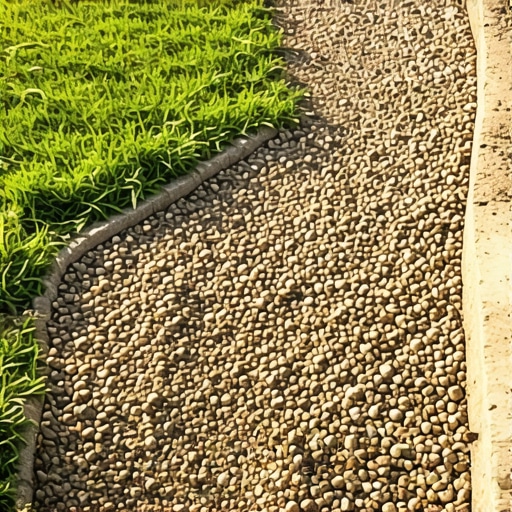
Stop buying pea gravel. If it’s round, it’s a rolling marble. Round stones never lock together. You want angular aggregate. When you compress angular stone with a plate compactor, the jagged edges lock together like a jigsaw puzzle. This is called ‘interlocking friction.’ For the base, use 3/4-inch minus (which means 3/4-inch stone down to dust). The dust fills the small voids, creating a concrete-like surface that still breathes. For the top 1 inch, you can go with a 3/8-inch angular chip. It stays put. It doesn’t roll under your boots. It’s stable.
The Step-by-Step 2026 Path Installation Checklist
- Mark and Utility Check: Call 811. Don’t slice a fiber optic line for a garden path.
- Excavation: Dig to a minimum of 6-8 inches. Remove all organic matter. If you see roots, cut them back or they will heave your path.
- Subgrade Compaction: Run a plate compactor over the bare dirt until it doesn’t leave a footprint.
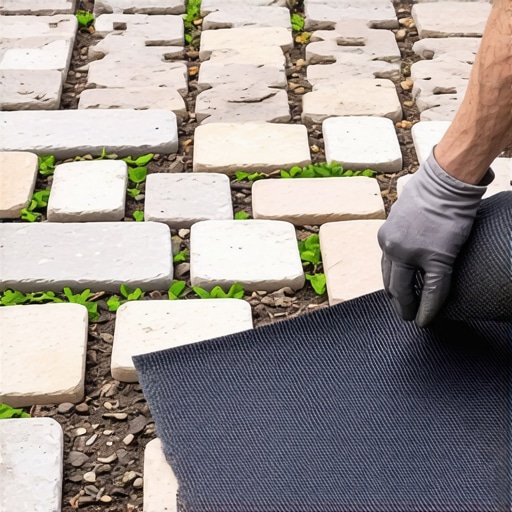
- Geotextile Layer: Lay 4-6 oz non-woven fabric. Overlap seams by at least 12 inches.
- Base Layer: Add 4 inches of 21A modified stone in 2-inch ‘lifts.’ Compact each lift separately.
- Edging: Install heavy-duty steel or aluminum edging. Plastic spikes will crawl out of the ground in three years.
- Surface Layer: Add 1-2 inches of your decorative angular stone.
“A retaining wall or path doesn’t fail because of the stone; it fails because of the water trapped behind or beneath it.” – Hardscape Engineering Axiom
What is the best gravel for a high-traffic walkway?
The best gravel for high-traffic walkways is a 3/8-inch angular chip stone, often called #8 or #9 stone. Unlike rounded river rock, these angular pieces bind together under pressure, providing a slip-resistant surface that accommodates wheelchairs, strollers, and heavy foot traffic without shifting or rutting.
Managing Hydrostatic Pressure and Drainage
Water is the enemy of all hardscaping. If your path sits in a low spot, it becomes a creek. You must grade the subgrade (the dirt) at a 2% slope away from any foundations. In heavy clay soils, like the red clay common in many regions, the water won’t soak in. It sits on top of the clay, under your gravel, and turns the whole thing into a ‘slurry.’ This is where hydrostatic pressure comes in. If the water can’t escape, it will push the stones up and out. In 2026 designs, we often install a hidden 4-inch perforated French drain alongside the path to give that water a clear exit path. It’s an extra $200 in pipe that saves a $5,000 path. Don’t be cheap. Buy the pipe.
The Maintenance Myth
People think gravel is ‘no maintenance.’ They are wrong. Every year, you will get ‘fines’ (dust and organic bits) blowing into the path. This creates a seed bed. If you don’t blow your path off once a week, you’ll have a weed path by year three. Also, you need to check your edging. Freeze-thaw cycles cause ‘frost heave.’ In the spring, take a 3-lb sledge and a block of wood and tap your edging back down into place. It takes ten minutes. If you ignore it, the edging will eventually trip you. It will happen. Be ready.