How to Build a Natural Privacy Screen with Lattice and Ivy
Engineering Privacy: Why Most DIY Screens Fail in Three Years
To build a natural privacy screen with lattice and ivy, you must integrate structural engineering with horticultural science. This involves setting 4×4 pressure-treated posts 36 inches deep, selecting non-invasive ivy species, and amending soil to a pH of 6.0-7.0 to ensure rapid vertical growth and structural stability against wind loads.
I always drill into my new crew members: if you don’t fix the soil grading and structural footings first, every plant you put in the ground is just expensive compost. I remember a job in the suburbs where a homeowner spent four grand on custom cedar lattice only to have the whole thing lean at a 15-degree angle after the first spring thaw. They hadn’t accounted for the frost heave or the weight of the mature vine biomass. We had to rip the whole thing out, re-excavate, and start from the dirt up. Professional landscaping is 80% physics and chemistry; the aesthetics are just the byproduct of doing the math correctly.
The Structural Foundation: Post Depths and Wind Loads
A lattice screen functions as a vertical sail, capturing wind energy and transferring that kinetic force directly into the ground through the posts. For a standard 6-foot screen, posts must be set at a minimum depth of 36 inches, or below the local frost line, whichever is deeper, to prevent heave and lean.
“A retaining wall doesn’t fail because of the stone; it fails because of the water trapped behind it.” – Hardscape Engineering Axiom
The same logic applies to privacy screens. Hydrostatic pressure in saturated soil can liquefy the area around a shallow footing, causing the screen to collapse under the weight of wet ivy. Use a 6-inch base of 3/4-inch modified crushed stone at the bottom of your post hole before pouring 3,000 PSI concrete. This allows for drainage directly beneath the post, preventing the wood from sitting in a localized bathtub that accelerates fungal decay and rot. Don’t use those pre-mixed bags from the hardware store unless you’re verifying the aggregate size; you need structural integrity, not just a grey rock.
How much modified gravel do I need for a patio base?
For a standard privacy screen footing, you need approximately 0.5 cubic feet of modified gravel per post to create a stable 6-inch drainage layer. This prevents soil saturation from destabilizing the 4×4 pressure-treated timber during heavy rain events or spring thaws.
Material Selection: Lattice Durability and Ivy Biology
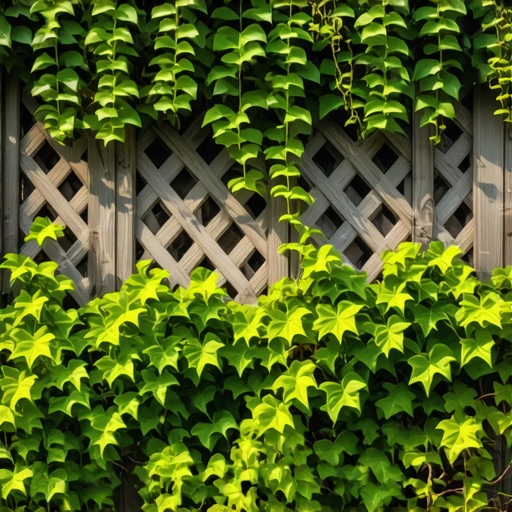
Selecting the right lattice material requires balancing the chemical resistance of the substrate against the aggressive attachment mechanisms of climbing vines. Vinyl lattice is often touted for low maintenance, but many species of ivy struggle to gain purchase on its non-porous surface, leading to ‘slumping’ where the plant weight pulls the entire mat downward.
| Material | Expected Lifespan | Ivy Adhesion Rate | Structural Load Capacity |
|---|---|---|---|
| Pressure-Treated Pine | 12-15 Years | High (Porous) | High |
| Western Red Cedar | 20-25 Years | Moderate | Medium |
| High-Density Vinyl | 30+ Years | Low (Requires Ties) | Low |
| Powder-Coated Steel | 25+ Years | Moderate | Extreme |
If you choose wood, ensure it is rated for ground contact (UC4A or higher). Ivy like Hedera helix uses adventitious rootlets that secrete a microscopic polysaccharide adhesive. This ‘glue’ bonds more effectively to the cellulose fibers of natural wood than to the slick polymers of plastic. However, this same mechanism can trap moisture against the wood, so a coat of high-quality oil-based sealer is mandatory before the first vine touches the surface. Don’t skip this. It will rot.
The Horticultural Engine: Soil Chemistry and Plant Selection
The success of an ivy screen depends on the Nitrogen-Phosphorus-Potassium (NPK) ratios and the cation exchange capacity (CEC) of the soil at the base of the lattice. Ivy requires high nitrogen levels during the establishment phase to drive leaf production and stem elongation, but excessive nitrogen can lead to weak, succulent growth that is susceptible to spider mites and fungal pathogens.
“The biological success of any vertical planting system is predicated on the root zone’s ability to facilitate gas exchange and maintain a stable rhizosphere pH.” – Agronomy Manual for Woody Ornamentals
Test your soil. If your pH is below 5.5, the ivy cannot efficiently uptake magnesium or calcium, leading to chlorosis and stunted growth. Amend with pelletized lime if necessary. For the planting hole, mix in 20% organic compost by volume to increase the microbial activity. I prefer a slow-release 10-10-10 fertilizer applied in early spring. Avoid the high-octane liquid feeds; they produce ‘lazy’ plants with shallow root systems that can’t handle a dry August.
Which ivy grows fastest for privacy?
While English Ivy is common, Boston Ivy or Virginia Creeper often provides faster coverage without the same invasive risks in certain USDA zones. These species utilize adhesive disks rather than rootlets, which are less damaging to the structural integrity of the lattice over a ten-year cycle.
The Professional Installation Checklist
- Utility Marking: Call 811 before you dig. Striking a gas line for a privacy screen is a rookie mistake.
- Post Alignment: Use a transit level. A 1/4 inch variance at the base becomes a 2-inch lean at the top.
- Drainage: Ensure the concrete footing is sloped away from the post at the surface to shed water.
- Plant Spacing: Space 1-gallon ivy containers 18 inches apart. Planting too close leads to root competition and ‘die-back’ in year three.
- Initial Training: Use biodegradable jute twine to weave the first 24 inches of growth into the lattice.
Long-Term Maintenance and Structural Load Management
Once the ivy reaches the top of the lattice, the weight of the plant material increases exponentially. A mature 8-foot section of English Ivy can weigh over 200 pounds when saturated with rain. This is why we don’t use flimsy 2×2 lattice from big-box stores. You need heavy-duty 3/4-inch thick panels secured with stainless steel screws, not staples. Staples will pull out. The wind will catch the screen, and the whole thing will tear away like a sheet of paper.
Pruning is not optional. You must thin the vine interior every two years to allow airflow. Without air movement, the center of the ivy mat becomes a breeding ground for Colletotrichum (leaf spot) and other fungal blights. Cut back any growth that attempts to wrap around the posts themselves; you want the ivy on the lattice, not strangling the structural supports. Use sharp, bypassed pruners and make clean cuts at the node. This isn’t just gardening; it’s infrastructure management. Keep the biomass lean, the soil chemistry balanced, and the footings dry, and that screen will outlast your mortgage.