
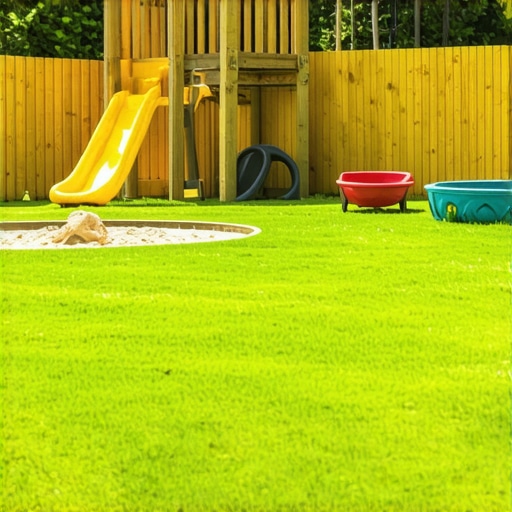
How to design a kid-friendly backyard
I always drill into my new crew members: if you don’t fix the soil grading first, every plant you put in the ground is just expensive compost. I’ve seen enough $50,000 backyard renovations turn into a swamp because some contractor focused on the ‘look’ rather than the civil engineering of the site. When you are designing for kids, the stakes are higher. You aren’t just building a garden; you are building a high-impact environment that needs to withstand shear force, compaction, and constant moisture fluctuations. If the foundation is trash, the backyard will be a muddy disaster within two seasons.
The Core Philosophy of Kid-Friendly Backyard Design
Designing a kid-friendly backyard requires balancing resilient turf species, non-toxic plantings, and safety-certified hardscape materials to ensure a durable, low-maintenance environment. Successful designs prioritize proper drainage patterns and soil microbiology to prevent compaction and standing water in high-traffic zones. It must be rugged.
Most people think a kid-friendly yard means throwing a plastic slide on some grass. That’s a mistake. You have to think about the hydrostatic pressure under your retaining walls and the NPK ratios in your soil. Kids are heavy on the land. They compact the dirt, which kills the pore space. No pore space means no oxygen for the roots. No oxygen means dead grass and a yard full of mud. We start with the soil. You need a sandy loam mix that allows for fast percolation. If you have heavy clay, you’re looking at a subsurface drainage system or you’re just wasting money. Don’t skip the French drain. It is the literal heartbeat of a functional yard.
“A retaining wall doesn’t fail because of the stone; it fails because of the water trapped behind it.” – Hardscape Engineering Axiom
Selecting the Right Turf for High-Impact Traffic
Turfgrass selection for a backyard with active children must prioritize wear tolerance and recovery speed to withstand constant foot traffic and soil compaction. Professionals typically recommend Turf-Type Tall Fescue or Kentucky Bluegrass blends for their deep root systems and ability to self-repair via rhizomes. Avoid cheap seed mixes.
I’ve seen homeowners buy the ‘Contractor Mix’ at the big-box store and wonder why their lawn looks like a mangy dog by July. Those mixes are usually full of annual rye that dies as soon as the thermometer hits 85 degrees. For a yard that actually gets used, you need to look at the seeding rate and the cultivar. Tall Fescue is the workhorse here. Its roots can go down three feet if you manage them right. That depth is what saves you during a dry spell. But you can’t just throw it on top of the dirt. You need to core aerate every fall to fight the compaction kids cause. Hit it with 0.5 inches of compost top-dressing. This feeds the microbes and breaks down the thatch layer. Grass needs to breathe.
What is the most durable grass for active children?
For most northern and transition zones, a 90/10 blend of Turf-Type Tall Fescue and Kentucky Bluegrass offers the best durability. The Fescue provides the deep-rooted heat resistance, while the Bluegrass uses its rhizomatous growth habit to fill in bare spots caused by heavy play. This prevents mud pits.
Hardscaping for Safety and Structural Integrity
Hardscaping in a kid-centric environment involves installing impact-attenuating surfaces and stable base layers to prevent settling and tripping hazards. Using ASTM-certified engineered wood fiber or poured-in-place rubber over a compacted 21A or 57 stone base ensures the area meets safety standards. Drainage is non-negotiable here.
If you’re putting in a play set, don’t just dump some wood chips on the grass. You need to excavate. Dig out at least 9 to 12 inches. Lay down a non-woven geotextile fabric. This isn’t the thin stuff you find in the gardening aisle; you need the heavy-duty industrial grade. Then you add your base. I prefer a layer of clean 57 stone for drainage, followed by the safety surfacing. Why? Because water needs to move through the system. If it sits there, the wood fiber rots, it starts to smell, and you’re breeding mosquitoes. Also, check your fall zones. You need a 6-foot radius of safety surfacing around every piece of equipment. Don’t eyeball it. Use a tape measure.
How much modified gravel do I need for a patio base?
To calculate the modified gravel needed, multiply the square footage of the area by the depth of the base (minimum 6 inches for patios) and divide by 27 to get cubic yards. For a 200-square-foot area, you will need approximately 4 to 5 tons of compacted 21A modified stone to ensure structural stability. Compact it in 2-inch lifts.
| Material | Durability | Drainage Rating | Safety/Fall Rating |
|---|---|---|---|
| Engineered Wood Fiber | Moderate | High | Excellent (ASTM F1292) |
| Rubber Mulch | High | Low | Very Good |
| Pea Gravel | High | Excellent | Poor (Migration issues) |
| Artificial Turf | High | Moderate | Requires Padding |
Plant Selection: Avoiding the ‘Toxic’ Beauty Trap
Plant selection for a kid-friendly backyard focuses on non-toxic, thornless species that are hardy enough to survive occasional trampling and ball impacts. Professionals prioritize native perennials and structural shrubs that provide ecosystem services without posing a risk to curious toddlers or pets. Verify every species before planting.
I once walked onto a job site where a designer had spec’d out a bunch of Nerium oleander right next to a sandbox. I almost fired the guy on the spot. Every part of that plant is toxic. In a kid’s yard, you want things that can take a beating. Think Ilex glabra (Inkberry) instead of boxwoods, or Panicum virgatum (Switchgrass) for some texture. These plants are tough. They don’t mind if a soccer ball flies into them. And for the love of everything holy, stop putting mulch volcanoes around your trees. The root flare needs to be exposed. If you bury the flare, you’re just inviting rot and girdling roots. It will kill the tree in ten years.
“Ensure that all play equipment is anchored into a subsurface foundation that extends below the local frost line to prevent seasonal heaving.” – ICPI Construction Standards
The Maintenance Reality: Beyond the Install
A kid-friendly yard isn’t ‘set and forget.’ It’s a living system. You need to check the pH of your soil every two years. If it’s too acidic, your fertilizer won’t even work; the nutrients just lock up in the soil. Aim for 6.5. And stop over-watering. If you water every day for 10 minutes, you’re training the roots to stay at the surface. That makes the grass weak. You want deep, infrequent watering. Give it one inch once a week. This forces the roots to chase the moisture down. It makes the turf resilient. It makes the yard professional grade. Don’t be a hack. Do it right the first time.
- Inspect all play equipment hardware for rust or loosening monthly.
- Replenish safety surfacing (mulch/wood fiber) to maintain a 9-inch minimum depth.
- Core aerate the lawn in the fall to alleviate soil compaction.
- Check the integrity of retaining wall weep holes to ensure proper drainage.
- Prune any dead or overhanging branches that could pose a fall risk.
![Reviving Clay Soil Without Digging [2026 Guide]](https://lawnmajesty.com/wp-content/uploads/2026/09/Reviving-Clay-Soil-Without-Digging-2026-Guide.jpeg)