Stop 2026 Grass Thinning Under Large Oak Trees [Simple Fix]
The Real Reason Your Grass Is Thinning Under Oak Trees
Grass thinning under oak trees occurs because of light deprivation, root competition, and soil acidification. Large oaks act as massive umbrellas that block photosynthetically active radiation while their aggressive surface roots outcompete turf for moisture and nitrogen. To solve this, you must change the grass variety to a fine fescue and implement a vertical mulching protocol to reduce soil compaction without damaging the tree root flare.
I always drill into my new crew members: if you dont fix the soil grading and light penetration first, every plant you put in the ground is just expensive compost. I saw a project last year in a high end neighborhood where the homeowner had spent six thousand dollars on high quality sod three years in a row. Every spring it looked okay, and by every August it was just bare dirt and oak mast. They kept hiring mow and blow crews who just threw more nitrogen at the problem. Nitrogen in a dark environment just causes the grass to grow long, thin cell walls that collapse at the first sign of heat stress. It is a biological death sentence. We had to come in and explain that you cannot fight physics. The tree wins every time unless you balance the ecosystem.
“A tree canopy can intercept up to 95 percent of the sunlight that would otherwise reach the turf, effectively starving the grass of the energy it needs for photosynthesis.” – University of Missouri Extension
Why Traditional Lawn Care Fails Under Oaks
Most homeowners treat the area under a tree the same as the open lawn. This is a mistake. The soil under an oak is often drier than the rest of the yard. Why? Because the tree canopy acts as a physical barrier to light rain, and the tree roots are much more efficient at sucking up the water that does hit the ground. When you see your grass thinning, it is likely the tree is literally drinking the water right out from under the root zone of the turf. You are dealing with a microscopic battle for resources where the grass is outmatched in every category. [image_placeholder_1]
The Simple Fix Protocol for 2026
The solution is not more fertilizer; it is a fundamental shift in how you manage the drip line of the oak tree. The drip line is the area directly under the outer circumference of the tree branches. This is the most active zone for nutrient exchange and where the competition is fiercest. You need to perform a three step remediation: crown thinning, species conversion, and deep root fertilization. This ensures that light reaches the ground and the grass has the specific biological traits to survive on limited energy.
| Action Item | Technical Requirement | Impact on Turf |
|---|---|---|
| Crown Thinning | Remove no more than 20% of canopy | Increases PAR (Photosynthetically Active Radiation) |
| Species Shift | Transition to Fine Fescue blends | Lower light compensation point |
| Aeration | 3 to 4 inch core depth | Reduces bulk density of soil |
| pH Adjustment | Target 6.5 to 6.8 pH | Improves cation exchange capacity |
How much modified gravel do I need for a patio base?
While often asked in the context of hardscaping near trees, for a standard patio base you generally need 6 inches of compacted 21A or 57 stone. However, if you are building near a large oak, you should avoid gravel entirely and use a suspended deck or permeable pavers to prevent soil compaction that will kill the tree roots and the grass around it. Compaction is a silent killer. It crushes the pore space in the soil, preventing oxygen from reaching the roots. Without oxygen, the grass roots die of suffocation long before they die of thirst.
The Science of Fine Fescues
Fine fescues, including Creeping Red, Chewings, and Hard Fescue, are the only cool season grasses capable of surviving in the deep shade of an oak. They have a lower metabolic rate. They do not need to produce as much ATP because they do not grow as fast. This makes them perfect for the low light environment. If you are trying to grow Kentucky Bluegrass under an oak, you are failing because that grass requires at least 6 hours of direct sun to maintain its carbohydrate reserves. Under an oak, it might only get 2 hours. It will rot. There is no way around it. You must overseed with a blend specifically designed for dry shade.
“Soil compaction under mature trees reduces the available pore space for air and water, leading to a decline in both turf vigor and tree health.” – International Society of Arboriculture (ISA)
Will lime help grass grow under oaks?
Lime is only effective if your soil pH is below 6.0. Many people believe oak leaves make the soil acidic, but the reality is that the tree and the grass both consume nutrients that can lead to local acidification over decades. You must test the soil before dumping lime. If the pH is fine but the grass is thinning, lime will actually make it harder for the grass to take up micronutrients like iron and manganese. Do not guess. Measure the pH with a calibrated meter. If you are in a region with heavy clay, compaction is a bigger threat than pH. Use a core aerator to pull plugs. It is the only way to get air back into the root zone.
Step-By-Step Restoration Checklist
- Step 1: Selective Pruning. Hire a certified arborist to thin the inner canopy. Do not lion tail the tree. Focus on removing deadwood and small diameter branches to allow dappled sunlight.
- Step 2: Core Aeration. Pull 3 inch plugs throughout the drip line. This breaks the surface tension and allows water to penetrate the thatch layer.
- Step 3: Top Dressing. Apply a quarter inch of high quality leaf compost. This introduces beneficial microbes that help break down the tannic acid from oak leaves.
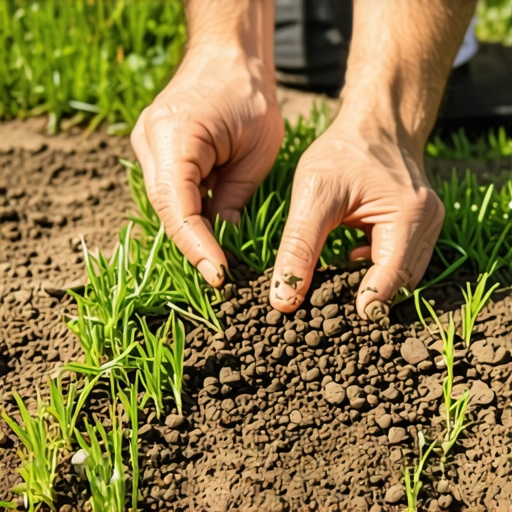
- Step 4: High Performance Seeding. Use a slit seeder to put Fine Fescue seed directly into the soil at a rate of 5 pounds per 1000 square feet.
- Step 5: Irrigation Adjustment. Water deeply once a week rather than light misting every day. You need to drive the water 6 inches deep to ensure the grass roots get a drink before the tree roots grab it.
Maintaining the Balance
Once the new grass is established, you cannot treat it like a golf course. Keep the mowing height at 3.5 to 4 inches. The longer the blade of grass, the more surface area it has to capture what little light filters through the oak leaves. If you scalp it, you kill it. Also, be diligent about leaf removal in the fall. Oak leaves are thick and full of lignin. They do not break down quickly. If they sit on the grass for more than a week, they will smother it and create a fungal playground for brown patch or pythium blight. Use a blower, not a rake, to avoid pulling up the young fescue roots. This is the difference between a professional result and a DIY disaster. Stop looking for a magic chemical and start managing the biology of the site.”