
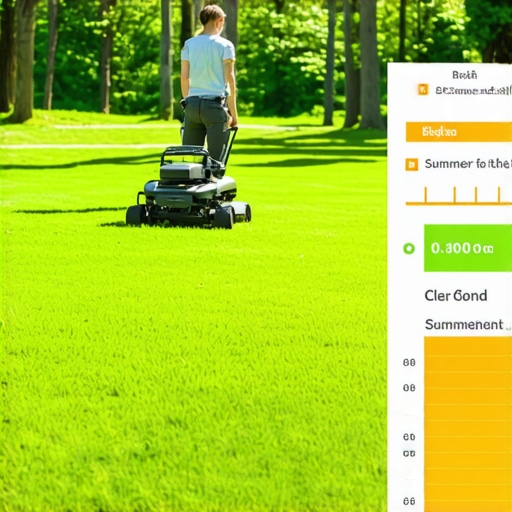
Stop 2026 Lawn Burn: 3 Summer Mowing Height Rules
The Anatomy of a Scorched Lawn: Why Your Turf is Turning into Straw
Lawn burn in 2026 is primarily caused by scalping the turf canopy, which exposes the delicate crown to direct UV radiation and increases soil evaporation rates. To prevent this, homeowners must maintain a mowing height of 3.5 to 4 inches for cool-season grasses and adjust frequency to never remove more than one-third of the leaf blade at once.
I recently walked a property where the homeowner was in a total panic. They had spent thousands on a custom garden design only to torch the entire front lawn in forty-eight hours. They applied a high-nitrogen ‘quick green’ fertilizer during a record-breaking heatwave and then set their mower deck to its lowest setting to ‘save time.’ By Monday, the fescue wasn’t just brown; it was chemically cauterized. The soil temperature had spiked to nearly 105 degrees Fahrenheit because there was no leaf canopy to shade it. The grass didn’t go dormant; it literally cooked in the ground. This is what happens when you treat lawn care like a chore instead of biological management. If you don’t respect the root-to-shoot ratio, you’re just creating expensive compost.
“Increasing the mowing height during summer months promotes deeper rooting and provides better insulation for the soil surface, reducing moisture loss through evaporation.” – Penn State Center for Turfgrass Science
Rule 1: The 4-Inch Canopy Protocol
Mowing at a height of 4 inches creates a biological umbrella that protects the soil microbiology and retains moisture in the upper two inches of the soil profile. This height allows the plant to maximize photosynthesis during high-stress periods, ensuring the roots have enough carbohydrate reserves to survive the heat. When you drop that deck lower, you are forcing the plant to use all its energy to repair the leaf instead of maintaining the root system. It will fail. Stop thinking a short lawn looks ‘clean.’ It looks like a graveyard. In my landscaping firm, we never send a crew out with a deck set lower than 3.75 inches after June 15th. We use precise measuring blocks to calibrate every machine. If the blade is too low, the plant’s transpiration rate skyrockets, and it bleeds moisture faster than the roots can pull it from the drying soil. [image_placeholder_1]
How short should I cut my grass in July?
In July, you should never cut cool-season grass (like Fescue or Bluegrass) shorter than 3.5 to 4 inches to prevent crown desiccation. For warm-season grasses like Bermuda or Zoysia, a height of 1.5 to 2.5 inches is acceptable, provided the irrigation schedule is adjusted to compensate for higher soil temperatures.
| Grass Type | Early Spring Height (in) | Summer Height (in) | Root Depth Impact |
|---|---|---|---|
| Tall Fescue | 2.5 – 3.0 | 3.5 – 4.5 | Deep (8″+) |
| Kentucky Bluegrass | 2.0 – 2.5 | 3.0 – 4.0 | Medium (5-6″) |
| Bermuda Grass | 1.0 – 1.5 | 1.5 – 2.5 | Variable |
| Zoysia | 1.5 – 2.0 | 2.0 – 3.0 | Deep |
Rule 2: The One-Third Depletion Mandate
The One-Third Rule dictates that you should never remove more than 33% of the total leaf tissue in a single mowing event to avoid physiological shock to the turfgrass. Removing more than this percentage halts root growth for up to 14 days while the plant redirects all nutrients to emergency foliage repair. If your grass is 6 inches tall, don’t take it down to 3 inches. Take it to 4.5 inches, wait two days, then take it to 3.5. This isn’t a suggestion; it’s a biological requirement. When you scalp a lawn, you are essentially performing a botanical amputation without anesthesia. The plant goes into a defensive crouch. It stops searching for water. If the heat is high, the plant will simply give up. This is a common failure point in hardscaping projects where the surrounding turf is neglected during construction; the compaction and the heat from the pavers create a micro-climate that demands even stricter adherence to these height rules.
“Scalping turfgrass reduces the photosynthetic area and weakens the plant, making it more susceptible to environmental stresses and pest infestations.” – Texas A&M AgriLife Extension
Rule 3: Blade Integrity and Thermal Timing
Dull mower blades tear the grass tissue instead of cutting it, leaving jagged edges that lose moisture rapidly and provide an entry point for fungal pathogens. Always sharpen your blades every 10-15 hours of use and only mow during the cooler parts of the day to minimize thermal stress on the freshly cut leaf. A torn leaf tip turns white or tan within 24 hours. From the street, the lawn looks brown, but it’s actually just millions of frayed ends. It looks terrible. It’s unhealthy. Also, stop mowing at 2 PM when the sun is at its zenith. You are exposing freshly wounded tissue to the harshest UV rays of the day. Mow at 7 PM. Let the plant recover in the dark with the dew. It makes a difference.
Will burnt grass grow back?
Burnt grass will only grow back if the crown of the plant remains alive and hydrated; if the crown has turned brittle and brown, the plant is dead and requires overseeding or sod replacement. Check the base of the plant—if it’s still green or white and firm, there is hope. If it’s shriveled, you’re looking at a renovation project, not a recovery.
- Check Blade Sharpness: A clean cut prevents moisture loss.
- Monitor Soil Temp: If the ground is over 85°F, increase height immediately.
- Skip the Bag: Leave clippings to return nitrogen and shade the soil.
- Hydration Check: Ensure 1 inch of water per week, applied before 8 AM.
- Avoid Traffic: Keep heavy equipment off drought-stressed turf.
The Remediation Plan
If you’ve already messed up, stop fertilizing. Adding high-nitrogen salts to a stressed lawn is like giving a dehydrated man a salt tablet. It’s malpractice. Instead, focus on deep, infrequent watering to drive those roots down. You want to force the plant to work for its water. Shallow, daily watering keeps the roots in the ‘hot zone’ of the top inch of soil. That’s a death sentence. Switch to 45-minute sessions twice a week. Get a soil probe. If you can’t push it 6 inches into the ground, your soil is too compacted and dry. Fix the physics of the soil before you worry about the chemistry of the grass. Hardscaping and grading issues often contribute to these dry spots, so ensure your yard isn’t shedding water faster than it can absorb it. Every yard is a system. Treat it like one.
![Stop Raking Your 2026 Leaves [Nutrient Hack]](https://lawnmajesty.com/wp-content/uploads/2026/07/Stop-Raking-Your-2026-Leaves-Nutrient-Hack.jpeg)