![Stop 2026 Leaf Wilt on Roses [Soil Fix]](https://lawnmajesty.com/wp-content/uploads/2026/07/Stop-2026-Leaf-Wilt-on-Roses-Soil-Fix.jpeg)
Stop 2026 Leaf Wilt on Roses [Soil Fix]
Understanding the Vascular Collapse of Your Rose Garden
Leaf wilt in roses is rarely a simple case of dehydration. It is more often a symptom of vascular dysfunction, soil compaction, or pathogenic infiltration within the rhizosphere. To resolve wilt for the 2026 season, homeowners must look beyond the foliage and analyze the bulk density and cation exchange capacity (CEC) of their soil. Stop guessing and start measuring.
The Apprentice Lesson: Why Your Plants Are Expensive Compost
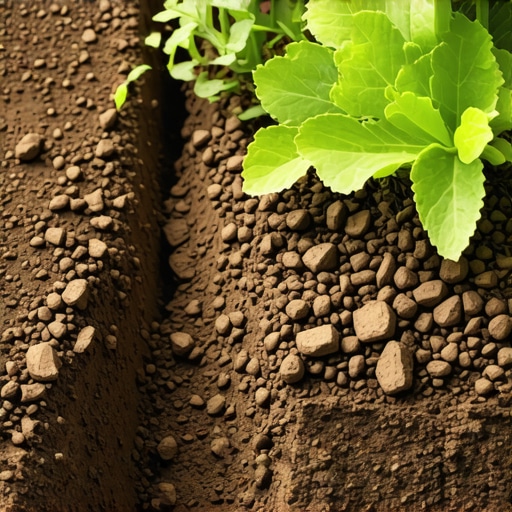
I always drill into my new crew members: if you don’t fix the soil grading first, every plant you put in the ground is just expensive compost. I remember a job in ’14 where a client spent four figures on David Austin cultivars. They were dead by August. My apprentice at the time thought we just needed more water. I handed him a shovel and made him dig. Three inches down, we hit a solid shelf of buried construction debris and gray clay. The roots were literally drowning in a perched water table. The leaves were wilting because the roots had rotted off. No amount of surface watering fixes a structural drainage failure. It was a $5,000 lesson in physics.
What Causes Leaf Wilt in Roses?
Rose leaf wilt is primarily driven by vascular dysfunction caused by fungal pathogens, poor soil drainage, or high salt accumulation. Identifying the root cause requires a pH test and a perc test to distinguish between physiological drought and true root rot. Most DIYers misdiagnose the symptom and drown the plant further.
The Physics of Soil Porosity and Hydraulic Conductivity
Roses require a specific balance of macro-pores and micro-pores. Macro-pores allow for oxygen diffusion, while micro-pores hold the capillary water necessary for nutrient transport. When you have heavy clay, the bulk density exceeds 1.6 g/cm³, which is the point where roots can no longer penetrate the soil matrix. This leads to root girdling and eventual wilt as the plant outgrows its limited root zone. You aren’t just growing flowers; you are managing a biological engine. If the fuel line—the roots—is pinched by 2,000 pounds of compacted soil per square foot, the engine stalls. Every time.
“Soil compaction reduces the volume of large pores, which are critical for rapid water infiltration and gas exchange between the atmosphere and the soil.” – Penn State Agricultural Extension
Conducting a Percolation Test for Proper Garden Design
Stop guessing about your drainage. Perform a perc test. Dig a hole 12 inches deep and 12 inches wide. Fill it with water and let it drain completely to saturate the surrounding profile. Fill it again and measure how fast the water level drops. If it drops less than one inch per hour, your roses will rot. You have a drainage crisis. To fix this in landscaping, you must either install a French drain or transition to raised beds where you can control the hydrostatic pressure.
The Core Soil Fix for Rose Wilt
To remediate wilt, you must adjust the soil structure by incorporating organic compost and ensuring a cation exchange capacity (CEC) that allows for nutrient uptake. Focus on mycorrhizal fungi to extend root surface area and combat transpiration stress during peak heat. Chemicals won’t fix a structural soil failure. You need biology.
| Soil Amendment | Porosity Increase | pH Impact | Application Rate |
|---|---|---|---|
| Aged Leaf Mold | 25% | Neutral | 3 inches tilled to 8″ depth |
| Expanded Shale | 40% | None | 20% by volume in clay |
| Pine Bark Fines | 15% | Slightly Acidic | 2 inches as a top dress |
| Greensand | 5% | Neutral | 5 lbs per 100 sq. ft. |
Nutrient Ratios and Chemical Burn
I see it every year: homeowners dumping high-nitrogen fertilizer on a wilting rose, thinking it needs a “boost.” You are killing it. High nitrogen increases the osmotic potential of the soil water, which can actually pull moisture out of the roots—a process called plasmolysis. For roses, you want a 5-10-5 ratio. Phosphorus is for root development. Nitrogen is for leaves. If you don’t have the roots, the leaves will just burn. It is basic chemistry. Check your NPK. Don’t overdo it.
How much modified gravel do I need for a patio base?
While often asked during hardscaping projects near rose beds, the answer is critical for drainage: you need a minimum of 4 to 6 inches of compacted 21A or 411 modified gravel. This base must be sloped 1/8 inch per foot away from your garden beds. Failure to manage this runoff is the number one cause of localized flooding in rose gardens. Water follows the path of least resistance. Make sure that path isn’t into your flower beds.
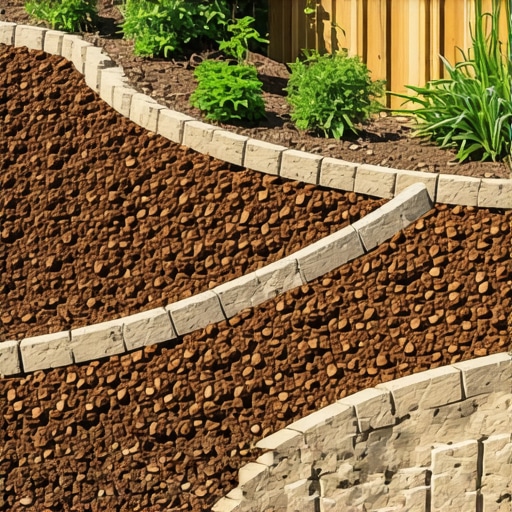
“A retaining wall doesn’t fail because of the stone; it fails because of the water trapped behind it.” – Hardscape Engineering Axiom
The 5-Step 2026 Soil Restoration Checklist
- Core Aeration: Pull 3-inch plugs around the drip line to alleviate compaction.
- pH Adjustment: Aim for 6.5. Use elemental sulfur to lower or lime to raise.
- Inoculation: Add endo-mycorrhizae to the root zone to assist water absorption.
- Mulch Management: Never pile mulch against the root flare. Use 2 inches of shredded hardwood.
- Irrigation Calibration: Deep soak once a week. Frequent shallow watering creates weak roots.
How do I identify fungal wilt vs. drought stress?
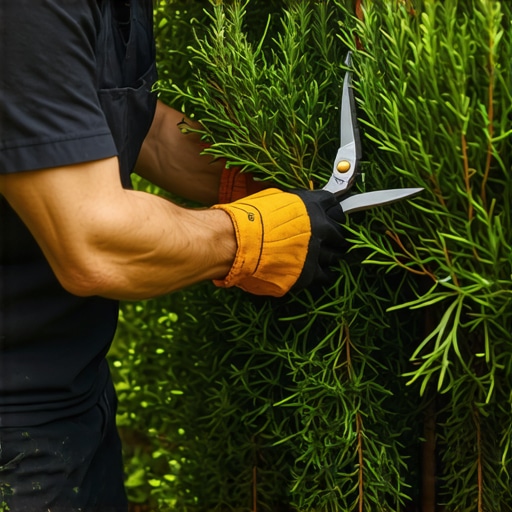
Check the stems. Drought stress causes a uniform droop across the entire plant that usually recovers overnight. Fungal wilt, such as Verticillium, often affects one side of the plant or specific branches first. If you see dark streaks in the xylem when you prune a dead branch, you have a soil pathogen. There is no cure for Verticillium; you have to replace the soil or move the bed. It is harsh, but it is the truth. Gardening isn’t always about saving things; it is about knowing when to excavate and start over correctly.
Long-Term Maintenance and Lawn Care Synergy
Your lawn care routine impacts your roses. If you are using broadleaf weed killers on your grass, the drift or leaching can cause rose leaves to curl and wilt. Roses are hypersensitive to dicamba and 2,4-D. Keep your chemicals away from the beds. Maintain a 12-inch buffer zone of hardwood mulch between your turf and your roses. This prevents mower blight and chemical crossover. It also keeps your string trimmer from chewing up the bark. Protect the cambium layer. If that is damaged, the plant cannot move water. It will die. Fix the dirt, protect the stem, and the 2026 season will take care of itself. No fluff. Just physics.

![Fixing 2026 Broken Drip Irrigation Lines [Easy]](https://lawnmajesty.com/wp-content/uploads/2026/06/Fixing-2026-Broken-Drip-Irrigation-Lines-Easy.jpeg)