![Why Your 2026 Concrete Driveway is Cracking [Fix]](https://lawnmajesty.com/wp-content/uploads/2026/06/Why-Your-2026-Concrete-Driveway-is-Cracking-Fix.jpeg)
Why Your 2026 Concrete Driveway is Cracking [Fix]
The Anatomy of a Concrete Failure
A hairline crack today is a structural disaster by 2026. Most homeowners view concrete as a permanent, immovable mass, but as a hardscape foreman, I see it as a rigid bridge spanning a constantly shifting environment. I recently got called out to tear up a $30,000 driveway that was sinking because the previous contractor failed to address the sub-base. The slab was five inches thick, but it was sitting on uncompacted clay. When the first freeze-thaw cycle hit, the hydrostatic pressure from the trapped water pushed the slab upward, and with no flexibility or proper base, the concrete snapped like a dry cracker. You cannot cheat physics on a driveway install.
Subgrade Compaction: The Silent Killer of 2026 Driveways
Driveway cracks usually stem from improper subgrade preparation, where the soil was not compacted to at least 95 percent Proctor density before the pour. If the earth beneath the slab moves due to moisture or settling, the rigid concrete must break to accommodate that shift.
“A concrete slab is only as strong as the ground beneath it; 90 percent of structural failures start in the soil, not the mix.” – Hardscape Engineering Axiom
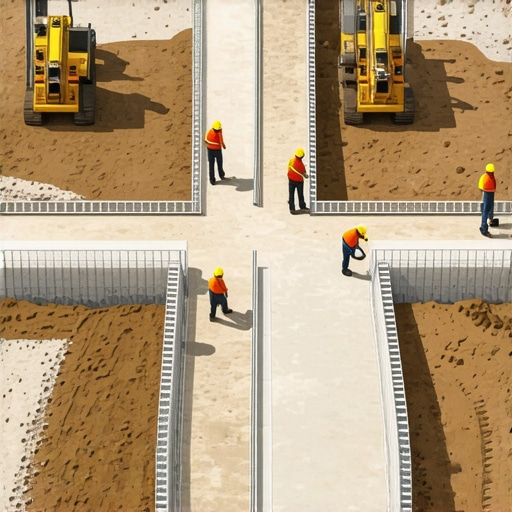
In many cases, contractors leave organic material like roots or topsoil under the pour. As that material rots, it creates a void. Without support, the weight of a 5,000-pound SUV will inevitably shear the concrete. You must excavate down to the subsoil, remove all organics, and use a vibratory plate compactor until the ground feels like rock. Don’t skip this. [IMAGE_PLACEHOLDER_1]
The Engineering of the Mix: Why 3,000 PSI Isn’t Enough
For a driveway intended to last until 2026 and beyond, using a standard 3,000 PSI mix is a fundamental mistake that leads to surface scaling and structural fissures. High-performance driveways require a minimum of 4,000 PSI concrete with air-entrainment additives to survive regional weather shifts. Air-entrainment creates microscopic bubbles that allow water to expand when it freezes without shattering the concrete matrix. If your contractor is adding too much water to the truck on-site to make it easier to pour, they are diluting the cement paste and lowering the final strength of your investment. It will rot.
How thick should a residential concrete driveway be for heavy trucks?
A standard passenger car driveway should be 4 inches thick, but if you expect delivery trucks or heavy SUVs, you must move to a 6-inch reinforced slab. Increasing the thickness from 4 to 6 inches increases the load-bearing capacity by nearly 50 percent. Always ensure the sub-base consists of at least 4 to 6 inches of compacted 3/4-inch modified stone.
| Material Type | Compaction Rating | Drainage Capability | Best Use Case |
|---|---|---|---|
| 3/4-inch Modified Stone | Excellent | Moderate | Primary Load Bearing Base |
| Clean #57 Stone | Good | High | Under-slab Drainage |
| Bank Run Gravel | Poor | Low | Low-traffic Fill Only |
Control Joints and the 10-Foot Rule
Concrete is guaranteed to do two things: get hard and crack. Control joints are intentional weak points cut into the slab to tell the concrete exactly where to crack so it stays hidden. A common error is spacing these joints too far apart. For a 4-inch slab, joints should be no more than 10 feet apart. If you see a crack running diagonally across a large section of your driveway, it is likely because the contractor waited too long to saw-cut the joints or spaced them 15 to 20 feet apart.
“Joints should be spaced at intervals of 24 to 30 times the slab thickness to effectively control random cracking.” – American Concrete Institute (ACI) Standards
What is the best way to repair deep driveway cracks?
The only permanent fix for a deep structural crack is to rout it out, clean it, and apply a high-modulus epoxy or a polyurethane sealant. Avoid the cheap bags of gray caulk at big-box stores. You need a material that can bond to the concrete walls and remain flexible enough to handle the 2026 thermal expansion cycles. If the slab is heaving, you may need to mud-jack or foam-inject the void beneath it before sealing.
The Pre-Pour Inspection Checklist
- Verify all organic topsoil is removed to a depth of at least 8 inches.
- Ensure the sub-base is compacted using a mechanical tamper or roller.
- Confirm #4 rebar is installed on chairs, not laying on the dirt.
- Check that the forms are sloped at 1/8 inch per foot for proper drainage.
- Confirm the concrete mix design specifies 4,000 PSI with 5 percent air entrainment.
Remediation and Maintenance for Long-Term Durability
If your 2026 driveway is already showing signs of distress, the fix depends on the root cause. For surface scaling, a high-strength resurfacer can provide a cosmetic and functional update, but it won’t fix a sinking base. If the cracks are wider than 1/4 inch, you are looking at a subgrade failure. In this scenario, cutting out the failed section, stabilizing the soil with crushed stone, and re-pouring with dowels into the existing slab is the only way to stop the spread. While the internet tells you to water the concrete while it cures, you actually need a chemical curing compound to seal in the moisture during the first 28 days to reach maximum PSI. Stop hiring the cheapest bid. High-end hardscaping is about what you don’t see under the surface. It is about engineering, not just aesthetics.

![Build a $1000 2026 Flagstone Patio [DIY Step-by-Step]](https://lawnmajesty.com/wp-content/uploads/2026/05/Build-a-1000-2026-Flagstone-Patio-DIY-Step-by-Step.jpeg)