Why Your 2026 Grass Seed Isn’t Growing [Soil Fix]
The Forensic Autopsy of a Failed Lawn
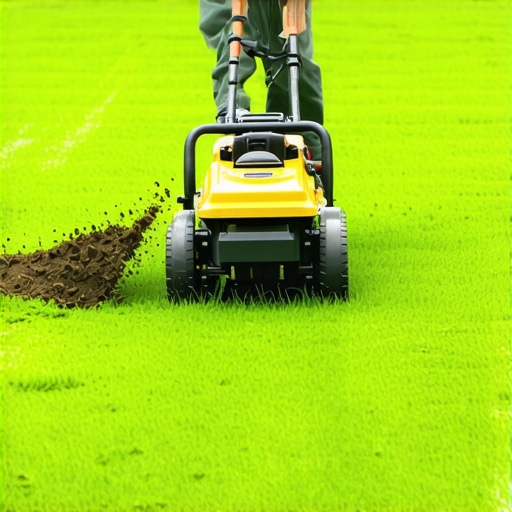
Your 2026 grass seed is failing because the soil environment lacks the biological and chemical architecture to support seedling emergence or root establishment. Most homeowners ignore cation exchange capacity and bulk density, leaving expensive turfgrass cultivars to rot in a high-acid or compacted dead zone. If the seed is sitting on top of a hard pan or swimming in poorly drained clay, it will die. It is that simple. I have spent two decades looking at dirt, and I can tell you that the seed is rarely the problem: it is the medium. I recently walked onto a job site where a homeowner had spent four thousand dollars on premium A-List fescue seed only to watch it turn into brown mush. They called me in a panic after they completely torched their front lawn by applying a massive dose of triple-19 fertilizer directly onto the new sprouts. They thought more was better. Instead, they created a salinity spike that dehydrated the coleoptiles from the inside out. The soil was literally sucking the life out of the plants. This is the chemical nightmare I see every spring. You cannot fix a structural soil failure with a bag of chemicals. You have to understand the rhizosphere.
“Soil pH is the single most important chemical property of the soil because it controls the availability of all essential plant nutrients.” – Penn State Agricultural Extension
The Chemistry of Germination Failure
Seed germination fails when soil pH levels fall outside the 6.2 to 7.0 range, which effectively locks out phosphorus and nitrogen from being absorbed by the embryonic root. When your soil is too acidic, aluminum toxicity can also stunt the growth of new turfgrass roots before they even break the surface. If you did not perform a Slurry Test or a professional soil analysis before throwing seed down, you were gambling with your money. I see it every day: people buy the most expensive seed but plant it in soil with a pH of 5.2. At that level, your fertilizer is basically inert. You might as well be throwing dollar bills into a paper shredder. We need to talk about imbibition. This is the process where the seed absorbs water. If your soil has a high sodium adsorption ratio, the water cannot penetrate the seed coat effectively. The seed sits there, dormant, until a fungus like Pythium or Rhizoctonia decides to eat it.
How long does it take for grass seed to germinate?
Grass seed typically takes between 7 and 21 days to germinate, depending on the turfgrass species, soil temperature, and moisture consistency. For 2026, climate shifts mean you must monitor soil heat flux carefully: if the ground is below 55 degrees Fahrenheit, the seed will remain quiescent.
| Soil Component | Optimal Level | Impact on Growth |
|---|---|---|
| Soil pH | 6.5 – 6.8 | Nutrient bioavailability |
| Organic Matter | 5% – 7% | Water holding capacity |
| Phosphorus (P) | 30-50 ppm | Initial root development |
| Bulk Density | < 1.4 g/cm3 | Root penetration depth |
The Invisible Killer: Bulk Density and Pore Space
Soil compaction kills new grass by eliminating the macropores needed for oxygen exchange and root elongation, essentially suffocating the plant at a microscopic level. When the bulk density of your soil exceeds 1.6 grams per cubic centimeter, roots cannot physically push through the earth. It is like trying to grow a plant in a brick.
“A lawn is only as good as its pore space; without at least 25 percent air porosity, root systems will fail due to anaerobic conditions.” – Agronomy Manual Section 4
My crew never starts a seeding job without checking the compaction layers. We use a penetrometer. If that tool does not slide in easily, we know we have to pull core aerations or use a subsurface ripper. You cannot just scratch the surface with a metal rake and expect results. You need seed-to-soil contact. This means the seed must be nestled into the earth, not sitting on a bed of thatch or organic debris. Thatch is the enemy of 2026 lawn care. It acts like a sponge, soaking up the water and keeping it away from the seed, while providing a breeding ground for turf pathogens.
Why is my grass seed not germinating after 3 weeks?
Your grass seed is likely failing due to poor seed-to-soil contact, inadequate moisture, or extreme soil compaction that prevents the radicle from penetrating the surface. If the seed has dried out even once after the initial swelling, the germination process has stopped permanently and the seed is dead.
The 2026 Soil Fix Protocol
To fix your soil for 2026, you must implement a remediation strategy that includes mechanical aeration, calcitic lime applications, and the integration of humic acid to improve nutrient cycling. This is not a one-day project. It is a biological transition. First, you need to strip back the failures of the past. If you have a fungal infestation from over-watering, you need to treat the soil before you re-seed. Don’t skip this. Here is the checklist my foremen use before we even put a single seed in the hopper:
- Perform a comprehensive soil test for N-P-K and micronutrients.
- Apply pelletized gypsum if the soil has high clay content to displace sodium.
- Aerate the soil to a depth of at least 3 inches using hollow-tine coring.
- Top-dress with a thin layer of screened compost to introduce beneficial microbes.
- Ensure the irrigation system is calibrated to deliver 0.1 inches of water twice daily.
The Science of the Seed Bed
A successful seed bed requires a granular structure where the soil particles are small enough to surround the seed but large enough to allow for gas exchange. If you till your soil into a fine powder, the first rain will turn it into a crusted surface. This crust is an impenetrable barrier for a tiny fescue sprout. We use cultipackers. A cultipacker presses the seed into the ground at the perfect depth: exactly one-eighth to one-quarter of an inch. Any deeper and the seed runs out of endosperm energy before it reaches the light. Any shallower and it dries out in the sun. It is a game of millimeters. While the internet tells you to water every day, turf grass actually needs deep, infrequent watering: exactly 1 inch per week: to force roots to chase the water down once the initial 21-day establishment period is over. Constant light misting after the first month creates shallow roots that will shrivel the first time the temperature hits 90 degrees. You are training the plant to be weak. Stop it.
![Kill 2026 Crabgrass without Chemicals [Vinegar Method]](https://lawnmajesty.com/wp-content/uploads/2026/05/Kill-2026-Crabgrass-without-Chemicals-Vinegar-Method.jpeg)