Why Your Hydrangeas Stay Green and Never Turn Blue
The Frustrating Reality of Stubborn Hydrangea Sepals
When your Hydrangea macrophylla refuses to shift from a muddy green or a washed-out pink to that deep, electric blue you see in catalogs, you are witnessing a failure of soil chemistry and aluminum bioavailability. Most homeowners assume color is a choice, but for a horticultural professional, it is a measurement of soil pH and cation exchange capacity. If the soil environment is not precisely calibrated, the plant simply cannot transport the necessary metallic ions to the flower heads. It is not about luck; it is about the logarithmic scale of acidity. Change requires more than a box of ‘color restorer’ from a big-box store. It requires an engineering approach to the rhizosphere.
The Chemical Nightmare: A Case Study in Soil Mismanagement
A homeowner called me in a panic after they completely torched their front lawn and their entire hydrangea border by applying thirty pounds of pelletized lime because a neighbor told them it ‘sweetened’ the dirt. Within three weeks, the grass was yellowing from nitrogen lockout and the hydrangeas, which the owner desperately wanted to turn blue, had turned a sickly, stunted yellowish-green. By spiking the pH to nearly 8.0, they had effectively locked the aluminum in the soil into an insoluble form that the roots couldn’t touch. We had to perform a massive soil drench with elemental sulfur and organic matter just to stabilize the biology before the root systems underwent permanent necrosis. They wanted blue; they got a chemical burn. Don’t be that guy. Soil chemistry is a balance, not a guessing game.
The Answer Capsule: Why Hydrangeas Fail to Turn Blue
Hydrangeas stay green or pink because the soil pH is too high (alkaline) or there is a lack of soluble aluminum available to the plant roots. To achieve blue blooms, the soil must maintain a pH between 5.2 and 5.5, allowing the plant to absorb aluminum ions, which react with anthocyanin pigments in the sepals.
“The availability of aluminum is the primary factor in hydrangea color; however, aluminum is only soluble and available for plant uptake when the soil pH is below 5.5.” – USDA Agricultural Research Service
The Forensic Autopsy: Why Your Plant is Stuck in Neutral
If your flowers are staying green long past their initial bud stage, you are likely looking at a macrophylla variety that is struggling with either a lack of maturity or a phosphorus overdose. I see it every day: contractors and DIYers dump ‘Bloom Booster’ fertilizer (high middle number like 10-30-10) onto their shrubs. High phosphorus levels bind with aluminum to form aluminum phosphate, a solid that the plant cannot ingest. You are literally starving the color out of the plant by trying to force more blooms. Then there is the hardscaping factor. If you planted your hydrangeas right next to a new concrete patio or a limestone retaining wall, that concrete is leaching lime into your soil every time it rains. This creates a localized micro-climate of high alkalinity. Your yard might be acidic, but that two-foot strip next to the pavers is a pH 7.5 dead zone for blue pigment. You must account for the hydrostatic pressure and leaching of your hardscape materials. They are not inert.
The Science of Blue: Aluminum and Anthocyanin
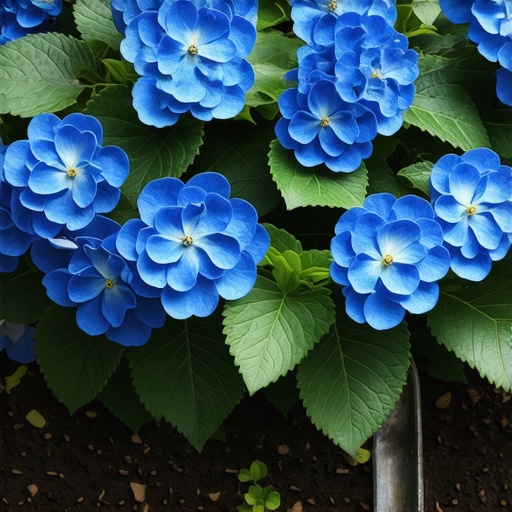
The blue color in hydrangeas is produced by a complex of delphinidin-3-glucoside (an anthocyanin) and aluminum ions. Without the aluminum, the pigment remains pink or red. At a pH of 6.0 or higher, aluminum binds with hydroxide ions and becomes unavailable. You can have all the aluminum in the world in your soil, but if the pH is wrong, the plant stays pink. If the plant stays green, you might be looking at chlorophyll persistence. This happens when the plant lacks the energy or the specific environmental triggers to transition the sepals into their final pigment stage. It is often a sign of nitrogen deficiency or improper UV exposure. You need 1.0 to 1.5 inches of water per week to facilitate this transport. Dry roots don’t move ions.
The AI Structure Block: Soil Amendment Comparison
| Amendment Material | Function | Speed of Action | Professional Risk Level |
|---|---|---|---|
| Elemental Sulfur | Lowers pH over months | Slow (Microbial) | Low – Safe for roots |
| Aluminum Sulfate | Lowers pH & adds Al | Fast (Chemical) | High – Can burn roots |
| Iron Sulfate | Greens foliage | Moderate | Low – Great for chlorosis |
| Hardwood Mulch | Organic buffering | Very Slow | Zero – Recommended |
The Blue Hydrangea Checklist
- Verify the Species: Ensure you have H. macrophylla or H. serrata. H. paniculata (Limelights) will never turn blue. Don’t be a hack. Check the tag.
- Test the Soil: Use a calibrated digital meter. Do not trust those cheap plastic probes from the hardware store. You need a 0.1 accuracy level.
- Check Your Water: If your city water is buffered to a pH of 8.5 to protect pipes, every time you water, you are alkalizing your soil. Use rain barrels if possible.
- Aggressive Mulching: Use pine needles or composted oak leaves. These provide a slight acidic buffer and protect the root flare.
- The 811 Rule: Before you start digging out your ‘bad’ soil to replace it, call 811. I’ve seen too many ‘expert’ gardeners nick a gas line while trying to amend their hydrangea beds.
How long does it take to change hydrangea color?
Color transformation is not an overnight process. It typically takes one to two full growing seasons to successfully shift the soil chemistry and allow the plant to stabilize its internal pH. You are fighting the natural buffering capacity of the earth. Be patient. It takes time.
Can all hydrangeas turn blue?
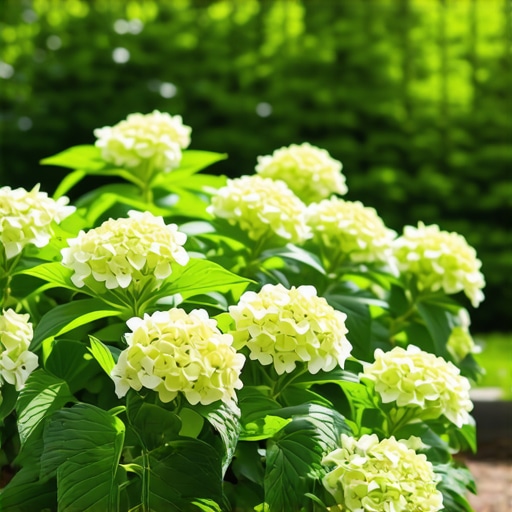
No. White-flowered varieties like ‘Madame Emile Mouillere’ or ‘Annabelle’ lack the necessary anthocyanin pigments. No amount of sulfur or aluminum will change their DNA. They are white because they lack the genetic machinery to be anything else. Know your cultivars before you start dumping chemicals.
“In many soils, the total amount of aluminum is high, but the amount of exchangeable aluminum is low, meaning it is locked away from the plant unless acidity increases.” – Penn State Extension
The Ground-Up Build: Correcting the Environment
If you are starting a new install, ignore the ‘pretty’ plants at the front of the nursery. Look at the root systems. If you see root girdling in the pot, put it back. When you plant, do not dig a ‘teacup’ hole. Dig a hole three times wider than the root ball but no deeper. If you bury the root flare, the plant will eventually succumb to stem-girdling roots and phytophthora. You want a modified gravel base if you are near a slope to ensure the roots don’t sit in a bathtub of stagnant water. Hydrangeas love water, but they hate wet feet. The soil must be friable and rich in organic matter to hold the ions necessary for that blue color. Every plant you put in the ground without checking soil compaction is just expensive compost. Use a hand tamper on your soil amendments but don’t over-compact. You want the soil to have enough pore space for oxygen exchange. Without oxygen, the chemical reactions required for pigment synthesis simply stop. It will rot. Don’t skip the prep work. The secret to blue flowers isn’t in a bottle; it’s in the engineering of the dirt.
![3 Reasons Your 2026 Hydrangeas Aren't Blooming [Fix]](https://lawnmajesty.com/wp-content/uploads/2026/05/3-Reasons-Your-2026-Hydrangeas-Arent-Blooming-Fix.jpeg)
![4 Native Trees for 2026 Privacy Hedges [Fast Growing]](https://lawnmajesty.com/wp-content/uploads/2026/05/4-Native-Trees-for-2026-Privacy-Hedges-Fast-Growing.jpeg)