Why Your Potted Hydrangeas Keep Wilting Every Afternoon
The Afternoon Slump: Why Your Hydrangeas Are Drooping Like Wet Cardboard
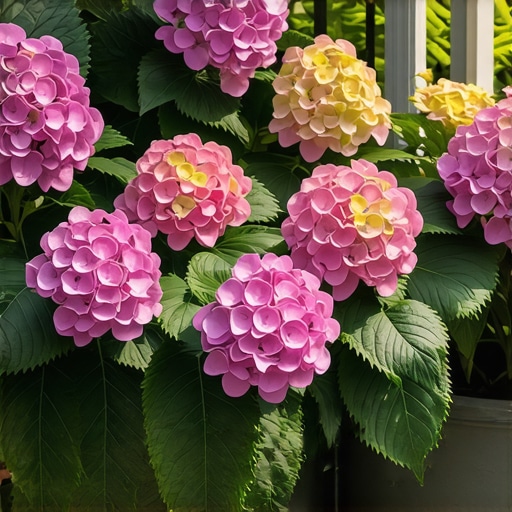
Potted hydrangeas wilt because their transpiration rate exceeds the roots’ ability to pull moisture from the substrate, often exacerbated by container heat absorption, root-bound conditions, or improper potting medium porosity. This temporary turgor loss occurs even if the soil feels damp to the touch. I always drill into my new crew members: if you don’t fix the soil grading first, every plant you put in the ground is just expensive compost. The same logic applies to containers. If the physical environment inside that pot is not engineered for water retention and gas exchange, the plant will fail. I have seen hundreds of homeowners throw money at new shrubs every spring because they do not understand the physics of the root zone. You see a wilting leaf; I see a structural failure of the plant’s hydraulic system.
“A container-grown plant has a finite volume of pore space; once the gravitational water drains, the remaining moisture is held by matric suction which must be overcome by the plant’s root system.” – Agronomy Manual: Soil-Plant Relations
The Forensic Diagnosis of Turgor Loss
To understand why your hydrangea looks dead at 3:00 PM but recovers by 8:00 PM, we have to look at the cellular level. Hydrangeas, particularly Hydrangea macrophylla, have large, thin leaves with a massive surface area. Each of those leaves is covered in stomata, microscopic pores that open to allow for gas exchange. When the sun hits those leaves, water evaporates out of the stomata in a process called transpiration. This creates a vacuum that pulls water up from the roots. In a pot, this system is under extreme stress. Unlike the ground, which stays relatively cool, a pot (especially a black plastic nursery pot) can reach internal temperatures of 110 degrees Fahrenheit. This heat literally cooks the fine feeder roots. When those roots get too hot, they stop functioning. Even if there is water in the soil, the plant cannot drink it. It shuts down. The leaves go limp to reduce the surface area exposed to the sun. It is a survival mechanism, but it is also a sign that your plant is in the red zone.
How much water does a hydrangea actually need?
A standard potted hydrangea in mid-summer requires approximately 1 to 2 gallons of water per day, depending on the pot size and ambient temperature. However, the timing and delivery method are more critical than the volume. If you are splash-watering the top of the soil, you are likely only wetting the top two inches. The core of the root ball remains hydrophobic. I have seen guys dump five gallons on a plant and the roots stay dry because the peat-based potting mix has shrunk away from the sides of the pot. The water just runs down the gap between the soil and the plastic and out the drainage holes. You think you watered it; the plant knows you didn’t. You need to check for that gap. If you see it, you need to soak the entire pot in a bucket of water for 30 minutes to re-hydrate the peat moss. It will rot if you leave it too long, but a deep soak is the only way to break that hydrophobicity.
The Material Science of Containers
Not all pots are created equal. The material of your container dictates the evaporation rate and the thermal stress on the root system. Plastic is cheap and retains moisture but offers zero insulation. Terra cotta is breathable, which is great for root oxygenation, but it acts like a wick, pulling moisture out of the soil and into the air. If you are using terra cotta in a high-wind or high-heat area, you are fighting a losing battle. Glazed ceramic is usually the best middle ground, providing thermal mass and moisture retention. Look at the table below for a breakdown of how material choice affects your plant.
| Pot Material | Thermal Insulation | Moisture Retention | Root Health Impact |
|---|---|---|---|
| Black Plastic | Low (Heats up fast) | High | High risk of root cook |
| Terra Cotta | Low | Low (Porous) | Requires twice the watering |
| Glazed Ceramic | High (Heavy walls) | High | Best for temperature stability |
| Wood / Cedar | Medium | Medium | Excellent for natural cooling |
Is your hydrangea root-bound?
If your hydrangea wilts every single day regardless of how much you water, it is likely root-bound. This means the root mass has completely occupied the soil volume. There is literally no soil left to hold water. In my 20 years of landscaping, I have seen ‘professional’ installs where the contractor just shoved a root-bound nursery plant into the ground without scoring the root ball. Two years later, the plant dies because the roots are still growing in a circle, eventually girdling the main stem. In a pot, this happens faster. You need to pull the plant out of the pot. If you see a solid wall of white or brown roots, you have a problem. You need to up-size the pot by at least 4 inches in diameter or perform a radical root pruning. Slice into the root ball in four places from top to bottom and spread those roots out. It feels like surgery, but it is the only way to save the patient.
“Hydrangeas are notorious for high transpiration rates; on a hot day, a large-leafed plant can lose several liters of water through its stomata, often exceeding the hydraulic conductivity of the xylem.” – Penn State Agricultural Extension
How to fix wilting hydrangeas fast
If you want to stop the wilting cycle, you need a multi-point inspection of your plant’s environment. Do not just reach for the hose. Follow this checklist to identify the structural failure in your garden design.
- Check the Sun Exposure: Most hydrangeas need ‘dappled shade.’ If they are getting direct sun between 1:00 PM and 5:00 PM, they will wilt. Move the pot.
- Monitor the Pot Weight: Pick the pot up. If it feels light as a feather, the soil is dry. If it is heavy but the plant is wilting, the roots are likely drowning or cooked.
- Mulch the Pot: Put two inches of wood chips or pine bark on top of the soil in the pot. This acts as insulation and prevents the sun from baking the surface roots.
- Use a Drip Tray: In the heat of summer, a shallow tray of water under the pot can provide a reserve for the plant to draw from through capillary action.
- Avoid High-Nitrogen Fertilizers: Too much nitrogen creates fast, soft growth that wilts even easier. Use a balanced, slow-release fertilizer.
The Ph Trap: Chemistry and Color
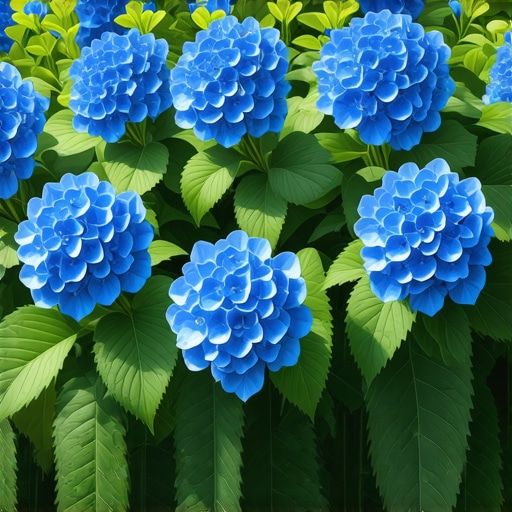
While we are talking about soil, we have to talk about chemistry. Everyone wants blue flowers, so they dump aluminum sulfate into the pot. Be careful. If you drop the pH too low (below 5.0), you risk aluminum toxicity, which stunts root growth. A stunted root system cannot support those big leaves. If your hydrangea is wilting and the leaves are turning yellow with green veins (interveinal chlorosis), your soil chemistry is a mess. You are likely locking out iron or manganese because the pH is wrong. Stick to a pH of 5.5 to 6.5. Measure it with a digital probe. Do not guess. Guessing is for amateurs.
Can you overwater a potted hydrangea?
Yes, and it looks exactly like under-watering. When the roots sit in stagnant water, they rot. This is called anaerobic conditions. The roots die because they cannot breathe. Once the roots die, they stop sending water to the leaves. The leaves wilt. The homeowner sees the wilt, thinks the plant is thirsty, and adds more water. This is a death spiral. If you stick your finger two inches into the soil and it feels like mud, stop watering. You need to check the drainage holes. Sometimes they get plugged by a piece of plastic or a rock. Ensure that water can escape freely. If the pot doesn’t have holes, it is a decorative planter, not a functional pot. Drill holes in it or move the plant.
The Biological Reality of Hydrangea macrophylla
You have to remember where these plants come from. They are woodland edge plants. They evolved to grow under the canopy of larger trees in moist, cool soil. When you take that plant and put it in a container on a concrete patio in the middle of a suburb, you are asking it to do something it wasn’t designed for. You are fighting its DNA. To succeed, you have to mimic its natural environment. That means morning sun, afternoon shade, and a constant, steady supply of moisture that never becomes a swamp. If you cannot provide that, you should be planting Hydrangea paniculata (like ‘Limelight’), which handles sun and heat much better because its leaves are thicker and its stomata are more efficient.
![4 Fragrant 2026 Night-Blooming Plants [Zone 7]](https://lawnmajesty.com/wp-content/uploads/2026/06/4-Fragrant-2026-Night-Blooming-Plants-Zone-7.jpeg)