
4 2026 Best Tools for Pruning Overgrown Hedges
4 2026 Best Tools for Pruning Overgrown Hedges
I always drill into my new crew members: if you do not understand how a plant heals, you are just a vandal with a sharp object. I recently watched a competitor try to renovate a fifty year old Boxwood hedge with dull blades and zero plan. By July, the entire structure was a graveyard of blight and fungal infections because they crushed the vascular tissue instead of slicing it. It was not just ugly; it was a fifteen thousand dollar liability for the homeowner. In my twenty years running a landscape firm, I have learned that your results are limited by the physics of your edge. You cannot manage high-end garden design or complex landscaping if you are using big-box store shears that flex under pressure. We are talking about surgical intervention on a living organism. When you deal with overgrown hedges that have developed thick, woody interiors, you need tools that respect the biology of the plant while providing the mechanical advantage to clear mass. This is about managing the cambium layer and ensuring the terminal buds have a chance to recover without the stress of jagged, torn fibers. We do not just cut; we engineer a growth environment.
The Essential Toolkit for Hedge Restoration
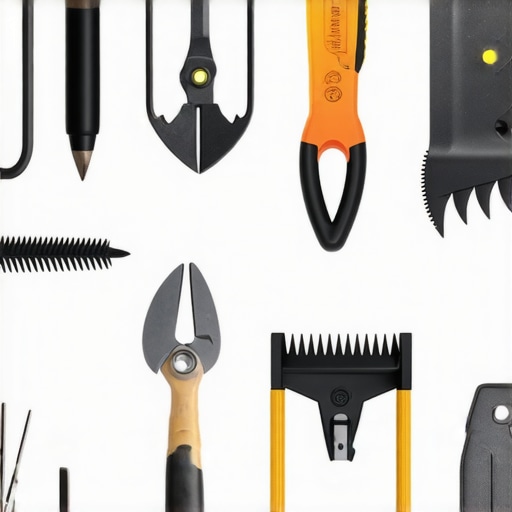
Using **professional-grade bypass loppers**, **high-torque battery trimmers**, **stiff-blade pruning saws**, and **telescopic pole pruners** allows for precise removal of woody biomass while protecting the plant’s vascular system and ensuring rapid wound occlusion in 2026 landscaping projects. These tools must be maintained at specific sharpness levels to prevent the crushing of the xylem and phloem, which are critical for nutrient transport during the recovery phase of an overgrown hedge.
“A pruning cut is a wound that the plant must seal through compartmentalization; the cleaner the cut, the faster the callous tissue forms to prevent pathogen entry.” – Horticultural Standards Manual
Tool 1: High-Torque 80V Brushless Battery Trimmers
Selecting a **high-torque 80V brushless battery trimmer** with a 1.5 inch blade gap ensures that you can slice through thick, overgrown stems without the motor stalling or the blades tearing the bark. For 2026, the industry has shifted toward high-capacity lithium-ion systems that provide the constant RPM necessary for a clean shear, which is vital for preventing the ‘chewed’ look often seen with underpowered consumer units. When we are reclaiming a property, we look for a stroke rate of at least 3,200 strokes per minute. This speed ensures that the blade spends less time in contact with the wood, reducing heat friction that can cauterize and damage the very cells responsible for healing. The metallurgy of the blades matters here. We look for laser-cut, diamond-ground steel. If the blade is stamped, it is trash. A stamped blade has a rounded edge from the factory that will never achieve the surgical precision required for a high-end Taxus or Hornbeam hedge. You need a tool that treats a two-inch branch like a sheet of paper.
How much modified gravel do I need for a patio base?
While we are discussing the perimeter of your garden design, it is important to remember that any hardscaping nearby requires a solid foundation; typically, you need a minimum of six inches of **compacted 21A or CR-6 modified gravel** to ensure structural integrity and proper drainage beneath your pavers. This prevents the settling that often ruins the alignment of your hedges and walkways.
Tool 2: Compound-Action Bypass Loppers
The **compound-action bypass lopper** is the primary tool for thinning out the interior of an overgrown hedge because it uses a gear-driven mechanism to multiply cutting force, allowing for the clean removal of branches up to 2.5 inches in diameter. Unlike anvil loppers, which crush the stem against a flat surface, the bypass blade slides past a counter-blade like scissors. This is non-negotiable for living wood. When you crush a stem, you destroy the plant’s ability to move water to the wound site. We use loppers with SK5 high-carbon steel blades. These hold an edge through a full day of hitting hard Oak or Privet stems. The handles must be aircraft-grade aluminum or reinforced fiberglass to prevent flexing. If the tool flexes, the energy is lost, and the cut becomes uneven. We teach our apprentices to listen for the ‘snap’ of a clean cut. If it sounds like a crunch, the blade is dull or the technique is wrong. You want to see a flat, smooth surface on the remaining branch that looks almost polished.
| Tool Category | Key Specification | Best Use Case | 2026 Innovation |
|---|---|---|---|
| Battery Trimmer | 80V / 3,200 SPM | Exterior Shaping | Smart Load Sensing Motors |
| Bypass Loppers | Compound Gearing | Woody Interior Thinning | Reduced Friction Coatings |
| Pruning Saw | Tri-Edge Teeth | Large Branch Removal | Impulse-Hardened Steel |
| Pole Pruner | Articulating Head | High-Reach Canopy Work | Carbon Fiber Shafts |
Tool 3: Tri-Edge Folding Pruning Saws
A **tri-edge folding pruning saw** is essential for navigating the tight interior spaces of a dense, overgrown hedge where loppers cannot fit, providing a pull-stroke action that removes material on the draw to prevent blade binding. The TPI (teeth per inch) should be around 7 to 8 for aggressive removal of large limbs. The ‘tri-edge’ refers to the teeth being ground on three sides, which creates a narrow kerf in the wood. This allows the blade to glide through without the friction that causes heat buildup. Heat is the enemy of the cambium. We have seen plants go into shock because a dull saw generated enough heat to effectively cook the surrounding tissue. In our firm, we retire a saw blade the moment it requires more than ten pounds of pull-pressure to move through a three-inch limb. If you are struggling, you are hurting the plant. These saws are the scalpels of our trade. They allow us to reach into the heart of a hedge and remove the deadwood that blocks airflow and light, two things every hedge needs to stay healthy from the inside out.
“Poor drainage and lack of airflow are the primary drivers of root rot and fungal blights in dense hedge rows.” – Agricultural Extension Office Bulletin
Tool 4: Telescopic Carbon Fiber Pole Pruners
The **telescopic carbon fiber pole pruner** allows a technician to maintain a 90-degree cutting angle on the top of high hedges without the instability of a ladder, ensuring a level finish and proper weight distribution during the cut. For 2026, the shift to carbon fiber has reduced the weight of these ten-foot tools by nearly forty percent. This is not about comfort; it is about precision. When a tool is heavy, the operator gets tired, and tired operators make sloppy cuts. An overgrown hedge often needs the ‘top’ lowered significantly to encourage lateral growth. If that cut is not perfectly level, water will pool on the flat surfaces of the cut limbs, leading to rot. An articulating head is mandatory. It allows us to set the blade at a 45-degree angle to the branch, which is the optimal geometry for shedding water and promoting rapid healing. We do not accept anything less than a clean, angled cut that directs moisture away from the center of the stem.
When should you hard prune an overgrown hedge?
The best time for hard pruning is late winter or early spring before the first flush of growth, as the plant is still dormant and the sap has not yet begun to flow heavily, which minimizes stress and nutrient loss. This timing is critical for species like Boxwood or Holly, which can be susceptible to winter burn if pruned too late in the fall.
The Biological Reality of the Cut
Every time we make a cut, we are triggering a hormonal response in the plant. By removing the terminal bud—the one at the very tip—we stop the production of auxins that suppress the growth of lateral buds lower down the stem. This is how we turn a leggy, thin hedge into a dense wall of green. But you cannot do this if your tools are ripping the tissue. A ripped stem results in ‘die-back,’ where the wood dies several inches below the cut, often taking the new buds with it. This is why we avoid ‘mow-and-blow’ contractors who use dull gas trimmers on everything. They are literally starving the plant of its ability to regenerate. We look for the ‘green ring’ of the cambium immediately after the cut. If that ring is intact and bright, the plant will recover in weeks. If it is brown or shredded, we have failed. Professional lawn care and landscaping require this level of microscopic attention. It is the difference between a hedge that lasts decades and one that needs to be ripped out in five years.
- Inspect all blades for nicks or burrs before the first cut.
- Sanitize tools with isopropyl alcohol between different plants to prevent disease spread.
- Ensure the bypass blade is tight against the hook to prevent bark tearing.
- Check battery levels to maintain consistent motor RPM throughout the job.
- Adjust the pivot tension on loppers to ensure they slice rather than crush.
The maintenance of these tools is just as important as the tools themselves. We sharpen our blades every morning using a diamond hone. We do not use grinders because the heat from a grinder will ruin the temper of the steel. Once the temper is gone, the blade will not hold an edge for more than ten minutes. We also use high-grade silicone lubricants that do not attract dust or grit. If you get grit in your pivot points, you are essentially sandpapering your tools every time you open them. This level of detail is what separates a professional landscaper from a hobbyist. Your yard is an investment in civil engineering and biology. Treat it with the respect it deserves by using the right steel for the job. The tools of 2026 are lighter, faster, and stronger, but they still require a human hand that understands the life cycle of the wood they are cutting.

![Stop Killing Your 2026 Boxwoods [Pruning Fix]](https://lawnmajesty.com/wp-content/uploads/2026/09/Stop-Killing-Your-2026-Boxwoods-Pruning-Fix.jpeg)