Stop Overwatering Your 2026 Garden: Soil Sensor Tips
The Death of the ‘Set It and Forget It’ Mentality
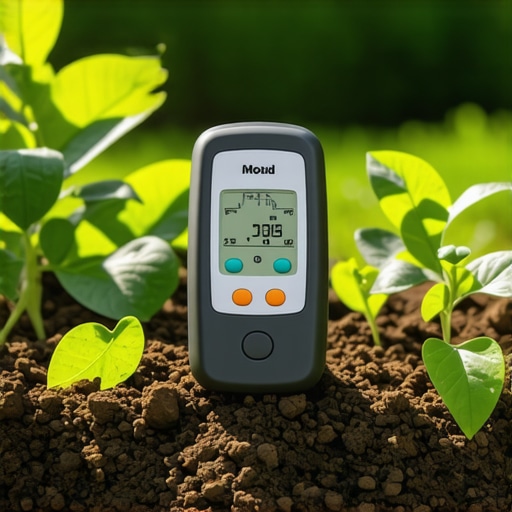
Stop treating your yard like a bathtub. To prevent anaerobic soil conditions and plant mortality in 2026, you must utilize soil moisture sensors that provide real-time volumetric water content (VWC) data. These sensors eliminate the guesswork by measuring the electrical permittivity of the soil, ensuring your irrigation system only fires when the root zone actually needs it.
A homeowner called me in a panic last season after they completely torched their front lawn. They had installed a beautiful, high-end fescue blend but were running their irrigation for twenty minutes every single morning, regardless of the humidity or recent rainfall. By the time I arrived, the soil smelled like a sulfur pit. The turf wasn’t thirsty; it was drowning. The roots had completely rotted away because there was no oxygen left in the pore spaces. They had spent $12,000 on sod and another $3,000 on ‘smart’ timers that weren’t smart enough to know the soil was at 45% VWC. It was a chemical and biological nightmare that could have been avoided with a $150 sensor and some basic engineering logic.
“Irrigation scheduling based on soil moisture sensing can reduce water use by 20% to 70% without sacrificing turf quality.” – Penn State Department of Plant Science
The Science of the Root Zone
Plants do not drink water; they trade it for carbon dioxide through transpiration. If your soil stays saturated, the gas exchange stops. We measure this through soil tension or matric potential. Most residential landscapes fail because the owner doesn’t understand the field capacity of their specific soil type. Sandy loam and heavy clay have vastly different drainage profiles. If you apply water at a rate faster than the percolation rate, you get runoff and wasted money.
[image_placeholder_1]
How deep do you bury a soil moisture sensor?
For most residential turf and garden beds, sensors should be placed at two distinct depths: one at 4 inches to monitor the active root zone and one at 8 to 12 inches to detect deep percolation and drainage efficiency. Placing sensors too shallow results in false dry readings while placing them too deep ignores the primary feeder roots of your plants.
| Soil Type | Field Capacity (VWC %) | Wilting Point (VWC %) | Management Target |
|---|---|---|---|
| Sandy Loam | 15-25% | 7-10% | 18% |
| Silt Loam | 25-35% | 12-17% | 28% |
| Clay | 35-45% | 20-25% | 38% |
What is the best soil sensor for a home garden?
The best soil sensors for 2026 are Time-Domain Reflectometry (TDR) or Capitance sensors that integrate via LoRaWAN or Wi-Fi to your master irrigation controller. Unlike cheap analog probes, these digital sensors account for soil salinity and temperature, providing a precise measurement of the water available to the plant rather than just the wetness of the dirt.
“A retaining wall doesn’t fail because of the stone; it fails because of the water trapped behind it.” – Hardscape Engineering Axiom
The 2026 Sensor Installation Checklist
- Calibration: Always calibrate your sensor to your specific soil texture before final burial.
- Contact: Ensure 100% soil-to-sensor contact; air pockets will result in erratic data and system failure.
- Placement: Install sensors in the driest part of the zone, not the wettest, to prevent localized dry spots.
- Wiring: Use waterproof heat-shrink connectors for all low-voltage splices to prevent corrosion from hydrostatic pressure.
- Monitoring: Set your controller to ‘Sensor Bypass’ only during maintenance or chemical applications.
Diagnosing the Forensic Failure
If you see yellowing leaves, don’t reach for the hose. First, check the osmotic stress levels. High salinity from over-fertilization can mimic drought symptoms. A high-quality sensor in 2026 will tell you the Bulk EC (Electrical Conductivity). If the EC is high and the moisture is high, you don’t have a water problem; you have a salt problem. Flush the soil, don’t drown it. Don’t skip the diagnostics. It will rot if you do.
![Fix 2026 Yellowing Evergreen Needles [Soil Fix]](https://lawnmajesty.com/wp-content/uploads/2026/05/Fix-2026-Yellowing-Evergreen-Needles-Soil-Fix.jpeg)