
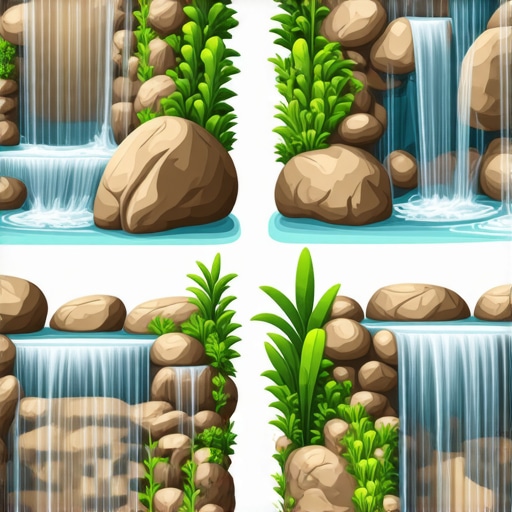
4 Backyard Waterfall Styles That Fit Smaller Spaces
The Engineering Reality of Small-Scale Water Features
Building a functional water feature in a limited footprint requires a strict adherence to hydraulic engineering and soil stabilization rather than just aesthetic placement. Backyard waterfall styles for small spaces center on maximizing vertical lift while minimizing the horizontal footprint through the use of subterranean reservoirs, high-efficiency pumps, and compact biological filtration systems. I recently got called out to tear up a $30,000 patio that was sinking because the previous contractor failed to account for the hydrostatic pressure of a leaking waterfall basin. The water had saturated the modified gravel base, turning the structural subgrade into a slurry. If you do not manage the water containment with 45 mil EPDM liners and proper geotextile underlayment, you are not building a garden feature; you are building a sinkhole. Most homeowners think a waterfall needs a massive pond, but in tight urban lots, the pond is the enemy. It collects debris, requires massive chemical balancing, and eats up square footage. We focus on ‘pondless’ tech where the water disappears into a gravel bed, keeping the pump cool and the maintenance low. Water weighs 8.34 pounds per gallon. When you start stacking 500 pound boulders on a slope, that soil needs to be compacted to a 95 percent Proctor density or the whole system will shift within two winters. This is applied physics, not just gardening. Success in small spaces is about managing the ‘Total Dynamic Head’ (TDH), which is the sum of the vertical lift and the friction loss created by the pipe diameter. If your pipe is too small, your pump works twice as hard and dies in half the time.
“A retaining wall doesn’t fail because of the stone; it fails because of the water trapped behind it.” – Hardscape Engineering Axiom
1. The Vertical Pondless Waterfall System
The pondless waterfall is the most efficient design for small yards because it utilizes a hidden underground basin filled with matrix blocks to store water volume without a visible pool. This setup eliminates the drowning hazard and the algae surface area associated with open water. You dig a hole, line it, fill it with ‘AquaBlox’ or similar structural voids, and cover it with river rock. The water falls, disappears through the stones, and is recirculated. It is a closed loop. The footprint can be as small as 3 feet by 3 feet. You must use a vault to house the pump so you can service it without digging up the whole feature. For a small drop of 2 to 3 feet, a pump pushing 1,500 GPH (Gallons Per Hour) is usually sufficient.
“The biological load of any water feature is directly proportional to the surface area available for nitrifying bacteria.” – Cornell Agricultural Extension
2. The Stacked Slate or Basalt Column
Basalt column fountains provide a high-impact architectural look by using natural igneous rock cores that are center-drilled to allow water to bubble over the top and coat the stone surface. This style is perfect for narrow side yards or patio corners where horizontal space is at a premium. The water clings to the texture of the stone through surface tension, creating a consistent sound without a massive splash radius. You need a basin that is at least twice the height of the tallest column to catch the ‘wind drift’ of the water. If you live in a freeze-thaw climate, these stones must be properly drained in winter to prevent the internal water from expanding and cracking the rock. Use a 1-inch flexible PVC pipe rather than corrugated tubing; the smooth interior walls reduce friction and keep the GPH high.
3. The Modern Weeping Wall
A weeping wall uses a vertical hardscape surface such as ledger stone or porcelain tile to create a thin film of moving water that requires only a few inches of depth at the base. It acts as a structural retaining wall and a water feature simultaneously. This is the go-to for modern garden design where clean lines are required. The key is the ‘spillway’ or ‘shear descent’ at the top. It must be perfectly level. Even a 1/16th of an inch tilt will cause the water to converge into a single stream rather than a broad sheet. We use stainless steel or UV-stabilized plastic spillways embedded into the masonry. This requires a dedicated GFI-protected electrical circuit and often an auto-fill valve to compensate for evaporation, as the thin sheet of water has a high surface-area-to-volume ratio.
4. The Recirculating Ceramic Urn
For the smallest spaces, recirculating ceramic urns offer a plug-and-play waterfall solution that can be installed in a single afternoon while still providing the sound of a natural creek. These are not the plastic junk you see at big-box retailers. High-end glazed ceramic or GFRC (Glass Fiber Reinforced Concrete) urns can weigh 200 pounds and last decades. The pump sits at the bottom of the urn or in a sub-grade basin. I prefer the sub-grade basin because it allows for a larger water reservoir, meaning you aren’t refilling it every two days in the July heat. Use a flow control valve to dial in the exact sound level. A heavy ‘glug’ sound is achieved with higher flow, while a ‘trickle’ is achieved by restricting the pump output. Don’t restrict the intake; that’s how you burn out a motor.
Waterfall Material Comparison Table
| Waterfall Style | Min. Footprint | Recommended GPH | Maintenance Level | Structural Load |
|---|---|---|---|---|
| Pondless Falls | 12 sq. ft. | 1500-3000 | Low | Moderate |
| Basalt Columns | 4 sq. ft. | 500-1000 | Low | High (Heavy Stone) |
| Weeping Wall | 2 sq. ft. | 1000-2000 | Medium | Very High |
| Ceramic Urn | 3 sq. ft. | 300-800 | Very Low | Low |
How much does a small backyard waterfall cost?
Professional installation of a high-quality small water feature typically ranges from $3,500 to $8,000 depending on stone choice and site accessibility. DIY kits exist for under $1,000, but they often lack the commercial-grade liners and solids-handling pumps required for longevity. You pay for the excavation, the 45 mil EPDM, the pump vault, and the specialized labor of ‘rocking in’ the feature so it looks natural rather than like a pile of dropped stones. Cheap labor will skip the underlayment, and the rocks will eventually puncture the liner. It is a guaranteed failure. Invest in a variable speed pump to save on electrical costs over the long term.
Do waterfalls attract mosquitoes?
No, a properly designed waterfall prevents mosquito breeding because mosquito larvae cannot survive in moving water. Mosquitoes require stagnant, still water to lay eggs and complete their life cycle. By keeping the water in constant aerobic motion and using a pondless reservoir where the water is stored underground, you effectively eliminate the habitat. If you have a traditional pond, you need a biological filter and perhaps native fish, but for small spaces, the pondless waterfall is the ultimate anti-mosquito solution. Keep the pump running 24/7 during the season to ensure the water remains oxygenated.
Pre-Installation Checklist
- Call 811 to mark underground utility lines before any excavation.
- Test soil drainage (perc test) to ensure the basin won’t sit in a high water table.
- Verify the GFI outlet is within 20 feet of the pump location.
- Calculate Total Dynamic Head (TDH) to size the pump correctly.
- Check local HOA codes for water feature height or noise restrictions.
The first year of a waterfall is the ‘settling in’ period. Expect some minor rock shifting as the soil reaches its final compaction. You will also see a ‘string algae’ bloom as the water chemistry stabilizes. Do not dump bleach in there; you will ruin the seals on your pump. Use a beneficial bacteria treatment to out-compete the algae for nutrients. Once the biological film establishes on the rocks, the system becomes self-regulating. Clean the pump intake screen every autumn. That is the job. If you do it right, the feature will outlast your mortgage. If you cut corners on the liner or the base, you will be calling me in three years to haul it away. Pick one. [{“@context”:”https://schema.org”,”@type”:”Article”,”headline”:”4 Backyard Waterfall Styles That Fit Smaller Spaces”,”author”:{“@type”:”Person”,”name”:”Veteran Horticulturist”},”description”:”Explore the engineering and design of compact backyard waterfalls, including pondless systems, basalt columns, and weeping walls for small landscapes.”},{“@context”:”https://schema.org”,”@type”:”FAQPage”,”mainEntity”:[{“@type”:”Question”,”name”:”How much does a small backyard waterfall cost?”,”acceptedAnswer”:{“@type”:”Answer”,”text”:”Professional installation typically ranges from $3,500 to $8,000, covering excavation, commercial-grade liners, and pump vaults.”}},{“@type”:”Question”,”name”:”Do waterfalls attract mosquitoes?”,”acceptedAnswer”:{“@type”:”Answer”,”text”:”No, moving water prevents mosquito larvae from surviving, making waterfalls a safe choice for pest control.”}}]}]
![Build a $200 Solar Pond Fountain [2026 DIY Project]](https://lawnmajesty.com/wp-content/uploads/2026/05/Build-a-200-Solar-Pond-Fountain-2026-DIY-Project.jpeg)
![Stop Your 2026 Fountain from Leaking [30-Min Fix]](https://lawnmajesty.com/wp-content/uploads/2026/06/Stop-Your-2026-Fountain-from-Leaking-30-Min-Fix.jpeg)
![Build a $200 Solar Pond Fountain [2026 DIY]](https://lawnmajesty.com/wp-content/uploads/2026/07/Build-a-200-Solar-Pond-Fountain-2026-DIY.jpeg)
![Why Your 2026 Pond Pump is Making Noise [Easy Fix]](https://lawnmajesty.com/wp-content/uploads/2026/05/Why-Your-2026-Pond-Pump-is-Making-Noise-Easy-Fix.jpeg)