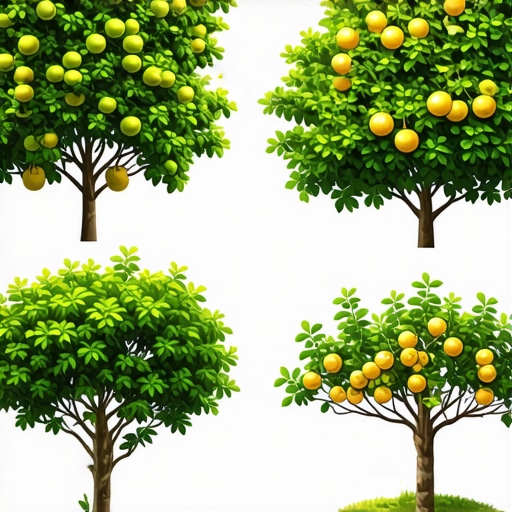
4 Compact 2026 Fruit Trees for Small Backyards
Why Rootstock Selection Dictates Your 2026 Orchard Success
Selecting the right compact fruit tree rootstock like M27 or G.11 determines the tree’s final height, disease resistance, and long-term viability in a residential landscaping design. For 2026 cultivars, these dwarfing stocks ensure trees remain under 8 feet, preventing root system encroachment on hardscaping or house foundations. I always drill into my new crew members: if you don’t fix the soil grading first, every plant you put in the ground is just expensive compost. You cannot simply dig a hole in heavy clay and expect a high-performance fruit tree to survive. I have seen too many homeowners drop five hundred bucks on ‘designer’ trees only to watch them drown in a bathtub of non-porous soil because they didn’t understand soil structure or drainage. When we talk about 2026 cultivars, we are looking at genetics that prioritize high yield-to-biomass ratios, but those genetics require surgical precision during installation. If your garden design doesn’t account for the soil’s cation exchange capacity (CEC) or the hydrostatic reality of your yard’s slope, you are failing before you even pick up a shovel.
“A tree’s root system can extend two to three times the width of the canopy, but the majority of absorbing roots are in the top 12 inches of soil.” – Penn State Extension
The Physics of the Planting Hole
Don’t believe the marketing on the tag. A ‘dwarf’ tree is a biological machine grafted onto a specific engine—the rootstock. When we install these in a professional landscaping project, we analyze the soil density first. If you have compacted clay from home construction, that tree will suffer from root girdling within 36 months. We excavate a hole three times the width of the root ball but no deeper than the root flare. This is where most hacks fail. They bury the root flare. If the flare is buried, the bark will rot, and the tree’s vascular system—the xylem and phloem—will choke. I have spent 20 years excavating ‘mystery’ deaths only to find the root flare buried six inches deep. Don’t do it.
| Fruit Type | 2026 Recommended Cultivar | Rootstock Type | Recommended Spacing | Soil pH Target |
|---|---|---|---|---|
| Apple | Blushing Delight (Columnar) | M27 (Ultra-Dwarf) | 3-4 Feet | 6.5 |
| Cherry | Carmine Jewel (Shrub-Form) | Own-Rooted/Gisela 5 | 6 Feet | 6.8 |
| Peach | Pix Zee (Genetic Dwarf) | Lovell | 5 Feet | 6.0 |
| Pear | Sunrise (Compact) | Quince C | 8 Feet | 6.5 |
1. The ‘Blushing Delight’ Columnar Apple: Vertical Engineering
The Blushing Delight Columnar Apple is a 2026 staple for tight urban spaces because it grows as a single vertical pillar reaching only 2 feet in width. This tree is the ultimate solution for lawn care enthusiasts who want fruit without sacrificing turf area or interfering with hardscaping pathways. Most people think they need a sprawling orchard; they don’t. This tree uses a ‘spur-bearing’ habit, meaning the fruit grows directly on the main trunk. You need to ensure the soil has a phosphorus-heavy profile during the first two years to establish that columnar structure. If you over-nitrogenate, you get leggy growth that snaps under fruit weight. Precision is the only way here.
How much space does a columnar apple tree really need?
A columnar apple tree requires a minimum of **3 square feet** of surface area and at least 8 feet of vertical clearance to prevent light competition and fungal issues. Ensure the site receives 6 to 8 hours of direct solar radiation to prevent the fruit from failing to ripen its sugars. We often integrate these into garden design as living fence posts. It is a structural element as much as it is a food source.
“Standardized rootstock nomenclature is critical for high-density orchard management to prevent scion overgrowth.” – American Society for Horticultural Science
2. Carmine Jewel Cherry: The Cold-Hardy Shrub
The Carmine Jewel Cherry is a 2026 hybrid that functions as a multi-stemmed shrub rather than a traditional tree, making it immune to many of the structural failures seen in grafted cherries. It tops out at 6.5 feet, meaning you don’t need a ladder, which reduces liability and maintenance costs. The real secret here is the root-to-shoot ratio. Because it’s often grown on its own roots, it doesn’t have the graft-union weakness common in other dwarfs. I tell my clients: if you want a hedge that you can eat, this is it. But watch your drainage. Cherry roots will turn to mush in 48 hours of standing water. If your landscaping doesn’t have a 2% grade away from the root zone, install a French drain.
3. Pix Zee Peach: Genetic Dwarfism in Action
The Pix Zee Peach is a 2026 favorite because it is a genetic dwarf, not a grafted one, meaning its internodes are naturally short and stubby. It produces full-sized fruit on a 5-foot frame. This is a heavy feeder. You need to monitor the NPK (Nitrogen, Phosphorus, Potassium) ratios monthly. In my experience, homeowners fail with peaches because they don’t prune the center. You need an ‘open center’ or ‘vase’ shape to get UV light into the middle of the canopy. If the middle stays dark, you get brown rot fungus. Period. It’s not bad luck; it’s bad physics. Keep the center open so air can move at 2-3 mph through the branches.
What is the best fertilizer for dwarf fruit trees?
The best fertilizer for **dwarf fruit trees** is a low-nitrogen, high-potassium organic blend (such as a 5-10-10 ratio) applied at the drip line during the early spring bud-break. Avoid high-nitrogen ‘turf’ fertilizers which stimulate excessive leaf growth at the expense of fruit production and structural integrity. I have seen lawn care companies kill fruit trees by spraying broadleaf weed killers or high-N liquids too close to the root zone. Keep your turf chemicals at least 5 feet away from the trunk flare.
4. Sunrise Pear: The Espalier Specialist
The Sunrise Pear is the 2026 choice for hardscaping integration, specifically for espalier training against stone walls or fences. Pears are naturally more vigorous, but the Sunrise cultivar on Quince C rootstock stays manageable. Training a pear tree against a south-facing masonry wall creates a micro-climate. The stone absorbs heat during the day and radiates it at night, which can push your hardiness zone up by a full level. This is garden design as engineering. You are using the thermal mass of your hardscaping to protect the tree’s late-winter blossoms from frost. It is a technical play that pays off in bushels.
- Check the Root Flare: Ensure the flare is visible above the soil line.
- Irrigation Logic: Install a dedicated drip line with 2GPH (gallons per hour) emitters.
- Mulch Protocol: Apply 2 inches of aged wood chips, but keep them 4 inches away from the trunk. No mulch volcanoes.
- Soil Test: Verify pH is between 6.0 and 7.0 before backfilling.
The Post-Installation Maintenance Matrix
Your work isn’t done when the tree is in the ground. The first 365 days are a ‘settling in’ period. Dwarf trees have smaller root volumes, meaning they have less ‘buffer’ against drought or nutrient spikes. You need to monitor the soil moisture with a tensiometer or a simple finger test. If the soil is dry 3 inches down, it’s time to water. But don’t just spray the leaves. That’s a recipe for scab and mildew. Water the soil. Deep, infrequent soaking forces the roots to dive deep, chasing the moisture. This creates a resilient tree. Shallow watering creates a ‘lazy’ root system that will fail during a heatwave. It’s simple biology. In 2026, the trend is toward high-density, low-input systems, but ‘low-input’ doesn’t mean ‘no-knowledge’. You have to be smarter than the tree. Stick to the measurements, watch your pH, and respect the root flare. Anything else is just gardening by accident.