4 Modern Edging Ideas for 2026 Paver Walkways
The Engineering of the Edge: 4 Modern Edging Ideas for 2026 Paver Walkways
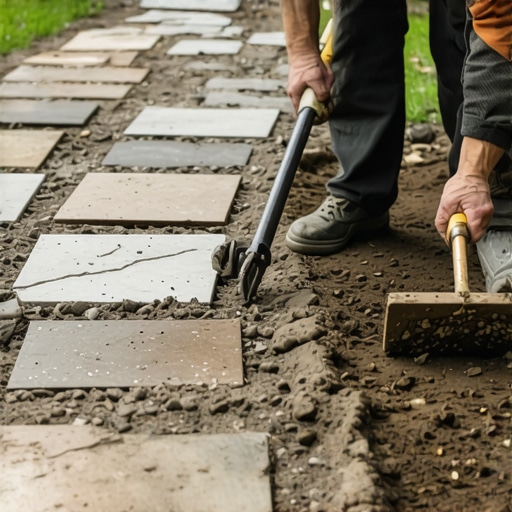
I recently got called out to tear up a $30,000 patio that was sinking because the previous contractor used cheap plastic edging with 6-inch spikes in soft clay. Within two winters, the frost heave had pushed the spikes out of the ground, the pavers migrated three inches laterally, and the entire structure looked like a discarded jigsaw puzzle. It was a textbook case of base-layer failure. If you don’t respect the physics of lateral resistance, your hardscape is just a temporary arrangement of rocks. High-end landscaping in 2026 is moving away from flimsy store-bought solutions toward integrated structural engineering. We are looking at heavier gauges, deeper profiles, and chemical bonds that treat the edge not as a decoration, but as a retaining system for the entire walkway’s integrity.
The Critical Role of Edge Restraint in Hardscape Longevity
Edge restraint systems provide essential lateral stability for paver walkways, preventing interlocking failure and joint migration caused by hydrostatic pressure or thermal expansion. A properly installed border ensures the polymeric sand remains compacted, which is the primary defense against weed growth and base erosion in modern garden design.
“A retaining wall doesn’t fail because of the stone; it fails because of the water trapped behind it.” – Hardscape Engineering Axiom
The base of any walkway is the most ignored component. Most hacks dump some crush-and-run, give it a quick pass with a vibratory plate, and call it a day. That is how you get dips. You need a modified gravel base (3/4-inch minus) compacted in 2-inch lifts to reach 98% Standard Proctor Density. If you are working in heavy clay, you must account for the high expansion coefficient. Clay holds water, water freezes, and ice expands with enough force to lift a house. If your edging isn’t anchored into the sub-base, it is going for a ride. [IMAGE_PLACEHOLDER]
1. Heavy-Gauge Corten Steel: The Industrial Structural Edge
Corten steel edging is a high-durability material that develops a protective oxide layer, offering 20-year lifespans for modern walkways while resisting lateral soil pressure. This weathering steel is ideal for landscape architecture because it maintains a slim profile without sacrificing the tensile strength required to hold heavy pavers in place.
We are seeing a massive shift toward 3/16-inch thick Corten. It is not just about the rust-colored patina. It is about the fact that it doesn’t flex when the ground moves. When we install these, we use 12-inch serrated steel stakes that bite into the compacted aggregate. This creates a vertical barrier that prevents turf roots from infiltrating the paver joints. It is a war of attrition. Grass roots can exert surprising pressure. A steel barrier is the only thing that wins that fight long-term.
2. Perpendicular Soldier Courses with Concrete Haunching
A soldier course involves placing pavers vertically or perpendicularly along the walkway border to create a visual frame and mechanical lock. When reinforced with concrete haunching (a triangular concrete wedge), this method provides maximum lateral resistance for high-traffic paths and lawn care boundaries.
This is the gold standard for high-end residential work. You don’t just set the pavers and walk away. You dig a trench at the perimeter and pour a dry-pack concrete mix behind the edge pavers. This haunch should come up about halfway the height of the paver. It is hidden by mulch or grass once we finish, but it acts like a structural curb. It makes the walkway one monolithic unit. If one paver tries to move, it has to move the whole 200-pound concrete-backed edge. It won’t move.
How much modified gravel do I need for a patio base?
For a standard pedestrian walkway, you need a minimum of 4 to 6 inches of compacted modified gravel. To calculate the volume, multiply the square footage by the depth in feet (e.g., 0.5 feet for 6 inches) and then multiply by 1.35 to account for compaction density. This ensures the sub-base can withstand static loads without settling.
3. Architectural Granite Kerbs and Natural Stone Inlays
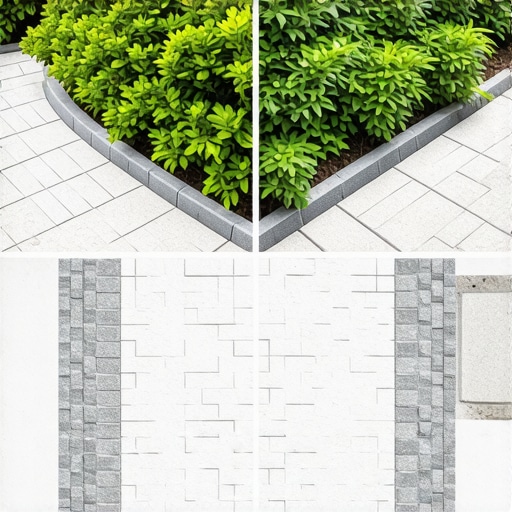
Granite kerbing offers unmatched compressive strength and weather resistance for luxury hardscaping, serving as a permanent edge that survives freeze-thaw cycles. Unlike plastic edging, natural stone kerbs do not degrade under UV exposure, making them a sustainable choice for 2026 garden designs.
Granite is dense. It doesn’t absorb water, which means it doesn’t crack when the temperature drops. We often set these on a 4-inch bed of crushed stone. The sheer mass of the granite provides the restraint. If you’re tired of replacing brittle plastic every five years, this is your solution. It’s expensive. It’s heavy. It’s permanent. Don’t use this if you plan on changing your mind about the garden layout in two years.
4. High-Density Aluminum Geo-Restraints
Aluminum edging is a corrosion-resistant and flexible restraint system designed for curved paver paths, providing a low-profile aesthetic that is invisible to the eye. In 2026 landscaping, these systems are preferred for minimalist designs where the paver texture must remain the focal point without visible plastic borders.
The key here is the alloy. We use 6063-T6 aluminum. It’s the same stuff they use for structural frames. It won’t rust, and it won’t rot. For a curved path, nothing beats it. It allows for smooth, sweeping radii that you just can’t get with wood or heavy stone. But you have to spike it right. We use a 10-inch spiral spike every 12 inches on the curves and every 24 inches on the straights. Don’t skip the spikes. If you do, the first time a lawnmower wheel hits that edge, it will deform.
| Material | Expected Lifespan | Lateral Resistance | Relative Cost |
|---|---|---|---|
| Corten Steel | 25+ Years | High | Moderate/High |
| Concrete Haunching | Lifetime | Maximum | Moderate (Labor Intensive) |
| Aluminum | 20+ Years | Medium/High | Moderate |
| Granite Kerbing | Lifetime | Maximum | High |
“Standard Proctor Density of at least 98% is required for sub-grade stability in pedestrian walkways.” – ICPI Tech Spec No. 2
What is the best way to prevent pavers from spreading?
The most effective way to prevent paver spreading is the installation of rigid edge restraints secured into the compacted sub-base combined with polymeric jointing sand. The edge restraint handles lateral pressure, while the polymeric sand creates a flexible bond that locks the pavers together into a single diaphragm.
Hardscape Installation Checklist
- Verify 811 utility markings have been completed before excavation.
- Excavate 6 inches beyond the paver edge to provide room for the restraint system.
- Confirm a 2% minimum pitch away from the home foundation for drainage.
- Check the moisture content of the aggregate before final compaction.
- Install edge spikes at a 45-degree angle toward the walkway for better grip.
- Sweep polymeric sand into joints when the pavers are bone-dry.
The biggest mistake homeowners make is thinking the job is done once the last paver is laid. That is when the maintenance cycle begins. In year one, you need to watch for settling. If the polymeric sand washouts, replace it immediately. Water is the enemy. Once it gets under the pavers, it will wash out the bedding sand and the whole project will fail. Stick to the specs. Don’t buy materials from a big-box store that caters to weekend warriors. Go to a professional masonry yard. Get the heavy-duty stuff. Your hands might be calloused, and your back might ache, but your walkway will still be straight in twenty years. Hardscaping is a game of inches and PSI. Don’t let a $10 piece of plastic ruin a $10,000 investment. It will fail. Do it right the first time.