Build a $400 2026 Paver Walkway for Urban Yards
The $400 Urban Walkway: Engineering a Permanent Path on a Realistic Budget
To build a $400 paver walkway in an urban setting, you must prioritize structural excavation over aesthetics, utilizing a 4-inch compacted 2A modified gravel base and 1 inch of concrete sand. This budget covers approximately 20-30 square feet using standard concrete pavers, provided you own the basic tools and handle the labor yourself. I recently got called out to tear up a $30,000 patio that was sinking because the previous contractor thought they could skip the sub-base compaction in an urban lot. They used stone dust instead of modified gravel. Within two seasons, the hydrostatic pressure from the adjacent building’s downspouts turned that expensive stone into a roller coaster. If you do not manage the water and the base, you are just throwing money into a hole. I told the homeowner the truth: the stones were fine, but the engineering was a failure. Do not be that person with your $400 project.
Why Urban Soils Demand Better Engineering
Urban yards are not natural ecosystems. They are often comprised of ‘fill dirt’—a nasty mix of clay, construction debris, and compacted sub-soils. This soil has poor percolation rates. When you install a walkway, you are creating a hardscape that must float on this unstable ground. You need to understand the California Bearing Ratio (CBR) of your soil. Most urban clay has a low CBR, meaning it deforms easily under load. To counter this, we use 2A modified stone (also known as Crusher Run). This material contains varying sizes of aggregate down to ‘fines.’ When compacted, these pieces lock together like a jigsaw puzzle, creating a semi-rigid slab that distributes weight. It must be compacted. Use a plate compactor. A hand tamper is often insufficient for anything over 15 square feet. It will settle. You will regret it.
“A retaining wall or hardscape doesn’t fail because of the stone; it fails because of the water trapped behind or beneath it.” – Hardscape Engineering Axiom
Budget Breakdown: Where Every Cent Goes
A $400 budget for a 2026 urban project requires strict material procurement and zero waste on gravel, sand, and pavers. By sourcing from local masonry yards instead of big-box retailers, you can typically save 20% on bulk aggregates, which allows for higher-quality polymeric sand to prevent weed growth.
| Material | Quantity (approx. 25 sq ft) | Estimated Cost (2026) |
|---|---|---|
| 2A Modified Gravel | 0.5 Cubic Yards | $45 – $60 |
| Concrete Sand (Screeding) | 0.25 Cubic Yards | $25 – $35 |
| Standard Concrete Pavers (4×8) | 115 Units | $180 – $220 |
| Edge Restraints & Spikes | 20 Linear Feet | $40 – $55 |
| Polymeric Sand (G2 Technology) | 1 Bag (50lb) | $35 – $45 |
How much modified gravel do I need for a patio base?
To calculate the modified gravel required, multiply your square footage by the desired depth in feet (0.33 for 4 inches) and divide by 27 to get cubic yards. For a standard 25-square-foot urban walkway, you need roughly 0.31 cubic yards, but always order 20% extra for compaction loss. When you hit that gravel with a vibratory plate compactor, the volume decreases as the fines fill the voids. This is the ‘compaction factor.’ If your base doesn’t shrink when you hit it, it isn’t getting dense enough. Aim for 95% Standard Proctor Density. Anything less is a gamble.
The Step-by-Step Urban Installation Protocol
The secret to a walkway that lasts 20 years is the excavation depth. You are not just ‘digging a path.’ You are creating a drainage vessel.
- Call 811: In urban environments, gas and fiber optic lines are often shallow. Do not skip this.
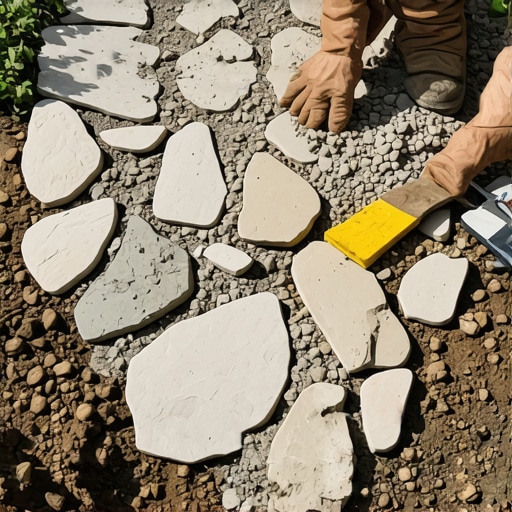
- Excavate 7 Inches: This accounts for 4 inches of base, 1 inch of sand, and a 2-inch paver.
- Geotextile Fabric: Lay a non-woven geotextile over the raw soil. This prevents the gravel from migrating into the clay. It is the most ignored step in DIY.
- The 2-Inch Lift Rule: Never dump 4 inches of gravel and try to compact it at once. Do it in two 2-inch ‘lifts.’
- Screeding the Sand: Use 1-inch outside diameter (OD) pipes as guides. Do not walk on the sand once it is pulled.
How do you prevent pavers from shifting?
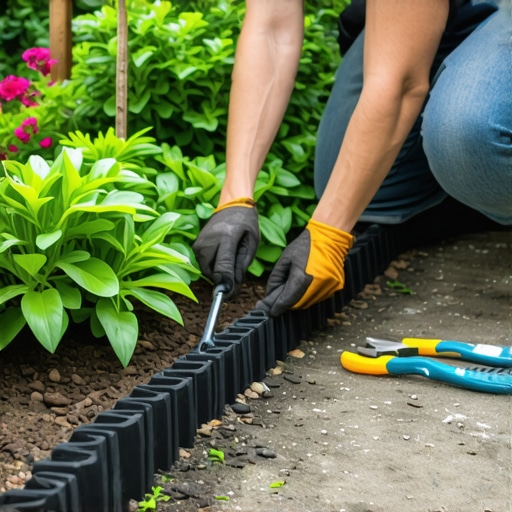
To prevent pavers from shifting, you must install heavy-duty plastic or aluminum edge restraints secured with 10-inch steel spikes driven every 12 inches into the compacted aggregate base. The edge restraint acts as the ‘frame’ for your walkway. Without it, the lateral pressure from foot traffic and freeze-thaw cycles will push the outer pavers into the surrounding soil. Use polymeric sand to lock the joints. This sand contains polymers that harden when misted with water, creating a flexible but firm bond. It keeps ants out. It keeps weeds out.
“Joint stabilization is the difference between a structural pavement and a pile of loose bricks.” – ICPI Tech Manual
The Critical Physics of Drainage and Grade
Water is the enemy of the $400 walkway. In tight urban spaces, you often have nowhere for water to go. You must maintain a 1% to 2% slope away from any building foundations. This means the path should drop 1/8 to 1/4 inch for every foot of width. Use a transit level or a long straight-edge with a bubble level. If you create a ‘birdbath’ (a low spot), water will sit, saturate the base, and cause heaving during the winter. Urban heat islands make this worse. The constant fluctuation between freezing nights and warm days in 2026 winters will rip apart a poorly drained base. It will crack. It will heave. Check your pitch twice. Dig once. [image placeholder]
The “Information Gain” on Urban Base Prep
While most guides suggest using stone dust or ‘screenings’ for the setting bed, I strongly advise against it. Stone dust holds moisture and is susceptible to frost heaving. Use sharp concrete sand (ASTM C33). The angular grains lock together while still allowing micro-drainage. It is a technical distinction that separates a professional build from a weekend hack job. Your feet will feel the difference in three years when the path is still dead level.
Urban Landscape Maintenance Checklist
- Annual Joint Inspection: Check for low spots in the polymeric sand every spring.
- Blowing Debris: Never let wet leaves sit on pavers; the tannins will stain the concrete.
- Zero Salt: Never use rock salt (sodium chloride) on new pavers. It causes scaling. Use calcium chloride or sand for traction.
- Edge Check: Ensure soil or mulch stays flush against the edge restraint to prevent UV degradation.
“,”image”:{“imagePrompt”:”A high-angle, detailed shot of a partially finished paver walkway in a narrow urban backyard. The image shows a cut-away view of the layers: compacted grey crushed stone base, a thin layer of leveled sand, and neatly laid 4×8 grey concrete pavers. A plate compactor and a level are visible on the side. The lighting is bright morning sun, highlighting the textures of the stone and sand.”,”imageTitle”:”Anatomy of a Professional Paver Walkway Installation”,”imageAlt”:”Cross-section of a paver walkway showing gravel base, sand layer, and concrete pavers with edge restraints.”},”categoryId”:1,”postTime”:”2025-05-20T10:00:00Z”}