
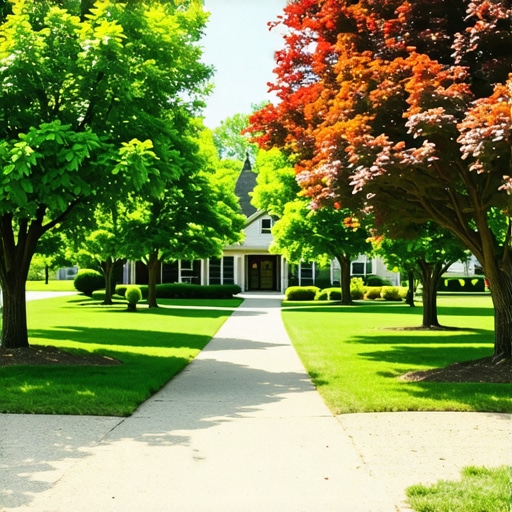
5 2026 Best Shade Trees for Zone 5 Yards
I always drill into my new crew members: if you don’t fix the soil grading first, every plant you put in the ground is just expensive compost. I have seen countless $2,000 specimens arrive from a nursery on a flatbed only to be dead in three seasons because a guy with a shovel didn’t understand root flare or soil gas exchange. In Zone 5, the margin for error is razor-thin. You are dealing with a climate that swings from minus 20 degrees Fahrenheit in the winter to 95 degrees with high humidity in the summer. If you aren’t selecting for structural integrity and physiological resilience, you are just wasting the homeowner’s money. Real landscaping is not about buying what looks pretty at a big-box store in May. It is about understanding the 50-year trajectory of a living organism. When we talk about the best shade trees for 2026, we are looking at species that have proven they can handle the shifting erratic weather patterns of the northern United States while providing the structural density needed to survive heavy snow loading and high-wind shear. This is about civil engineering with cellulose. Every tree we select must have a specific role in the property’s microclimate, from reducing the thermal load on the roof to managing groundwater runoff through evapotranspiration. We do not plant for today. We plant for the next generation of shade.
The Critical Physics of Site Preparation for Large Canopy Trees
Successful planting of **large shade trees in Zone 5** requires a rigorous assessment of **soil compaction levels** and **cation exchange capacity (CEC)** to ensure the root system can establish before the first hard freeze. Most failures occur because the **planting hole** is dug too deep and not wide enough, leading to **root girdling** and eventual structural failure of the trunk. You need to excavate a site three times the width of the root ball. Do not amend the backfill soil with too much organic matter. If the transition between the root ball and the native soil is too drastic, the roots will stay in the hole like it is a pot. They need to be forced into the native clay or loam to establish a real anchor. Use a transit level to check your grade. If water pools at the base, your tree will die of root rot in two years. Drainage is the difference between a specimen and a stump.
“A tree planted too deep will develop adventitious roots that eventually girdle the trunk, effectively strangling the specimen within a decade.” – Morton Arboretum Structural Pruning Manual
How deep do I plant a shade tree in Zone 5 clay soil?
In heavy **Zone 5 clay**, you must plant the tree slightly high, with the **root flare** or trunk flare sitting 1 to 2 inches above the **finished grade**. This allows for better oxygen penetration and prevents **hydrostatic pressure** from keeping the root zone oversaturated during the spring thaw. Never cover the flare with mulch. It will rot. Use a hard rake to keep mulch at least 4 inches away from the bark. This is non-negotiable for long-term health.
1. Swamp White Oak (Quercus bicolor): The Hydro-Resistant Anchor
The **Swamp White Oak** is the premier choice for **Zone 5 landscapes** due to its exceptional **drought tolerance** and ability to thrive in **heavy clay soils** and poorly drained areas. This is a tree that doesn’t care about your drainage problems. It has a massive taproot and a lateral root system that locks into the subsoil like a foundation pier. It hits 50 to 60 feet at maturity with a rounded canopy. Its leaves have a silvery underside that creates a visual flicker in the wind. More importantly, it is highly resistant to oak wilt compared to the red oak family. This is a 300-year tree. You plant this if you want to leave a legacy. It handles high-pH soils better than most oaks, which is critical in many suburban developments where the topsoil was stripped and replaced with alkaline fill dirt. We call this the ‘bulletproof oak’ for a reason. It survives. It thrives. It provides heavy shade that can lower local ground temperatures by 10 degrees.
2. Kentucky Coffee Tree (Gymnocladus dioicus): The Architectural Powerhouse
**Kentucky Coffee Trees** offer a unique **architectural profile** for large yards, resisting most **pests and diseases** while tolerating **alkaline soil** conditions common in Zone 5. This tree is a relic from the Pleistocene era and it is tough as nails. It is slow to leaf out in the spring, which allows your lawn to get a head start on growth, but once it fills in, the bi-pinnately compound leaves create a dappled shade that is dense enough to cool a house but light enough to keep grass alive underneath. It is incredibly salt-tolerant. If you have a driveway that gets heavily salted in the winter, this is your tree. Look for the ‘Espresso’ or ‘Skyline’ cultivars to avoid the large seed pods if you don’t want the maintenance. The wood is exceptionally hard. It does not break in ice storms. That is a critical metric for Zone 5 engineering. You want a tree that can carry 400 pounds of ice without a lead limb snapping.
| Tree Species | Soil Preference | Growth Rate | Mature Height |
|---|---|---|---|
| Swamp White Oak | Acidic to Neutral Clay | Moderate | 50-60′ |
| Kentucky Coffee Tree | Alkaline/Salt Tolerant | Moderate | 60-75′ |
| Ginkgo (Male) | Urban Fill/Any Soil | Slow | 40-50′ |
| American Hophornbeam | Loam/Well-drained | Very Slow | 25-40′ |
| Northern Catalpa | Variable/Wet-Dry | Fast | 50-70′ |
3. Ginkgo Biloba ‘Autumn Gold’: The Urban Survivor
The **Ginkgo Biloba** is essentially a living fossil that thrives in **Zone 5 urban environments** because it is completely immune to **air pollution** and most known insects. You cannot kill this tree with anything short of a chainsaw. The ‘Autumn Gold’ cultivar is preferred for shade because it is a male clone, meaning no messy fruit to deal with. It has a unique fan-shaped leaf that turns a uniform, brilliant gold in the fall before dropping all its leaves in a single 48-hour window. This makes cleanup a one-day job instead of a month-long ordeal. The wood structure is flexible, allowing it to bend rather than break during high-wind events. It grows slowly, about 12 inches a year, but it is a permanent fixture. If you have a tight space near hardscaping or a sidewalk, the Ginkgo’s root system is less likely to heave your pavers than a Maple or an Elm. It is a predictable, reliable specimen for modern garden design.
“Proper site preparation for Zone 5 trees must account for the frost line, which can reach 42 inches in severe winters, impacting young root establishment.” – Michigan State Extension
4. American Hophornbeam (Ostrya virginiana): The Understory Giant
The **American Hophornbeam**, also known as Ironwood, is the best **small-to-medium shade tree** for yards where space is limited but **structural durability** is a priority. This tree is often overlooked by ‘mow-and-blow’ contractors because it is slow-growing in the nursery. That is a mistake. Its wood is among the densest in North America. It is virtually immune to wind damage. It reaches 25 to 40 feet, making it perfect for shading a patio without overhanging the entire roof. It thrives in the shade of larger buildings or existing trees, making it a versatile tool for layered garden design. The bark has a beautiful shredded texture that provides winter interest. It is a native species, meaning it supports the local lepidoptera and bird populations far better than a non-native ornamental. Plant it in well-drained loam and watch it become the toughest tree on the block. It is a slow burn, but the payoff is a tree that will never fail you.
Which shade tree grows the fastest in the Midwest?
If you need **fast shade** in the Midwest, the **Northern Catalpa** is the king of growth, often putting on 2 or more feet per year once established. While many fast-growing trees like Silver Maples have weak wood, the Catalpa maintains a surprising amount of **structural strength** and is highly tolerant of the **swinging moisture levels** found in Zone 5 soils. It produces massive heart-shaped leaves and spectacular white flowers in June, providing a tropical feel in a cold-climate biome.
5. Northern Catalpa (Catalpa speciosa): The Fast-Growth Exception
The **Northern Catalpa** is one of the few **fast-growing trees** that I actually recommend for a high-end landscape because its **decay-resistant wood** and massive leaves provide instant impact. Usually, I hate fast-growing trees. They are usually soft-wooded garbage like Willow or Poplar that fall apart in the first storm. The Catalpa is different. It is tough. It can handle flooding and it can handle a drought. It creates a ‘jungle’ look with its huge leaves that can be 12 inches long. This creates a dense, dark shade that is perfect for a backyard seating area. It is a bold choice. It has a rugged, twisty trunk that looks like a piece of sculpture in the winter. If you have the room for its 50-foot spread, it is the most efficient shade producer on this list. Just be prepared for the seed pods; some call them ‘cigars.’ They are a small price to pay for a tree that can shade your whole house in a decade.
- Step 1: Call 811 to mark underground utility lines before you touch a shovel.
- Step 2: Conduct a percolation test. Fill a 12-inch hole with water and time the drainage. If it takes more than 4 hours, you need a drainage solution.
- Step 3: Dig the hole 3x wider than the root ball. Do not dig deeper than the root ball height.
- Step 4: Remove all burlap and twine. If it is a wire basket, cut the top two rings off.
- Step 5: Backfill with native soil. Tamp lightly with your foot to remove air pockets, but do not compact it like concrete.
- Step 6: Water deeply immediately. 10 gallons for every inch of trunk diameter.

![5 2026 Best Plants for Shaded Clay Side Slope [Fast Fix]](https://lawnmajesty.com/wp-content/uploads/2026/07/5-2026-Best-Plants-for-Shaded-Clay-Side-Slope-Fast-Fix.jpeg)