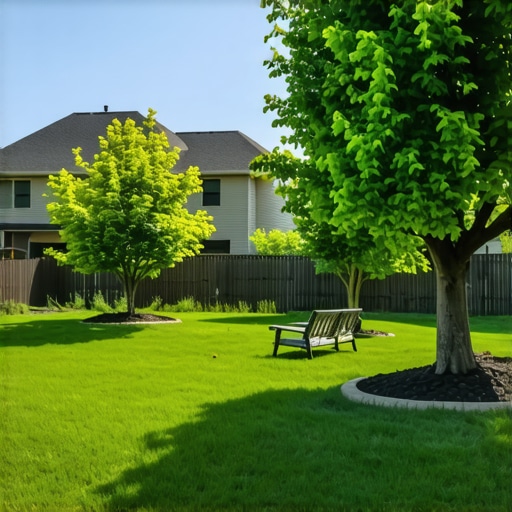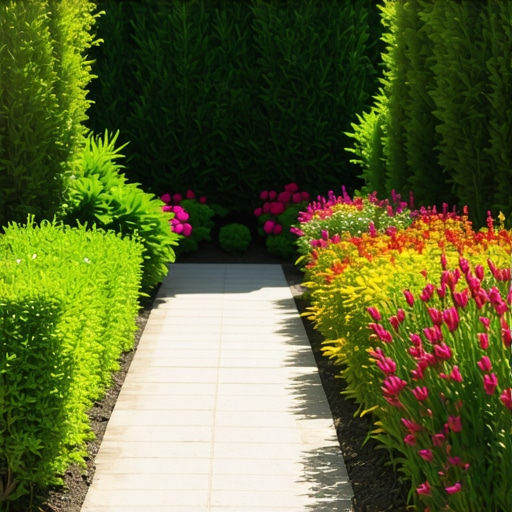
5 2026 Best Shrubs for Compact Front Bedding
The Structural Reality of Front Bedding Design
Selecting the best compact shrubs for front bedding in 2026 requires a deep understanding of soil mechanics, root architecture, and cultivar genetics. Homeowners must prioritize plants like Strongbox Inkberry or Little Lime Punch Hydrangea which offer predictable growth patterns and high disease resistance within restricted root zones. Proper installation involves more than just digging a hole; it requires managing soil bulk density and ensuring the root flare is positioned correctly to avoid long-term physiological stress.
The Apprentice Lesson: Why Your Foundation Beds Are Failing
I always drill into my new crew members: if you don’t fix the soil grading first, every plant you put in the ground is just expensive compost. Last season, I watched a neighbor hire a ‘mow-and-blow’ crew to install twenty dwarf boxwoods. They dug holes just wide enough for the root balls and buried them three inches too deep. By July, those plants were suffocating in a ‘bathtub effect’ because the heavy clay soil wouldn’t drain. In my firm, we excavate the entire bed, not just the holes. We test the Cation Exchange Capacity (CEC) of the soil before a single shovel hits the dirt. If you don’t understand how water moves through your specific soil texture, you’re just throwing money into a hole. We treat landscaping as a subset of civil engineering. Your front yard is a biological system that must interact with the structural integrity of your home’s foundation. This means managing hydrostatic pressure and ensuring that irrigation doesn’t undermine your footings.
“A retaining wall doesn’t fail because of the stone; it fails because of the water trapped behind it.” – Hardscape Engineering Axiom
1. Ilex glabra ‘Strongbox’ (Inkberry Holly)
The ‘Strongbox’ Inkberry is the professional’s answer to the ongoing boxwood blight crisis. This cultivar maintains a tight, spherical habit without the constant need for gas-powered shears that tear the leaf margins. It thrives in USDA zones 5 through 9. From a biological standpoint, Ilex glabra is superior because it handles fluctuating moisture levels better than Buxus. When we install these, we ensure a soil pH between 5.0 and 6.5. If your soil is alkaline, the plant will suffer from chlorosis, as it cannot sequester iron efficiently. We recommend a 1-inch application of pine bark mulch to maintain acidity. Never pile mulch against the stem. That is a death sentence. It traps moisture against the bark, inviting fungal pathogens and girdling roots.
2. Hydrangea paniculata ‘Little Lime Punch’
This isn’t your grandmother’s hydrangea. ‘Little Lime Punch’ is engineered for compact spaces, topping out at 3 feet. The engineering advantage here is its ability to bloom on new wood. This means even if a harsh winter kills the terminal buds, the plant will still produce flowers on the current season’s growth. We prune these in late winter to a height of 12 inches to encourage thick, structural stems that won’t flop under the weight of the blooms. In terms of garden design, these provide the massing needed for curb appeal without obscuring windows. It is a workhorse that requires a steady supply of potassium to maintain cell turgidity during the peak of August heat.
3. Physocarpus opulifolius ‘Little Devil’ (Ninebark)
Ninebark is a masterclass in texture. ‘Little Devil’ stays small, roughly 3 to 4 feet, and offers deep burgundy foliage. As an expert, I value this plant for its cold hardiness and its tolerance for various soil types, including the heavy clays often found in new construction developments. The exfoliating bark provides winter interest, which is a critical component of a professional landscape plan. We look for signs of powdery mildew in humid microclimates, so we always space these to allow for maximum airflow. Airflow is not a luxury; it is a mechanical requirement for fungal prevention.
4. Taxus x media ‘Beanpole’ (Yew)
When we need verticality in a tight horizontal footprint, we go to ‘Beanpole’ Yew. This is a columnar evergreen that doesn’t demand the footprint of a traditional shrub. The key here is drainage. Taxus species have zero tolerance for ‘wet feet.’ If we are installing these in heavy soil, we always build a raised planting bed or install a French drain system using 4-inch perforated pipe and 57-stone to move water away from the root zone. A yew in standing water for 48 hours is a dead yew. It is that simple.
5. Diervilla rivularis ‘Kodiak Orange’
This is for the homeowner who wants a native-adjacent plant that can handle neglect. It is tough as nails. It isn’t a true honeysuckle, so it isn’t invasive, but it offers the same resilience. It pushes high-pigment orange foliage in the fall. From a soil microbiology perspective, Diervilla is excellent for stabilizing banks or edges of bedding because of its fibrous root system. We use it to bridge the gap between hardscaping and softscaping.
Technical Material Comparison for Bedding Construction
| Shrub Variety | Mature Height | Growth Rate | Soil Preference | Root Type |
|---|---|---|---|---|
| Strongbox Inkberry | 2-3 ft | Moderate | Acidic / Moist | Fibrous |
| Little Lime Punch | 3 ft | Fast | Well-drained / Loam | Woody / Lateral |
| Little Devil Ninebark | 3-4 ft | Moderate | Adaptable / Clay | Extensive |
| Beanpole Yew | 4-6 ft (Narrow) | Slow | Highly Drained | Deep / Fleshy |
| Kodiak Orange | 3-4 ft | Fast | Dry / Average | Spreading |
How much modified gravel do I need for a patio base?
Patio base depth requires exactly 4 to 6 inches of compacted 21A or CR-6 modified gravel for pedestrian traffic. To calculate volume, multiply the square footage by the depth in feet, then multiply by 1.5 to account for the compaction factor. Skipping compaction leads to catastrophic settling.
Front Bedding Maintenance Checklist
- Test soil pH and NPK levels every 24 months.
- Apply pre-emergent herbicide in early spring before soil temps hit 55 degrees.
- Inspect root flares for depth; remove excess soil if the flare is buried.
- Drip irrigation should be placed at the drip line, not the trunk.
- Prune for structure, not just shape, using bypass pruners.
“Soil is not dirt; it is a living matrix of mineral particles, organic matter, and pore space that must be managed like a machine.” – Agronomy Field Manual
How do I stop my shrubs from dying in the first year?
First-year shrub mortality is almost always caused by improper watering or planting depth. Ensure you are providing 1 inch of water per week through deep, infrequent soakings rather than daily light mists. This forces the root system to grow downward into the cooler, moister subsoil layers.
[image-placeholder]
The Final Inspection: Beyond the Install
Landscaping is a long game. The 2026 season will favor those who stop treating their front beds like furniture and start treating them like infrastructure. Every plant listed above was selected because it fulfills a specific engineering role: ‘Strongbox’ provides low-level screening, ‘Beanpole’ provides vertical accent, and ‘Little Lime Punch’ provides seasonal mass. When you combine these with a properly graded hardscape, you create a system that increases in value as it matures. Don’t listen to the hacks at the big-box stores. Dig the right hole, buy the right cultivars, and manage your water. It is the only way to ensure your garden survives the next decade. Success is measured in inches of root growth, not just the color of the leaves in May. Keep your tools sharp and your soil healthy. The rest is just biology.{“@context”:”https://schema.org”,”@type”:”Article”,”headline”:”5 Best Compact Shrubs for Front Bedding in 2026: A Horticultural Engineering Guide”,”author”:{“@type”:”Person”,”name”:”Veteran Horticulturist”},”datePublished”:”2025-05-20″,”description”:”Expert guide on the best compact shrubs for 2026, focusing on soil mechanics, cultivar selection, and horticultural engineering for front bedding.”},{“@context”:”https://schema.org”,”@type”:”FAQPage”,”mainEntity”:[{“@type”:”Question”,”name”:”How much modified gravel do I need for a patio base?”,”acceptedAnswer”:{“@type”:”Answer”,”text”:”Patio base depth requires exactly 4 to 6 inches of compacted 21A or CR-6 modified gravel for pedestrian traffic. To calculate volume, multiply the square footage by the depth in feet, then multiply by 1.5 to account for the compaction factor.”}},{“@type”:”Question”,”name”:”How do I stop my shrubs from dying in the first year?”,”acceptedAnswer”:{“@type”:”Answer”,”text”:”First-year shrub mortality is almost always caused by improper watering or planting depth. Ensure you are providing 1 inch of water per week through deep, infrequent soakings rather than daily light mists.”}}]}
![4 Fast-Growing 2026 Vines for Privacy [No Mess]](https://lawnmajesty.com/wp-content/uploads/2026/06/4-Fast-Growing-2026-Vines-for-Privacy-No-Mess.jpeg)