5 2026 Best Shrubs for Compact Privacy Hedges
Why Compact Privacy Hedges Fail Before They Are Planted
Proper compact privacy hedges require a minimum of 18 inches of soil depth and a precisely calculated drainage coefficient to prevent root rot in high-density plantings. Successful screen installation depends on matching USDA hardiness zones with local soil pH levels to ensure nutrient uptake is not chemically locked out. I always drill into my new crew members: if you don’t fix the soil grading first, every plant you put in the ground is just expensive compost. Most homeowners see a 3-gallon pot and dig a 3-gallon hole. That is a death sentence. In my twenty years of correcting failed landscapes, I have seen more ‘privacy screens’ die from root girdling and poor gas exchange than from actual disease. If the soil is compacted to more than 200 PSI, those roots aren’t going anywhere. They will circle the hole until they choke the plant to death. We do not plant in dirt; we plant in a biological system. If you ignore the subsurface engineering, the surface aesthetics will fail within 24 months. Fix the drainage. Amend the soil. Only then do you touch a shovel.
“A retaining wall doesn’t fail because of the stone; it fails because of the water trapped behind it.” – Hardscape Engineering Axiom
The Physics of Privacy: Planning the Compact Perimeter
Selecting compact privacy shrubs involves calculating mature canopy width against the available linear footage of the property line to prevent overcrowding. Over-planting leads to fungal outbreaks like Cercospora leaf spot due to restricted airflow. You need to know your numbers. Are we dealing with heavy clay or sandy loam? Are you prepared to install a dedicated drip irrigation line? 80% of your work happens before the first shrub arrives from the nursery. We start with a soil test. If your pH is 7.5 and you are trying to plant acid-loving evergreens, you are fighting a losing battle against iron chlorosis. We also look at utility lines. Call 811. Do not assume your cable line is deeper than your trench. It usually isn’t. We aim for a trench that is twice the width of the root ball but no deeper than the root flare. Planting too deep is the primary cause of secondary root rot. The flare must remain visible. This is non-negotiable.
How far apart should I plant privacy shrubs?
For compact varieties, spacing usually ranges from 24 to 36 inches on center, depending on the specific growth habit and mature width of the cultivar. Calculate the mature spread and subtract 20% for a dense screen. Tight spacing requires aggressive nutrient management. You are forcing more plants to compete for the same volume of soil minerals. This is why we install automated irrigation. Relying on a garden hose is a recipe for uneven growth. One shrub gets 2 gallons, the next gets 0.5. Within three years, your ‘hedge’ looks like a jagged EKG monitor.
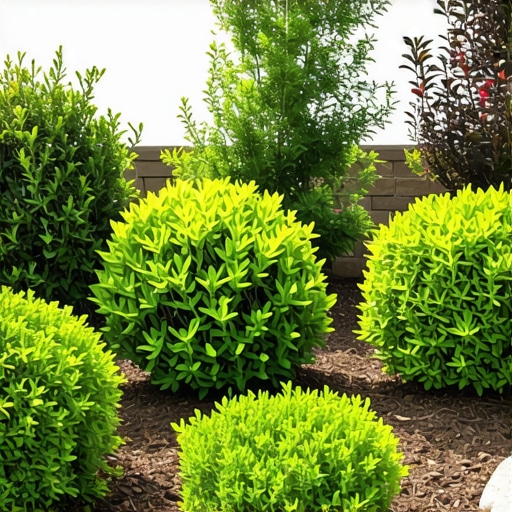
Top 5 Shrub Picks for 2026 Compact Hedges
| Shrub Variety | USDA Zone | Growth Rate | Mature Width | Soil Preference |
|---|---|---|---|---|
| Hicks Yew (Taxus x media) | 4-7 | Slow | 3-4 ft | Well-drained/Neutral |
| Sky Pencil Holly (Ilex crenata) | 6-9 | Medium | 2-3 ft | Acidic/Moist |
| Emerald Green Arborvitae | 2-7 | Medium | 3-4 ft | Loamy/Standard |
| Green Mountain Boxwood | 5-9 | Slow | 2-3 ft | Well-drained/Alkaline |
| Chestnut Hill Laurel | 6-9 | Medium | 3-4 ft | Rich/Acidic |
1. Hicks Yew (Taxus x media ‘Hicksii’)
The Hicks Yew is the structural engineer’s favorite because it handles heavy shearing and maintains a strict columnar form. It is one of the few evergreens that can tolerate significant shade without losing density at the base. Beware of wet feet. If your site has standing water for more than 4 hours after a rain, these will die. We often build raised berms specifically for Yews to ensure the root zone stays above the saturation point. It is a slow grower, which means less pruning for you, but a higher upfront cost for mature specimens.
2. Sky Pencil Holly (Ilex crenata)
When you have zero lateral space, the Sky Pencil Holly is the only logical choice. It grows straight up like a 10-foot pillar. We use these in tight urban alleyways or right up against hardscape patios where a wider shrub would obstruct foot traffic. They require a pH between 5.0 and 6.0. If you have high-alkalinity soil, you will see yellowing leaves within the first season. Use elemental sulfur to drop the pH before planting. Do not skip this step. The plant cannot ‘adjust’ to the wrong chemistry.
3. Emerald Green Arborvitae (Thuja occidentalis ‘Smaragd’)
Despite being a common choice, the ‘Smaragd’ remains a top performer for 2026 because of its disease resistance compared to larger cultivars. It stays compact and doesn’t ‘split’ under heavy snow loads as easily as the larger ‘Nigra’. However, it is a favorite for deer. If you have high deer pressure, you must apply a repellent or choose a different species. We plant these 3 feet apart for a solid wall. Anything closer leads to branch dieback where the plants touch.
4. Green Mountain Boxwood (Buxus ‘Green Mountain’)
This is a hybrid that provides a natural pyramidal shape. It is the gold standard for formal garden design. It is highly resistant to Boxwood Blight, which has decimated older varieties. We use this when the client wants a hedge that looks manicured but doesn’t require monthly trimming. It prefers a slightly alkaline soil, which is common in many suburban developments with concrete runoff. Protect it from winter winds to prevent bronzing of the foliage.
5. Chestnut Hill Laurel (Prunus laurocerasus)
The Chestnut Hill Laurel is a compact version of the massive Skip Laurel. It offers broad, dark green leaves that provide excellent noise attenuation. Because the leaves are thick and waxy, they reflect sound waves better than the needle-like foliage of a cedar or yew. It is a workhorse in part-shade environments. We find they respond best to organic fertilizers with a 10-6-4 NPK ratio applied in early spring. Avoid high-nitrogen ‘lawn’ fertilizers near the drip line; they will force rapid, weak growth that snaps in the wind.
“Woody ornamentals require a precise balance of macro and micronutrients; specifically, phosphorus levels must be monitored to ensure root development outpaces canopy growth in the first three years.” – Penn State Extension Horticulture Manual
The Forensic Installation Process
Installing a compact hedge is a systematic engineering project. We follow a strict checklist to ensure 100% survivability. One mistake in the first 48 hours can ruin a $5,000 investment. We don’t use ‘magic’ fertilizers. We use science. We test the compaction. We verify the drainage. We ensure the irrigation emitters are placed at the root flare, not at the trunk. If water hits the trunk directly, you’re inviting fungal cankers. It is that simple.
- Excavation: Trench should be 2x wider than the root ball. Scarify the side walls of the trench to prevent ‘pot-bounding’.
- Soil Amendment: Mix 20% organic compost with 80% native soil. Do not use 100% potting mix; the roots will never leave the hole.
- Hydration: Flood the hole before planting. This is called ‘puddling in’ and it removes air pockets that kill fine root hairs.
- Mulching: Apply 2-3 inches of shredded hardwood mulch. Keep it 3 inches away from the trunk. No mulch volcanoes. They trap moisture and rot the bark.
- Staking: Only stake in high-wind corridors. Allow for 2 inches of ‘sway’ to encourage the development of reaction wood, which strengthens the trunk.
How much modified gravel do I need for a patio base near hedges?
If you are building a hardscape next to your hedge, you need a 6-inch base of CR6 or 21A modified gravel, compacted in 2-inch lifts. Ensure the drainage slope leads away from your new shrubs. If your patio drains into your hedge trench, you have created a bathtub. The shrubs will drown. We use a plate compactor to reach at least 95% Proctor density on the base. Landscaping is not just about plants; it is about managing water and soil pressure.
The Long-Term Maintenance Cycle
A hedge is a living machine. It needs fuel and maintenance. We recommend a soil test every two years. Don’t guess. If you’re missing magnesium, your leaves will look pale, and no amount of nitrogen will fix it. Pruning should be done with sharp, sanitized bypass pruners. Dull blades crush the vascular tissue, leading to dieback. Always taper your hedge so the bottom is wider than the top. This allows sunlight to reach the lower branches, preventing the ‘naked leg’ look that ruins privacy screens. It will rot if you leave the clippings inside the canopy. Clean your work area. Keep the airflow high. High-density hedges are a privilege of the disciplined gardener, not the lazy one. Maintain the drip system. Check for leaks. In year one, those shrubs need 1 inch of water per week, delivered deep into the soil profile to force the roots down. Shallow watering creates shallow roots. Shallow roots lead to dead plants during the first July heatwave. Do the work correctly the first time.