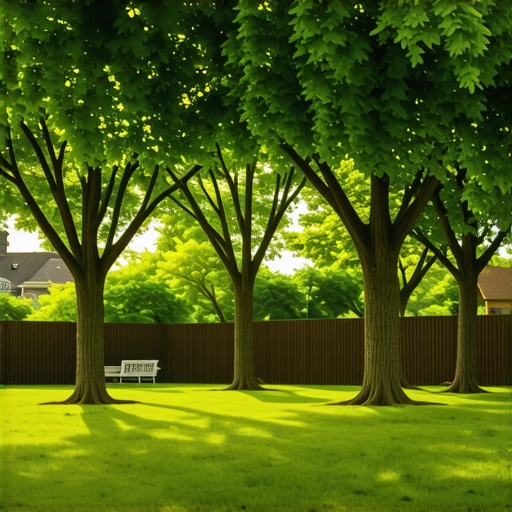
5 2026 Best Trees for Fast Shade in Zone 5 Backyard Yard
Success in a Zone 5 landscape starts long before the first shovel hits the dirt. If you are looking for shade by 2026, you are not just buying plants; you are engineering a biological canopy that must withstand winter lows of -20 degrees Fahrenheit. I always drill into my new crew members: if you don’t fix the soil grading and drainage first, every tree you put in the ground is just expensive compost. Most homeowners see a tree as a static object, but a veteran landscaper sees a hydraulic pump that moves hundreds of gallons of water while battling the freeze-thaw cycles of the Midwest and Northeast. Don’t be the person who buys a tree based on a pretty picture at a big-box store only to watch it succumb to root girdling because the pot was too small and the nursery stock was junk.
The Critical Physics of Fast-Growing Shade in Zone 5
To achieve rapid shade in a Zone 5 backyard, you must select species with a proven growth rate of 2 to 5 feet per year that can withstand extreme winter dormancy and heavy snow loads. Speed often comes at the cost of wood strength, so the strategy involves selecting cultivars that balance rapid biomass production with structural integrity to prevent storm breakage. In my twenty years of hardscaping and planting, I have seen too many silver maples shatter in a light ice storm because they grew too fast without the proper cellular density. We look for trees that establish deep taproots or wide lateral networks that anchor into the heavy clay or rocky loam common in northern latitudes.
“Proper planting depth is the single most important factor in long-term tree health; the root flare must be visible at the soil surface to prevent stem-girdling roots that eventually choke the vascular system.” – International Society of Arboriculture (ISA) Best Management Practices
The 2026 Top Shade Performers Comparison Table
| Tree Species | Growth Rate (Annual) | Mature Height | Best Soil Type | Structural Integrity |
|---|---|---|---|---|
| Autumn Blaze Maple | 3-5 Feet | 50-60 Feet | Adaptable/Clay | Medium-High |
| Heritage River Birch | 2-3 Feet | 40-50 Feet | Moist/Acidic | High |
| American Sycamore | 4-6 Feet | 70-100+ Feet | Deep Loam | Medium |
| Dawn Redwood | 3-4 Feet | 70-90 Feet | Well-Drained | Very High |
| Tulip Tree | 2-3 Feet | 70-90 Feet | Rich/Organic | Medium |
1. Acer x freemanii ‘Autumn Blaze’ (Autumn Blaze Maple)
The Autumn Blaze Maple is the workhorse of the suburban landscape for a reason. This hybrid combines the speed of the Silver Maple with the structural strength and color of the Red Maple. In Zone 5, it handles the alkaline soil shifts better than most. Expect 3 feet of growth per year if you manage the nitrogen levels correctly. Do not over-fertilize with high-nitrogen turf food; you want wood density, not just green shoots. Watch for the root flare. If you bury it too deep, the tree will suffer from chronic stress and show early fall color as a distress signal. It is a hardy choice for backyard landscaping near patios where you need quick relief from the July sun.
2. Betula nigra ‘Heritage’ (Heritage River Birch)
The Heritage cultivar is superior to the species because of its resistance to the bronze birch borer, a pest that destroys lesser trees. This tree loves water. If your backyard has a low spot where the soil stays damp after a rain, this is your solution. It provides a dappled shade that is perfect for garden design involving shade-loving perennials. The exfoliating bark provides winter interest, which is vital when the backyard is buried in snow for four months. It grows fast, often hitting 30 feet in less than a decade. Always plant these in groups of three for the best aesthetic and structural windbreak effect.
3. Platanus occidentalis (American Sycamore)
If you have the acreage, the Sycamore is the king of speed. I have seen these put on 6 feet in a single season when the groundwater is accessible. These are massive trees. Do not plant them within 30 feet of your hardscaping or foundation. The roots are aggressive and will lift pavers or crack a poorly reinforced retaining wall. They are the definition of a “legacy tree.” They shed bark and large leaves, so be prepared for the maintenance. But for sheer shade volume by 2026, nothing beats them. They are tough as nails against Zone 5 winds.
4. Metasequoia glyptostroboides (Dawn Redwood)
This is a deciduous conifer, meaning it has needles but drops them in the winter. It is a prehistoric survivor. It grows in a perfect pyramidal shape, providing a very dense shade. In Zone 5, it is remarkably hardy once established. It thrives in large backyards where it can act as a focal point. The wood is rot-resistant, and it handles the heavy hydrostatic pressure of wet spring soils better than almost any other fast-grower. It is a clean tree, making it ideal for landscaping near swimming pools or sensitive garden beds.
“Hardy trees in northern climates require a focus on the ‘hardening off’ process in autumn; excessive late-season irrigation can prevent dormancy and lead to frost crack.” – USDA Forest Service Technical Report
5. Liriodendron tulipifera (Tulip Tree)
The Tulip Tree is one of the tallest hardwoods in North America. It grows straight and fast. The shade is deep and cool. It produces unique tulip-shaped flowers, though you might not see them until the tree is 15 years old. In a Zone 5 yard, it needs deep soil. Avoid planting this in thin soil over a limestone shelf. It needs room for its root system to expand. If you provide a 3-inch layer of organic mulch—kept away from the trunk—you will see rapid growth. It is a structurally sound tree that handles heavy snow loads without the brittle snapping common in other fast-growing species.
How much space do I need for a fast-growing shade tree?
For most fast-growing species in Zone 5, you should allow a minimum radius of 20 to 30 feet from any permanent structure or underground utility line. Fast growth often correlates with aggressive root systems that seek out moisture in sewer lines or apply pressure to foundation walls. Always call 811 to mark utilities before excavating for a root ball that may exceed 48 inches in diameter.
What is the best time of year to plant in Zone 5?
The optimal planting window for Zone 5 is either early spring before bud break or late autumn after leaf drop but before the ground freezes. Spring planting allows the tree a full growing season to establish its mycorrhizal network before the first hard freeze. Fall planting is effective for species like maples and birches, provided you use a transpirational spray to prevent winter desiccation.
The Professional Installation Checklist
- Site Inspection: Check for overhead wires. Fast-growing trees hit these within 5 years.
- Soil Testing: Verify pH. Most Zone 5 soils are slightly alkaline; some trees need acidic amendments.
- The Hole: Dig twice as wide as the root ball, but no deeper. The floor of the hole must be firm.
- Root Management: Cut any circling roots. If they circle now, they will kill the tree in ten years.
- Hydration: Slow-drip 10 gallons of water immediately after planting. Air pockets are the enemy.
- Mulching: Apply a 3-foot ring of wood chips. No “mulch volcanoes” against the bark. It will rot.
Don’t fall for the “magic fertilizer” scams. A newly planted tree doesn’t need a massive shot of chemicals; it needs a stable environment and consistent moisture. Use a drip bag (like a TreeGator) for the first two seasons. In Zone 5, the wind is your biggest adversary for young trees. Stake them only if necessary, and use flexible straps, not wire. The tree needs to move slightly to develop “reaction wood,” which is how it builds the strength to survive a lifetime of storms. If you follow these engineering principles, you won’t just have a tree; you’ll have a legacy that provides cooling shade for decades to come.