5 2026 Best Trees for Quick Shade in Summer
I always drill into my new crew members: if you don’t fix the soil grading first, every plant you put in the ground is just expensive compost. After twenty years of excavating failed landscapes, I have seen too many homeowners throw thousands of dollars at fast-growing shade trees only to watch them die because they ignored the root flare or the soil’s compaction levels. Real shade isn’t a commodity you buy; it is a biological system you engineer. Choosing a tree for 2026 requires looking past the glossy catalog photos and analyzing the structural integrity and growth rate of the species relative to your local hydrology and soil pH.
Why Quick Shade Success Depends on Soil Engineering
Quick shade is achieved by selecting fast-growing species like Red Maple or River Birch that are compatible with your specific USDA Hardiness Zone and soil pH. Success requires managing hydrostatic pressure and ensuring proper root flare exposure to prevent girdling roots and premature tree death during the establishment phase.
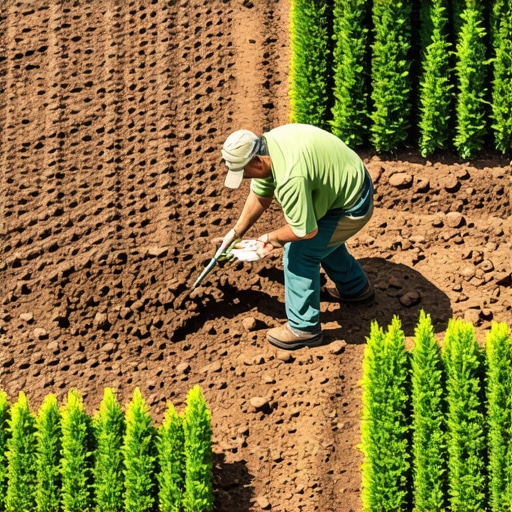
When you want shade by next summer, you are fighting against the clock and the physics of plant biology. Most people buy a tree, dig a hole, and hope for the best. That is how you end up with a dead stick in three years. You need to understand the bulk density of your soil. If your soil is compacted to more than 1.6 grams per cubic centimeter, those roots aren’t going anywhere. They will spin in the hole like they are in a plastic pot until they eventually strangle themselves. I tell my clients: spend $500 on the tree and $1,000 on the hole. This means excavating a site three times the width of the root ball and ensuring the percolation rate is at least one inch per hour.
How much modified gravel do I need for a patio base near these trees?
If you are installing a hardscape near these quick-shade trees, you generally need a minimum of 6 inches of 21A or 411 modified gravel, compacted in 2-inch lifts. However, you must keep this base outside the critical root zone (CRZ) of the tree, which is typically one foot of radius for every inch of trunk diameter. Failure to do so will lead to heaving pavers as the tree grows or a dead tree from root suffocation. Use permeable pavers if you must encroach on the drip line.
“A retaining wall doesn’t fail because of the stone; it fails because of the water trapped behind it, and trees planted near these structures must be managed for their root-water uptake.” – Hardscape Engineering Axiom
1. Acer rubrum ‘October Glory’ (Red Maple)
The October Glory Red Maple is a workhorse in the landscaping industry for a reason. It can put on 2 to 3 feet of vertical growth per year once the mycorrhizal network is established. But here is the catch: it hates wet feet and high pH. If your soil is above 7.0 pH, you will see manganese chlorosis, which turns the leaves a sickly yellow. I measure the soil pH before I even take the tree off the truck. You want a consistent 5.5 to 6.5 range for maximum foliar density. It provides a dense canopy that can drop surface temperatures by 15 degrees in mid-July.
2. Betula nigra ‘Heritage’ (River Birch)
If you have a spot that stays damp, the River Birch is your best bet for fast results. These trees are often sold as multi-stem clumps, which provides a wider shade footprint much faster than a single-leader tree. They are resistant to the Bronze Birch Borer, a pest that decimated older birch varieties. I’ve seen ‘Heritage’ birches grow from 10-foot saplings to 25-foot shade-producers in less than five years. Use a 2-inch layer of arborist wood chips at the base—never a mulch volcano—to keep the roots cool and moist.
What is the fastest growing shade tree for my yard?
The Hybrid Poplar is technically the fastest growing, often exceeding 5 feet per year, but I refuse to plant them because their wood is brittle and they are prone to canker diseases. For a permanent, high-quality landscape, the London Plane Tree or Willow Oak are superior choices that offer a balance of rapid growth and 30-year structural stability. Avoid the ‘silver maple’ trap; they grow fast but will crush your roof in a windstorm.
3. Quercus phellos (Willow Oak)
People think oaks are slow, but the Willow Oak is the exception. It has a fine leaf texture that makes for easy cleanup and a growth rate that rivals many maples. Its wood density is much higher than other fast-growers, meaning it won’t fall apart in an ice storm. When planting, I check the root flare—where the trunk widens at the base. If that flare is buried, the tree is on a countdown to failure. We excavate until the first primary structural root is at grade.
| Tree Species | Growth Rate (ft/year) | Mature Width (ft) | Best Soil Type |
|---|---|---|---|
| October Glory Maple | 2.0 – 3.0 | 35 – 40 | Acidic Loam |
| River Birch | 2.5 – 3.5 | 25 – 35 | Moist/Heavy Clay |
| Willow Oak | 2.0 – 2.5 | 40 – 50 | Well-Drained Loam |
| London Plane Tree | 2.5 – 3.0 | 60 – 70 | Urban/Compacted |
| Skyline Honeylocust | 2.0 – 3.0 | 30 – 35 | Alkaline/Salt-Tolerant |
4. Platanus x acerifolia ‘Exclamation!’ (London Plane Tree)
This is the tank of the tree world. It is highly resistant to anthracnose and powdery mildew. The ‘Exclamation!’ cultivar grows with a very strong central leader, which is critical for wind resistance. In new developments where the topsoil was stripped and the subsoil is compacted like concrete, this tree thrives where others fail. It handles the urban heat island effect better than almost any other shade tree available for 2026 installs. It will drop bark, so don’t plant it directly over a high-end paver patio unless you enjoy power washing.
“Trees planted too deep will eventually develop girdling roots that strangle the trunk, a leading cause of premature failure in suburban landscapes.” – Penn State Agricultural Extension
5. Gleditsia triacanthos ‘Skyline’ (Honeylocust)
The Skyline Honeylocust provides what I call “filtered shade.” It is perfect if you want to cool your house but still want enough light for a turfgrass lawn to grow underneath. These trees are legumes, meaning they have a unique relationship with Rhizobium bacteria to fix nitrogen, although they aren’t heavy hitters in that department. They are extremely salt-tolerant, making them perfect for planting near driveways where de-icing salts are used in winter. They grow fast and have almost no pest issues in most regions.
Professional Installation Checklist
- Site Survey: Locate all underground utilities via 811 before digging.
- Soil Test: Check pH and NPK levels to determine if sulfur or lime is needed.
- Excavation: Dig the hole twice as wide as the root ball but no deeper.
- Mechanical Prep: Shave the outer inch of the root ball to remove any circling roots.
- Hydration: Saturate the hole before backfilling to eliminate air pockets.
- Mulching: Apply 2-3 inches of organic mulch, leaving a 4-inch gap from the trunk.
The first year after planting is the most critical. You need to provide 10 to 15 gallons of water per week, delivered via drip irrigation or a slow-release watering bag. Don’t rely on your lawn sprinklers; they don’t penetrate deep enough to reach the root zone. If you see the leaves wilting or turning brown at the edges, you have already waited too long. Monitor the soil moisture tension. Trees are a long-term investment in your property’s thermal envelope and resale value. Do it right the first time. It will not fail if you follow the biology.