5 Heat-Proof Shrubs for 2026 Southern Gardens
The Foundation of Southern Heat Management
Heat-proof shrubs for Southern gardens involve selecting woody perennials with high transpiration efficiency and drought tolerance to survive rising night-time temperatures. Successful garden design requires integrating native species that maintain stomatal conductance during extreme thermal events while managing soil moisture levels through proper hardscaping and irrigation.
I always drill into my new crew members: if you don’t fix the soil grading first, every plant you put in the ground is just expensive compost. Most rookie contractors think they can just dig a hole, drop a root ball in, and walk away. That is how you kill a three thousand dollar planting budget in one August afternoon. I remember a job in North Georgia where a homeowner had spent a fortune on boxwoods. They looked great for a week. But because the previous crew didn’t understand bulk density and drainage, the clay soil turned into a bathtub. The roots literally suffocated in forty eight hours. We had to excavate the entire site, install a French drain system with four-inch perforated pipe, and amend the soil with expanded shale just to give the next round of plants a fighting chance. If you do not respect the physics of water movement and the biology of the root zone, the Southern sun will expose your laziness every single time.
“Proper soil preparation is the most important factor in the success of any landscape planting in the heat-stressed environments of the South.” – Texas A&M AgriLife Extension
The Engineering of Soil and Site Preparation
Before selecting your nursery stock, you must analyze the Cation Exchange Capacity (CEC) of your soil. In most Southern regions, you are dealing either with heavy Piedmont clay or coastal sand. Clay has high nutrient retention but terrible gas exchange. Sand has excellent drainage but zero nutrient hold. To prepare for 2026 climate conditions, you need a Soil Organic Matter (SOM) level of at least 5 percent. This isn’t just for the plants: it is for the microbiology. Mycorrhizal fungi are the silent partners in heat resistance, extending the root system’s reach by a factor of ten. You achieve this by tilling in high-quality compost, not the bagged trash from a big-box store that is 90 percent un-aged wood chips. Un-aged wood chips steal nitrogen from your plants as they break down. It is a biological tax you cannot afford to pay.
1. Yaupon Holly (Ilex vomitoria ‘Schillings Dwarf’)
Yaupon Holly serves as a structural cornerstone in hardscaping layouts due to its extreme drought resistance and ability to tolerate alkaline soils. This native shrub thrives in USDA Hardiness Zones 7 to 9 and maintains its foliage density even during prolonged periods of thermal stress and 100-degree days.
This is the workhorse of the Southern landscape. Unlike the temperamental Boxwood, the ‘Schillings Dwarf’ Yaupon Holly laughs at 100-degree days and 90 percent humidity. It is a slow grower, which means less pruning for you. We use these for low borders along stone walkways. They handle the reflected heat from pavers that would scorch almost anything else. From a technical standpoint, the Ilex vomitoria has a waxy cuticle on its leaf surface that prevents excessive water loss through transpiration. It is a physiological tank.
2. Texas Sage (Leucophyllum frutescens)
Texas Sage is a premier choice for Xeriscape designs because of its silver foliage which reflects solar radiation to reduce leaf temperature. This shrub is highly effective in lawn care transitions where water conservation is a priority, requiring minimal irrigation once the root system is established.
If you want a plant that actually likes it when the sky turns into a furnace, this is it. Often called the “Cenizo,” it produces purple blooms triggered by high humidity or rainfall. It requires perfectly drained soil. If you plant this in a low spot where water sits, it will rot. Period. We often install these in raised beds or behind small retaining walls where we can control the drainage matrix. Use a 57-stone gravel base beneath your planting soil to ensure the roots never sit in standing water. It can handle a pH up to 8.5, making it ideal for sites with concrete runoff.
3. Bottlebrush (Callistemon ‘Little John’)
Bottlebrush varieties provide pollinator support and visual interest while resisting pest infestations and nutrient deficiencies in poor soils. The ‘Little John’ cultivar is a compact shrub ideal for modern garden design, offering high heat tolerance and a fibrous root structure that stabilizes soil.
This is for the homeowner who wants color without the maintenance headache of roses. The ‘Little John’ stays under three feet tall and wide. Its leaves are narrow and tough, a classic adaptation to prevent water loss. We find these work best when planted in groups of three or five to create a thermal mass. They are salt tolerant, so if you are near the coast, this is a mandatory inclusion. Just make sure you aren’t over-watering. Most people drown these plants trying to “help” them through the heat. Deep watering once a week is better than a daily misting that never reaches the bottom of the root ball.
4. Cleyera (Ternstroemia gymnanthera)
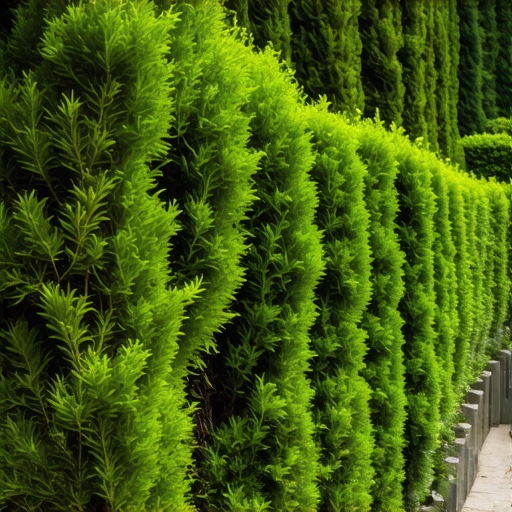
Cleyera is a versatile evergreen shrub used for screening and privacy in landscaping projects where shade tolerance and heat resilience are required. Its glossy leaves and slow growth rate make it a low-maintenance alternative to invasive species in Southern gardens.
When you need a hedge that won’t die the moment the temperature hits 95, Cleyera is the answer. It is one of the few plants that can handle the transition from full morning sun to deep afternoon shade without dropping leaves. The new growth comes in a bronze-red color that looks like a flower from a distance. The key to success here is the planting depth. Never bury the root flare. The root flare is the point where the trunk widens into the roots. If you bury that, you are trapping moisture against the bark, leading to fungal cankers and eventual death. We use a 3-inch layer of pine straw mulch to keep the soil temperature consistent, but we keep the mulch 2 inches away from the trunk itself.
5. Wax Myrtle (Morella cerifera)
Wax Myrtle is a fast-growing native shrub that excels in ecological restoration and large-scale landscaping due to its nitrogen-fixing nodules. It provides erosion control and acts as a windbreak, making it a critical component for climate-ready garden design in the Southeast.
This is a survivor. It is a nitrogen-fixer, meaning it has a symbiotic relationship with bacteria that allows it to pull nitrogen from the air and put it into the soil. It is basically its own fertilizer factory. It grows fast, so it is perfect for screening out a neighbor or hiding an AC unit. It is also a host plant for the Red-Banded Hairstreak butterfly. We use these in areas where the soil is poor and the heat is brutal. It can handle wet feet better than the others, but it is just as happy in a drought. It is the ultimate insurance policy for a Southern landscape.
“The objective of site grading is to manage the flow of water away from structures and prevent saturation of planting beds, which is the primary cause of root rot in ornamental shrubs.” – Hardscape Engineering Axiom
How much modified gravel do I need for a patio base near shrubs?
To ensure proper drainage for adjacent shrubs, a patio base typically requires 4 to 6 inches of compacted modified gravel. Calculate the volume by multiplying the square footage of the patio by the desired depth in feet, then divide by 27 to get the cubic yardage. This hardscaping foundation prevents hydrostatic pressure from affecting nearby planting beds.
How often should I water new shrubs in heat?
Newly installed shrubs require deep irrigation every 2 to 3 days during the first 90 days. Apply approximately 1 inch of water per week, targeting the root zone directly rather than the foliage to prevent fungal pathogens. Once established, most heat-proof shrubs only require supplemental water during extreme drought conditions.
| Shrub Species | Max Height (ft) | Sun Exposure | Soil Preference | Heat Index Limit |
|---|---|---|---|---|
| Yaupon Holly | 3-4 | Full/Partial | Any/Well-drained | 115°F |
| Texas Sage | 5-6 | Full | Alkaline/Sandy | 120°F |
| Bottlebrush | 3 | Full | Well-drained/Loam | 110°F |
| Cleyera | 6-10 | Full/Shade | Acidic/Moist | 105°F |
| Wax Myrtle | 10-15 | Full/Partial | Any/Wet or Dry | 110°F |
Critical Installation Checklist
- Mark all utility lines by calling 811 before any excavation.
- Test soil pH and adjust with elemental sulfur or lime at least 4 weeks before planting.
- Dig planting holes twice as wide as the root ball but no deeper than the root ball.
- Remove any burlap or wire cages from the top third of the root ball.
- Apply 3 inches of organic mulch, keeping it away from the plant stems to prevent rot.
- Set irrigation timers to run in the pre-dawn hours to minimize evaporation.
Landscape success in 2026 is about resilience, not just aesthetics. Stop buying plants based on the pretty picture on the tag. Look at the biology. Look at the engineering. Build the soil, manage the water, and the plants will take care of themselves. If you skip the prep work, you are just throwing money into a hole. Build it right the first time.