5 Best 2026 Fruit Trees for Zone 7 Backyards
Success in a Zone 7 backyard depends entirely on your ability to manage the transition from wet, heavy winters to humid, scorching summers. In my twenty years as a landscape contractor, I have seen more money wasted on poorly selected nursery stock than on any other aspect of outdoor design. Most homeowners walk into a big box store, pick a tree with a pretty tag, and stick it in a hole that is too small and too deep. That is not landscaping; that is an expensive way to create firewood. Designing a productive home orchard requires an understanding of soil mechanics, hydrology, and the specific physiological needs of the Malus and Prunus genera. If you are not looking at your backyard as a biological system, you are already behind.
The Critical Importance of Soil Engineering and Site Preparation
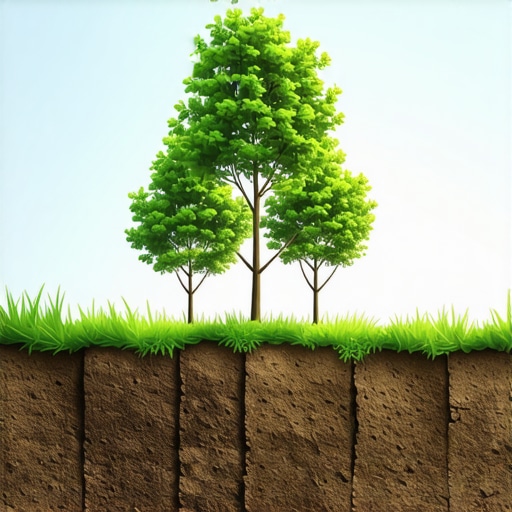
Proper site preparation for Zone 7 fruit trees involves testing soil pH, ensuring a percolation rate of at least one inch per hour, and amending heavy clay with 20% organic matter. Failure to address soil compaction and drainage before planting leads to root rot and stunted growth cycles.
I always drill into my new crew members: if you don’t fix the soil grading first, every plant you put in the ground is just expensive compost. I saw a guy last year spend five grand on specimen-grade cherry trees. He dug holes in heavy clay without checking the percolation rate. Two weeks of spring rain later, those trees were sitting in subterranean buckets of stagnant water. The roots drowned. He didn’t have a planting problem; he had a drainage and engineering problem. In Zone 7, we often deal with heavy red clay or dense silt. You cannot just drop a root ball into that. You need to fracture the side walls of the planting hole to prevent the “glazing” effect, where the roots grow in a circle because they cannot penetrate the smooth, compacted clay sides. This is known as root girdling, and it is a slow death sentence.
“Fruit trees require well-drained soil with a pH between 6.0 and 7.0 for optimal nutrient uptake and root health.” – Penn State Agricultural Extension
Before you even look at a catalog, you must call 811. Utility lines often run right where you want to plant your anchor trees. Once the lines are marked, assess the topography. If your yard has more than a 2% grade, you should consider hardscaping solutions like low stone retaining walls to create level terraces. This prevents irrigation runoff and ensures that the water reaches the root flare instead of washing away down the slope. We use a modified gravel base for any supporting masonry to ensure hydrostatic pressure does not blow out the wall during a heavy freeze-thaw cycle, which is common in our region. Drainage is the difference between a thriving orchard and a muddy mess.
Top 5 Fruit Tree Selections for 2026
The 2026 recommendations for Zone 7 focus on high-yield cultivars like the Contender Peach and Liberty Apple, which offer superior resistance to fire blight and late spring frosts. These varieties are selected for their proven performance in varied soil conditions and high-stress climate patterns.
1. The Contender Peach (Prunus persica)
The Contender Peach is the gold standard for Zone 7 for one reason: it is a late bloomer. In our zone, a sudden frost in late March or early April can wipe out a peach crop in a single night. The Contender waits. It requires about 1050 chill hours, which is high for our region but acts as a safety mechanism. This tree is self-fertile, meaning you do not need a second tree for pollination, making it ideal for smaller backyard footprints. We recommend planting this on a Guardian rootstock to handle the nematodes often found in southern Zone 7 soils.
2. Hosui Asian Pear (Pyrus pyrifolia)
If you want a tree that looks as good as it produces, the Hosui is the choice. Unlike European pears that need to be picked hard and ripened on a counter, Asian pears ripen on the branch. The Hosui is particularly resistant to fire blight, a bacterial nightmare that kills thousands of trees in the transition zone every year. It produces a bronze-skinned fruit that has a crisp, watery texture. From a landscaping perspective, its glossy green leaves and upright growth habit make it a perfect focal point for a formal garden design.
3. Liberty Apple (Malus domestica)
Most people want to grow Honeycrisp, but in Zone 7, Honeycrisp is a headache. It is prone to every fungus and pest in the book. Instead, go with the Liberty Apple. As the name suggests, it offers liberty from spraying. It is immune to apple scab and highly resistant to cedar apple rust and powdery mildew. It produces a tart, McIntosh-style fruit. To ensure the tree stays manageable, order it on an M.7 or M.111 semi-dwarf rootstock. This keeps the tree under 15 feet, allowing for easy pruning and harvesting without a 20-foot ladder.
4. Mount Royal Plum (Prunus domestica)
This is a European plum variety that is incredibly hardy. It is a freestone plum, meaning the pit separates easily from the flesh, which is what you want for canning or drying. In Zone 7, plums can be tricky because of black knot fungus. Mount Royal shows a higher level of tolerance than many Japanese varieties. It is also self-fertile, though planting a second plum nearby will always increase your yield through cross-pollination. It handles the heavier loams of our zone better than most stone fruits.
5. Methley Plum (Prunus salicina)
For the gardener who wants immediate results, the Methley is a fast grower and an early producer. It ripens in early summer, often before the peak heat and humidity of July hits. The fruit is small, purple-red, and very sweet. The Methley is a heavy hitter in terms of production, often producing so much fruit that the branches require thinning to prevent breakage. This is where your engineering mindset comes in: you must prune for structural integrity, not just for aesthetics.
[image_placeholder]
Technical Specifications and Maintenance Schedules
Successful orchard management requires a structured maintenance schedule including dormant oil applications in February, nitrogen-heavy fertilization in early spring, and precise summer pruning to manage the canopy density. Monitoring soil moisture with a tensiometer ensures the deep, infrequent watering required for root strength.
How much space do fruit trees need in a backyard?
Standard fruit trees require 20 to 25 feet of spacing, while semi-dwarf varieties only need 12 to 15 feet. Dwarf trees can be spaced as close as 8 feet apart, making them suitable for tight urban lots where space is at a premium. Proper spacing is not about the branches; it is about the root systems competing for nutrients and water in the soil matrix.
What is the best soil pH for fruit trees in Zone 7?
The ideal soil pH for most fruit trees in Zone 7 is 6.5. This slightly acidic environment allows for the maximum bioavailability of essential micronutrients like iron and manganese. If your soil is too alkaline, you will see chlorosis, where the leaves turn yellow while the veins stay green. This is a clear sign of nutrient lockout due to improper chemical balance in the soil.
| Variety | Pollination | Chill Hours | Disease Resistance | Harvest Window |
|---|---|---|---|---|
| Contender Peach | Self-Fertile | 1050 | High (Bacterial Spot) | Late August |
| Hosui Asian Pear | Needs Partner | 450 | High (Fire Blight) | August |
| Liberty Apple | Needs Partner | 800 | Immune (Apple Scab) | September |
| Mount Royal Plum | Self-Fertile | 700 | Medium (Fungal) | Late August |
| Methley Plum | Self-Fertile | 250 | High (Heat) | June/July |
“Proper pruning increases sunlight penetration and air circulation, which are critical for reducing fungal pathogen pressure.” – Texas A&M Agrilife Extension
Do not commit the sin of the mulch volcano. I see this every day. Some mower-and-blow hack piles six inches of mulch directly against the bark of the tree. This traps moisture against the trunk, inviting borers and fungal rot. The root flare, that widening part of the trunk where it meets the soil, must be visible. Mulch should be spread 2 to 4 inches deep in a wide circle around the tree, but it should never touch the wood. We use hardwood mulch because it breaks down slowly and adds organic matter back into the nitrogen cycle. Remember: deep, infrequent watering is the goal. You want to force those roots to chase the water down into the subsoil. Watering for ten minutes every day creates a shallow, weak root system that will fail during a drought.
The Long-Term Installation Checklist
- Test soil drainage by digging a 12-inch hole and filling it with water; it must drain within 12 hours.
- Check soil pH and adjust with lime or sulfur at least three months before planting.
- Identify the root flare and ensure it is planted 1 inch above the surrounding grade to allow for settling.
- Install a drip irrigation system with a timer to deliver water directly to the root zone, avoiding leaf moisture.
- Apply a dormant spray (neem oil or copper) in late winter to kill overwintering pests and fungal spores.
- Prune using the “Thinning Cut” method to remove crossing branches and water sprouts in early March.
By the end of the first year, your trees should show at least 12 to 18 inches of new growth if the nitrogen levels and water cycles are correct. If the growth is stunted, check for soil compaction. Sometimes the best tool for a struggling tree is not a fertilizer bag, but a core aerator or a broadfork to get oxygen back into the root zone. Landscaping is a long game. You are not just planting for 2026; you are engineering a system that will produce for the next twenty years. Don’t take shortcuts on the foundation.