Stop 2026 Tree Bark Damage from Lawn Mowers
The Forensic Autopsy of a Dying Landscape: Why Your Mower is a Killer
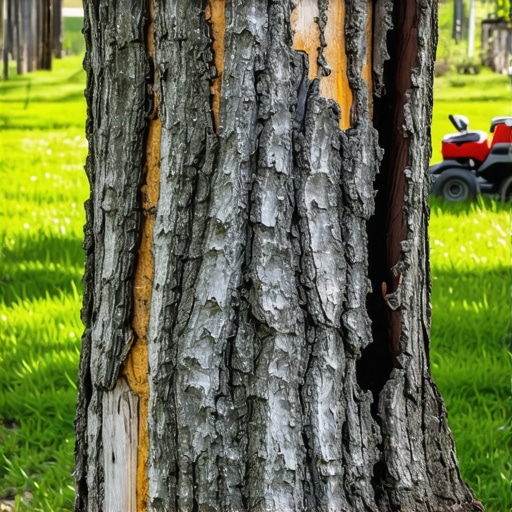
Mechanical injury to tree trunks is the silent epidemic of modern lawn care. When a 25-horsepower zero-turn mower or a high-RPM string trimmer makes contact with a tree, it does not just scratch the surface. It performs a violent extraction of the vascular system. I see this every week: a homeowner wonders why their ten-year-old oak is thinning at the top, only to find the base is scarred, grey, and weeping sap. The bark is the tree’s only armor. Once that armor is breached, the clock starts ticking on its death. It is a slow, agonizing process of starvation. I always drill into my new crew members: if you don’t fix the soil grading first, every plant you put in the ground is just expensive compost. You cannot hide bad engineering with a handful of mulch, and you cannot save a tree once a mower has stripped 50 percent of its circumference. We treat every tree on a site as a structural pillar. If you hit it, you are compromising the entire project.
The Anatomy of a Tree Kill: Why Bark Matters
Tree bark damage from lawn mowers and trimmers destroys the cambium layer, the microscopic engine room responsible for transporting nutrients between the roots and the canopy. Bark is not just a decorative skin; it is a complex stack of tissues including the cork, cork cambium, and phloem. The phloem moves sugars from the leaves down to the roots. When a mower deck slams into the trunk, it crushes these vessels. This is called girdling. If the damage extends around the entire diameter of the tree, the roots starve. They stop growing. The tree can no longer pull water up. The canopy starts to die back. Within two seasons, the tree is a standing hazard. We see this often in new developments where contractors are in a rush. They scalp the grass and bash the bark. It is negligence, plain and simple.
“The cambium is a thin layer of generative tissue between the bark and the wood. Any injury to this layer halts the downward flow of food to the roots, eventually leading to root death and total plant failure.” – Texas A&M AgriLife Extension
How do I protect my trees from lawn mower damage?
To protect tree trunks from mechanical damage, you must create a physical no-fly zone using mulch rings or hardscaping borders that keep equipment at least 12 to 24 inches away from the root flare. This eliminates the need for close-range trimming. Use a 2-inch layer of organic mulch, but never pile it against the bark. This prevents mower impact and improves soil health simultaneously. It is the only way to ensure 100 percent safety.
The High Cost of Mower Blight in Garden Design
In high-end garden design, trees are capital assets. A mature specimen can be worth $10,000 or more in property valuation. Yet, homeowners allow $15-an-hour lawn care hacks to run heavy machinery within inches of these assets. The impact of a mower deck creates a site of infection. Fungi like Armillaria or Phytophthora enter through the wound. These pathogens thrive in the moist, dark environment created by “mulch volcanoes”—that’s when people pile mulch against the trunk like a mountain. It rots the bark. Combined with mower damage, it is a death sentence. I have excavated root flares that looked like wet sponges because the homeowner thought more mulch was better. It is not. You need 2 inches of depth, max. And you must see the flare. If the tree looks like a telephone pole sticking out of the ground, it is planted too deep or over-mulched.
| Protection Method | Cost per Tree | Durability | Technical Effectiveness |
|---|---|---|---|
| Wood Chip Mulch | $5 – $10 | Low (Annual) | 90% (If applied correctly) |
| Plastic Trunk Guards | $15 – $25 | Medium | 70% (Can harbor insects) |
| Natural Stone Border | $75 – $150 | High | 95% (Physical barrier) |
| Corrugated Pipe Sleeves | $2 – $5 | Low | 50% (Aesthetic failure) |
How much modified gravel do I need for a patio base?
For a standard hardscaping project, you need a 6-inch base of compacted modified gravel (2A or ¾-minus) for walkways and 8 to 12 inches for driveways. Calculate this by multiplying your square footage by the depth in feet, then dividing by 27 to get cubic yards. Multiply by 1.5 to account for compaction density. If you skimp on the base, your pavers will shift within 24 months. Don’t guess; measure. Soil stabilization is the difference between a legacy project and a warranty nightmare.
The Physics of Impact: Trimmers vs. Saplings
A string trimmer line travels at speeds exceeding 3,000 RPM. At that velocity, a plastic line acts like a serrated blade. It doesn’t just cut grass; it sandblasts the bark. On a young tree with thin bark—like a Maple or a Cherry—a single pass with a trimmer can remove the entire protective layer. This is why I advocate for a “Zero-Trimmer Policy” within 12 inches of any woody plant. We use pre-emergent herbicides or hand-weeding in those zones. If your lawn care provider isn’t doing this, fire them. They are destroying your landscaping. I recently performed an autopsy on a row of Arborvitae. The homeowner thought they had a disease. No. The trimmer had girdled every single one of them at the soil line. The plants were literally choked to death.
“Mechanical injury to the base of a tree is a leading cause of decay and premature death in urban landscapes. Proper site preparation and equipment exclusion zones are mandatory for long-term health.” – ISA Best Management Practices
The Blueprint for Tree Survival: A Maintenance Checklist
Effective lawn care requires a shift in mindset. You are not just managing turf; you are managing a biological system. Follow this checklist to ensure your trees survive the 2026 growing season:
- Establish the Mulch Ring: Create a 3-foot diameter ring around every tree. Use arborist wood chips.
- Expose the Root Flare: Ensure the point where the roots widen at the base of the trunk is visible above the soil and mulch.
- Remove Turf Competition: Grass is a nutrient hog. Removing it from the tree’s root zone reduces competition for nitrogen and water.
- Hard-Edge the Bed: Use a spade to cut a clean 3-inch deep edge around the mulch ring to keep grass from encroaching.
- Train Your Crew: If you use a service, explicitly forbid them from using trimmers against the bark. Use a physical barrier if you don’t trust them.
Remediation: What to Do if Damage Occurs
If you find a fresh wound, do not reach for the “wound paint.” That stuff is garbage. It seals in moisture and promotes fungal rot. Instead, use a sharp, sterilized knife to carefully trim any loose or jagged bark around the wound. This is called bridge grafting or tracing. You want to create a smooth edge so the tree can grow callus tissue over the wound. Then, address the cause. If a mower hit it, move the mower path. If the soil is compacted from heavy equipment, use an air-spade to decompress the root zone. You have to reduce the tree’s stress so it can put energy into healing. It won’t happen overnight. It takes years. Most people don’t have the patience, so the tree dies. Don’t be that person. Protect the trunk. It is the only way. Use common sense and keep the steel away from the sap. Your yard will thank you for it in a decade. Stop the damage now.
![Stop 2026 Leaf Rust on Hydrangea Shrubs [Fix]](https://lawnmajesty.com/wp-content/uploads/2026/07/Stop-2026-Leaf-Rust-on-Hydrangea-Shrubs-Fix.jpeg)