5 Best 2026 Mulch Alternatives for Modern Yards
I always drill into my new crew members: if you dont fix the soil grading first, every plant you put in the ground is just expensive compost. I have seen too many hundred thousand dollar landscapes fail because the designer focused on the aesthetic and ignored the civil engineering of the site. Mulch is the biggest offender in this category. For twenty years, homeowners have been conditioned to accept cheap, dyed wood chips as the industry standard. It is a lie. Wood chips are often the waste product of construction debris or diseased timber, and when they break down, they rob your soil of nitrogen. By 2026, the industry is shifting toward more permanent, ecologically sound solutions. This is not just about looks; it is about managing the Cation Exchange Capacity and hydrostatic pressure of your garden beds. If you want a yard that lasts more than three seasons, you need to stop buying bags of orange wood and start looking at materials that work with the biology of the ground.
The Core Failure of Organic Wood Mulch and Why Alternatives Matter
Modern yards require 2026 mulch alternatives like decomposed granite or living groundcovers to solve the perpetual nitrogen-draw and fungal issues inherent in dyed wood chips. These materials provide superior thermal regulation, moisture retention, and structural stability without the acidic breakdown that harms high-end ornamental root systems. It will rot. Cheap mulch creates a hydrophobic layer that prevents water from reaching the rhizosphere. I have seen mulch volcanoes six inches deep that literally suffocated the root flares of mature maples. It is a slow death. Instead, we are looking at materials that facilitate gas exchange and stabilize soil temperatures throughout the freeze and thaw cycles of the late fall and early spring.
“The application of organic mulches exceeding three inches in depth can lead to oxygen deprivation and anaerobic conditions within the rhizosphere.” – Agricultural Extension Agronomy Manual
1. Decomposed Granite (DG) with Stabilizers
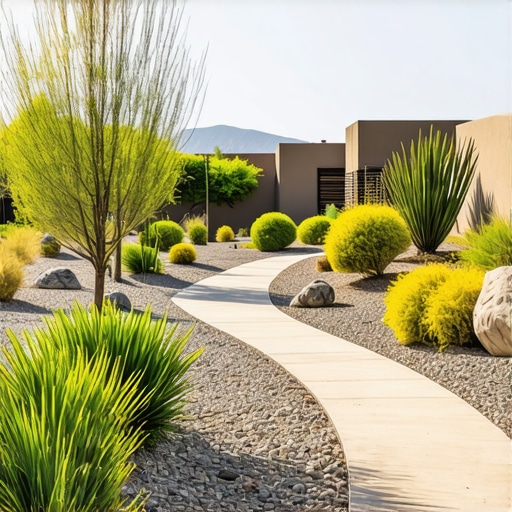
Decomposed granite serves as a permanent mineral mulch alternative that offers exceptional drainage and a compacted surface for modern landscapes. Using stabilized DG prevents erosion on sloped beds while maintaining permeability for deep root irrigation and reducing the heat island effect common in urban hardscaping environments. DG is not just crushed stone; it is granite that has weathered down to a specific gradation of fines and small aggregate. When you install this, you are adding mineral density to the site. It does not blow away in a leaf blower. It does not float away in a heavy rain. We use it in high-traffic garden paths and under specimen trees where we want to avoid the mess of organic decay. You must use a stabilizer, a non-toxic binder that keeps the particles locked together while allowing water to pass through at a rate of several inches per hour. It is professional grade. [IMAGE_PLACEHOLDER_1]
How much modified gravel do I need for a patio base?
While often confused with mulch, the base layer for any stone alternative requires at least four inches of compacted 21A or 57 stone to prevent shifting. For garden beds using stone mulch, a two inch depth of decorative aggregate over a six ounce geotextile fabric is the standard. Don’t skip the fabric. If the stone mixes with the native soil, you have a mess that is impossible to clean. You need that separation layer to maintain the integrity of the drainage profile.
2. Living Mulch and Native Groundcovers
Living mulch utilizes dense vegetative mats of native species to provide natural shade and weed suppression while actively building soil microbiology. This 2026 strategy focuses on green mulch varieties like Sedum or Thymus to create a biological barrier that reduces evapotranspiration and eliminates the need for annual material replacement. It is a self-sustaining system. When you plant a groundcover like Phlox subulata or Carex pensylvanica, you are creating a root network that holds the soil in place better than any plastic mesh. You are also feeding the soil. As the lower leaves of these plants die off, they provide a microscopic layer of organic matter that is immediately processed by soil microbes. No hauling bags. No smell of rotting wood. Just a functional ecosystem that gets better with age. It is a long term investment.
| Material Type | Initial Cost | Maintenance Level | Longevity (Years) | Drainage Rating |
|---|---|---|---|---|
| Decomposed Granite | Moderate | Low | 10+ | 9/10 |
| Living Mulch | High | Moderate | Perennial | 8/10 |
| River Rock | Moderate | Low | 20+ | 7/10 |
| Pine Straw | Low | High | 0.5 | 6/10 |
| Recycled Rubber | Moderate | Very Low | 5+ | 4/10 |
3. River Rock and Polished Cobble
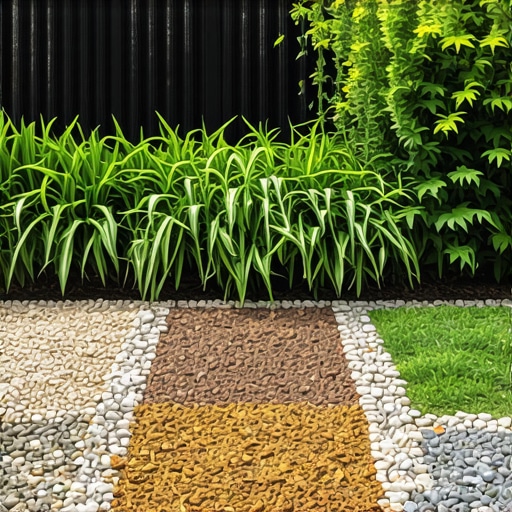
River rock provides a heavy, durable mulch alternative that excels in drainage swales and modern minimalist garden designs. Using rounded river stone creates a thermal mass that protects soil from extreme temperature swings while offering a non-flammable barrier for homes in high-risk wildfire zones. This is about weight. In areas with heavy runoff, wood mulch is useless; it just ends up in the street. River rock stays put. We use it to solve drainage problems, often layering it over a French drain system. The stones allow water to drop straight down into the sub-base, preventing the surface puddling that leads to root rot. You must choose your stone size carefully. One to three inch cobble is the sweet spot. Anything smaller is hard to keep clean of debris; anything larger becomes a trip hazard.
“A retaining wall doesn’t fail because of the stone; it fails because of the water trapped behind it.” – Hardscape Engineering Axiom
4. High-Performance Pine Straw
Pine straw remains a top 2026 mulch alternative for acidic soil environments and large scale woodland landscaping projects. This material provides a natural interlocking mat that prevents soil erosion on steep grades while maintaining an acidic pH balance ideal for azaleas, rhododendrons, and evergreen species. I prefer long-leaf pine straw. It has a higher resin content, meaning it takes longer to break down than the short-needle variety. It is also breathable. Unlike wood chips, which can mat down and create a fungal crust called a mycelium mat, pine straw allows for excellent gas exchange. Your soil needs to breathe. If you have a heavily wooded lot, stop fighting the needles. Embrace them. They are the forest’s natural way of protecting its own. Don’t overthink it.
5. Recycled Rubber and Synthetic Permeable Bases
Recycled rubber mulch offers a permanent, non-decaying alternative for play areas and high-use commercial garden beds. This synthetic option provides shock absorption and moisture permeability without attracting termites or harboring the mold spores often found in traditional organic wood-based mulch products. Use it only where appropriate. I don’t like it in high-end perennial beds because it adds no nutritional value to the soil, but for a playground or a dog run, it is unbeatable. It doesn’t rot. It doesn’t fade if you buy the UV-treated versions. It provides a clean, dry surface immediately after a rainstorm. Just make sure you are using 99% wire-free recycled tires. Cheap versions can have metal fragments. That is a liability you don’t want. Safety first.
How do I stop weeds from growing in stone mulch?
Weeds in stone mulch usually come from the top down, not the bottom up. Dust and organic debris settle between the stones, creating a micro-soil. The best defense is a heavy-duty geotextile fabric and a leaf blower used once a week to keep the stones clean. If you let the dirt build up, nature will find a way. Stay ahead of it.
- Assess site drainage and soil pH before selecting any material.
- Excavate the bed to a depth of 3 inches to allow for the new material profile.
- Install a professional-grade 6-ounce non-woven geotextile fabric for all stone applications.
- Secure the edges with a deep spade edge or aluminum edging to prevent migration.
- Apply the alternative mulch at a consistent depth of 2 to 3 inches.
- Monitor the soil moisture for the first season to adjust to the new evaporation rates.
Landscape management is a game of inches. You can spend your weekends hauling bags of mulch that will disappear in twelve months, or you can build a system that lasts. 2026 is the year we move away from the temporary and toward the structural. Choose materials that respect the biology of the root and the physics of the water table. Your yard will thank you for it. Stop being a hack. Build it to last.