5 Drought-Proof Perennials for Late Summer Color
5 Drought-Proof Perennials for Late Summer Color: Professional Landscaping Guide
Most homeowners view landscaping as a weekend hobby. For me, it is a 50-hour-a-week battle against soil compaction, drainage failure, and poor soil chemistry. You do not just put a plant in a hole. You engineer a biological system. I always drill into my new crew members: if you do not fix the soil grading first, every plant you put in the ground is just expensive compost. We have seen it a hundred times. A client spends five figures on garden design and lawn care, only for the perennials to melt in August because the subsoil was compacted to 95% Proctor density during the hardscaping phase. Water sits on top, the roots suffocate, and the homeowner blames the nursery. In reality, the failure happened at the planning stage. 80% of a successful perennial installation occurs before the first root ball touches the dirt. Success requires analyzing the microscopic reality of the yard, from nitrogen cycles to hydrostatic pressure. If you ignore the physics of the site, nature will win every single time. Hardscaping and planting must work in tandem to manage water flow and thermal mass.
The Science of Xeriscaping and Soil Moisture Retention
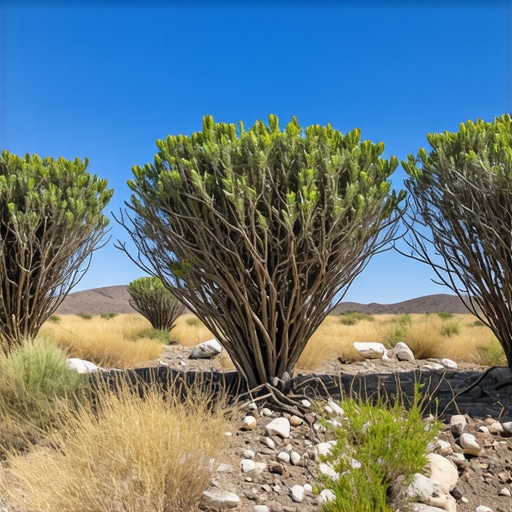
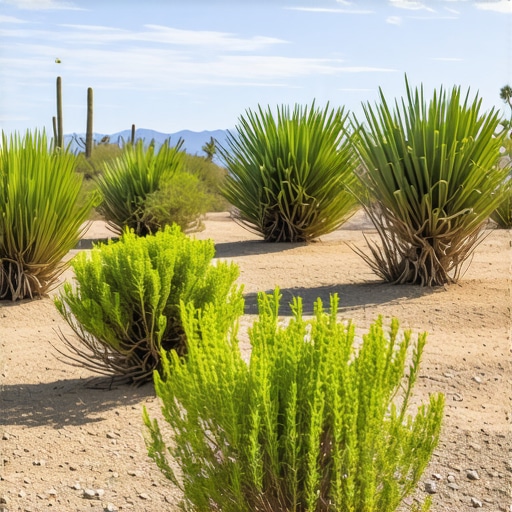
Drought-proof perennials for late summer are plants capable of maintaining physiological function during extreme heat and low precipitation through specialized botanical adaptations. These species utilize deep taproots, succulent tissues, or specialized leaf surfaces to survive when soil moisture levels drop below the permanent wilting point. Unlike standard annuals, these perennials are selected for their ability to thrive in the high-heat environments typically found near stone walls or asphalt driveways where the heat island effect is most pronounced.
“A retaining wall doesn’t fail because of the stone; it fails because of the water trapped behind it.” – Hardscape Engineering Axiom
Before we analyze the specific plant taxa, we must address the O-horizon and soil structure. You need at least 3 inches of organic matter integrated into the top 8 inches of native soil to ensure proper capillary action. If you have heavy clay, you cannot just add sand; that creates a substance similar to concrete. Instead, you must incorporate expanded shale or aged compost to break the ionic bonds of the clay particles, allowing for the drainage required by drought-tolerant species. Proper soil grading is non-negotiable. If the grade slopes toward your garden design bed without a drainage exit, you are creating an underground swimming pool that will rot even the hardiest species.
How much modified gravel do I need for a patio base?
When integrating plants near hardscape, calculate 4 to 6 inches of 2A modified gravel for the base, compacted in 2-inch lifts. This ensures stability for the pavers while preventing soil heave that could damage the root zones of adjacent perennials. Proper compaction is verified when the mechanical tamper literally bounces off the surface of the stone.
1. Echinacea Purpurea (Purple Coneflower)
Echinacea is a staple of professional garden design because of its central taproot system. This root architecture allows the plant to penetrate deep into the B-horizon of the soil, accessing moisture layers that surface-level lawn care grasses cannot reach. While the internet tells you to water every day, turf grass actually needs deep, infrequent watering—exactly 1 inch per week—to force roots to chase the water down. Echinacea follows this same principle. Once established, it requires zero supplemental irrigation in most USDA zones. It is a biological pump that cycles nutrients from the deep subsoil. The ray florets and high-pigment centers provide late summer interest when other species have entered dormancy due to heat stress.
2. Perovskia Atriplicifolia (Russian Sage)
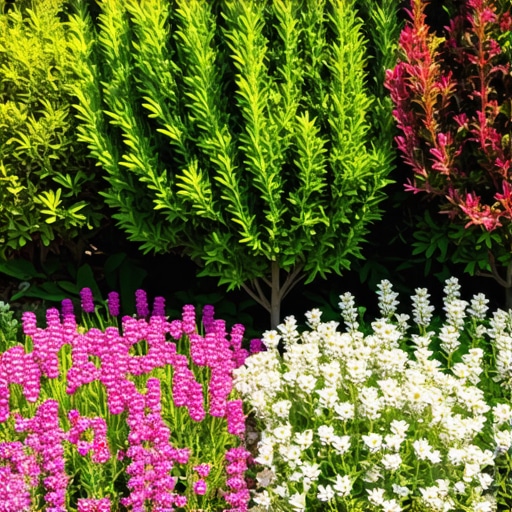
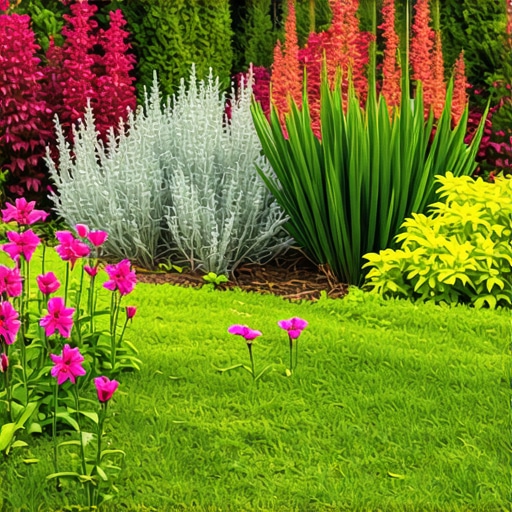
Russian Sage is the ultimate weapon for landscaping projects involving high-thermal mass areas like concrete walkways. The silver-grey foliage is not just for aesthetics; it is a biological defense mechanism. Those tiny hairs, or trichomes, reduce wind speed across the leaf surface, lowering the rate of evapotranspiration. It thrives in high pH soils (7.0 to 8.0) and requires zero nitrogen-heavy fertilizers. In fact, over-fertilizing Russian Sage leads to weak, floppy stems and a lack of chromatic intensity. It prefers the lean, well-drained environments often found in technical hardscaping backfill. [[IMAGE_PLACEHOLDER]]
3. Asclepias Tuberosa (Butterfly Weed)
This is a nitrogen-neutral powerhouse that thrives in high-drainage sandy loams where other plants starve. From a horticultural engineering perspective, Asclepias tuberosa is critical because of its extreme drought resistance and its role in local ecology. It is important to note that this plant has a fragile taproot; once it is in the ground, you cannot move it. If you try to transplant it, you will likely sever the main moisture conduit and kill the specimen. We use it to stabilize slopes where lawn care is impossible due to the steepness of the grade and the risk of soil erosion. It requires full solar exposure—at least 6 to 8 hours of direct UV—to maintain its structural integrity.
4. Sedum ‘Autumn Joy’ (Stonecrop)
Sedum is a master of CAM photosynthesis (Crassulacean Acid Metabolism). Unlike most plants that open their stomata during the day, Sedum keeps its pores closed during the heat to prevent water loss. It performs its gas exchange at night when temperatures are lower and humidity is higher. This makes it essentially immune to the wilting point. In a professional garden design, we use Sedum to transition between the hardscape elements and the softer perennial beds. Its succulent leaves store significant water reserves, allowing it to survive for weeks without a single drop of rain. It is the gold standard for low-maintenance landscaping.
5. Gaillardia (Blanket Flower)
Gaillardia is a short-lived perennial that makes up for its lifespan with high heat tolerance and aggressive self-seeding. It thrives in the 90-degree-plus environments found near stone walls or asphalt driveways. We often use it in coastal landscaping because of its high salt tolerance. If you are dealing with sandy soil that has a low cation exchange capacity, Gaillardia is one of the few species that will not only survive but also provide consistent color from July through the first frost. Do not use heavy mulch around Gaillardia; it prefers a thin layer of pea gravel or pine bark to prevent crown rot.
Which perennials survive 100 degree heat?
Perennials such as Echinacea, Sedum, and Gaillardia are engineered for 100-degree heat. These plants utilize specialized cellular structures and deep root systems to maintain turgor pressure when ambient temperatures exceed the physiological limits of standard garden flora.
| Plant Name | USDA Zone | Soil pH Preference | Drought Tolerance Rating |
|---|---|---|---|
| Echinacea | 3-9 | 6.0 – 7.0 | High |
| Perovskia | 4-9 | 7.0 – 8.5 | Exceptional |
| Asclepias | 3-9 | 5.5 – 7.0 | High |
| Sedum | 3-9 | 6.5 – 7.5 | Exceptional |
| Gaillardia | 3-10 | 6.0 – 8.0 | High |
“Agricultural extension data suggests that soil organic matter increases the water-holding capacity by 20,000 gallons per acre for every 1% increase in humus.” – USDA Agronomy Manual
- Dig the hole twice as wide as the root ball to allow for lateral root expansion.
- Scarify the sides of the planting hole with a spade to prevent root girdling in heavy clay.
- Position the root flare exactly 1 inch above the finished grade to prevent trunk rot.
- Backfill with native soil mixed with no more than 20% compost to avoid soil interface issues.
- Apply 2 inches of mulch, keeping it 3 inches away from the plant stems to prevent fungal infection.
The first year of a new install is the settling-in period. Even drought-proof plants need consistent hydration until their root systems bridge the gap between the nursery potting mix and your native soil. This usually takes one full growing season. If you skip the initial watering, you are just throwing money into a hole. Once established, these five species will become the backbone of a resilient landscape that laughs at the August sun. Do not follow the big-box store advice of daily light watering. That creates shallow, weak roots. Deep, infrequent saturation is the only way to build a professional-grade garden. Always check with 811 Dig Safe before any excavation to avoid utility strikes. Managing the landscape is an engineering task; respect the biology and the physics, and the yard will take care of itself.