Why Professional Landscapers Never Use Plastic Weed Barriers
The Autopsy of a Dying Garden: Why Plastic is a Death Sentence
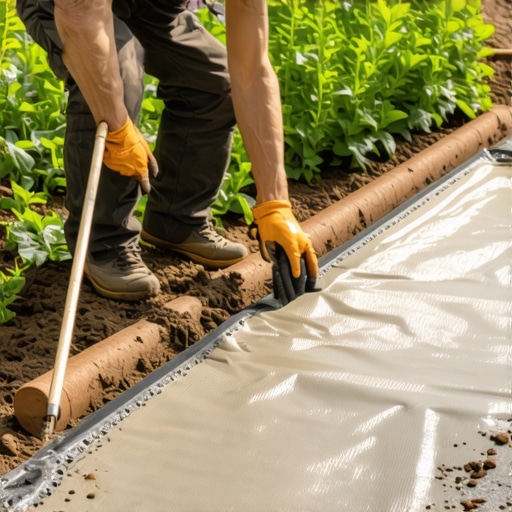
Pull back a layer of black polyethylene plastic from a five-year-old landscape bed and you will encounter the smell of sulfur and rot. The soil beneath is not dark and crumbly; it is a gray, compacted slab of anaerobic clay. Plastic weed barriers function as a suffocating shroud that prevents soil gas exchange and moisture infiltration, effectively killing the microbial life required for plant health. This isn’t just about weeds. It is about the fundamental biology of your yard. When you block the earth’s ability to breathe, you turn a living garden into a sterile waste site. I always drill into my new crew members: if you don’t fix the soil grading and biology first, every plant you put in the ground is just expensive compost. You cannot shortcut the nitrogen cycle with a roll of $20 plastic. I have spent decades excavating the mistakes of contractors who wanted a quick visual win at the expense of the homeowner’s long-term investment. They lay down the plastic, cover it with two inches of mulch, and walk away with a check. Two years later, the homeowner is left with dying shrubs and a mess of weeds growing directly on top of the barrier. It is a scam. To understand why, we have to look at the microscopic reality of what is happening under your feet. Soil needs oxygen. Roots need to respire. Plastic stops both.
What is Soil Gas Exchange and Why Does Plastic Kill It?
Soil gas exchange is the critical movement of oxygen into the soil and the release of carbon dioxide from root respiration into the atmosphere. Polyethylene weed barriers act as a physical seal that traps CO2 and prevents O2 from reaching the rhizosphere, leading to localized hypoxia and root death. This lack of oxygen triggers a shift from aerobic to anaerobic bacterial activity. You will know it has happened when you smell that rotten-egg odor. That is hydrogen sulfide gas, a byproduct of anaerobic microbes thriving in an oxygen-starved environment. It is toxic to most ornamental plants. While a DIYer thinks they are stopping weeds, they are actually creating a toxic basement for their trees and shrubs.
“Soil gas exchange is critical for root respiration; without oxygen, roots cannot actively transport nutrients, leading to systemic plant decline and increased susceptibility to pathogens.” – Penn State Extension Horticultural Manual
The Mechanical Failure: Weeds Grow on Top anyway
One of the biggest lies in landscaping is that plastic prevents weeds. In reality, wind-blown dust, organic debris, and decomposing mulch create a thin layer of nutrient-rich sediment on top of the plastic within 12 to 18 months. Weed seeds land in this new layer and germinate. Their roots then penetrate the plastic or move laterally until they find a seam. Once a weed root gets through that plastic, it is nearly impossible to pull. You end up ripping the barrier out of the ground just to get a single dandelion. Furthermore, the hydrostatic pressure during heavy rains causes the plastic to float or shift, often surfacing and looking like a tattered trash bag in your garden design. It is an aesthetic and functional failure. Most hardscaping professionals avoid plastic because it also creates drainage nightmares. Water cannot penetrate the plastic, so it runs off toward your foundation or pools in low spots, causing soil saturation and crown rot in your perennials. It is a cascading system failure that starts with a single roll of plastic.
Technical Comparison of Soil Barriers
| Barrier Type | Permeability (%) | Life Span | Impact on Soil Biology | Primary Use Case |
|---|---|---|---|---|
| Black Plastic (Poly) | 0% | 2-5 Years | Highly Destructive | None (Avoid) |
| Non-Woven Geotextile | 15-30% | 10-15 Years | Moderate Suppression | Under Hardscaping only |
| Arborist Mulch | 95% | 1-2 Years | Regenerative | Planting Beds |
| Sheet Mulching (Cardboard) | 85% | 6-12 Months | Highly Beneficial | New Garden Prep |
The Hydrostatic Pressure and Drainage Reality
When you cover a sloped area with plastic, you are essentially creating a waterslide for stormwater runoff. In a professional hardscaping setup, we manage water using French drains and modified gravel bases that allow for 15-20% porosity. Plastic offers 0% porosity. During a one-inch rain event, that water has to go somewhere. If it can’t go down, it goes sideways, washing your expensive mulch into the lawn or the street. This is why we see so much erosion in DIY landscaping projects. Professional-grade geotextile fabrics (the fuzzy, felt-like stuff) are designed for drainage, not weed suppression. They allow water to pass through while keeping soil fines from clogging your gravel. Using plastic instead of a proper non-woven geotextile is a rookie mistake that will compromise the structural integrity of your site.
“Non-woven geotextiles should only be used in drainage applications and as a separation layer in hardscapes; they are not intended for use as a primary weed barrier in living soil systems.” – ICPI Technical Standards
How much modified gravel do I need for a patio base?
To calculate your modified gravel needs, multiply the square footage of your site by the depth (minimum 4-6 inches for patios), then divide by 27 to get cubic yards, adding 20% for compaction. If you skip the compaction step or use plastic underneath the gravel, the base will shift. The plastic acts as a slip-plane. This causes pavers to heave and dip. Always use a vibratory plate compactor on 2-inch lifts. Don’t just dump the stone and hope for the best. Soil prep is 80% of the job. The same applies to gardens. If you don’t prep the soil correctly, no barrier will save you from maintenance headaches later.
The Remediation: How to Fix a Plastic-Smothered Yard
If you have inherited a yard full of plastic, the fix isn’t pretty, but it is necessary. You have to strip the site. Here is the professional checklist for soil restoration:
- Mechanical Removal: Pull up every square inch of plastic. Use a utility knife to cut around root flares. Do not nick the bark.
- Core Aeration: Once the plastic is gone, the soil is likely compacted. Use a core aerator to pull plugs and re-introduce oxygen.
- Organic Amendment: Top-dress with 1-2 inches of high-quality compost. This reintroduces the microbiology that the plastic killed.
- Sheet Mulching: Use a layer of plain brown cardboard over stubborn weed areas. It suppresses weeds but decomposes, adding carbon to the soil.
- Vertical Mulching: For trees that were under plastic, use an air-spade to loosen the soil and incorporate organic matter directly into the root zone.
Why Arbo-Mulch Beats Everything Else
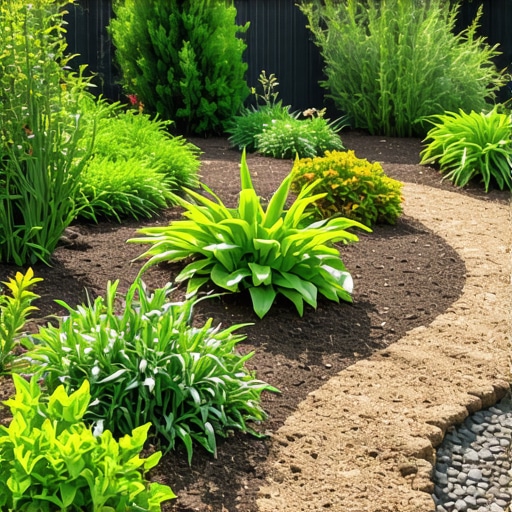
Professional horticulturists use arborist wood chips. It is the gold standard for lawn care and garden health. Unlike plastic, wood chips mimic the forest floor. As they break down, they feed mycorrhizal fungi which form a symbiotic relationship with your plants’ roots. These fungi help plants find water and nutrients they couldn’t reach on their own. Plastic severs this connection. Wood chips also regulate soil temperature. In the heat of summer, soil under plastic can reach 120 degrees Fahrenheit, literally cooking the roots. Under a thick layer of wood mulch, that same soil stays at a cool 75 degrees. It’s a no-brainer. If you want a garden that thrives, you have to work with biology, not against it. Stop buying plastic. Start buying compost.
What are the best plants for heavy clay soil?
For heavy clay, look for native species with deep taproots like Baptisia or Switchgrass that can penetrate the dense structure and help with natural aeration. These plants don’t need weed barriers; they need space to grow. Avoid planting too deep; always ensure the root flare is visible above the soil line. If you bury the flare and then cover it with plastic and mulch, the tree will develop girdling roots and die within a decade. It’s a slow death, but it’s preventable. Just use mulch. Keep it away from the trunk. Let the soil breathe.