How to Build a Natural Stone Edge for Your Flower Beds
I always drill into my new crew members: if you don’t fix the soil grading first, every plant you put in the ground is just expensive compost. This hard truth applies equally to hardscaping. I have seen hundreds of DIY edging projects where the homeowner spent thousands on beautiful Pennsylvania fieldstone, only to have the entire border sink into the mud because they skipped the base preparation. A natural stone edge is not a decoration; it is a structural retaining system at a micro-scale. It manages soil migration, prevents turf encroachment, and handles the hydrostatic pressure of the flower bed during heavy rain events.
The Engineering Logic of Natural Stone Edging
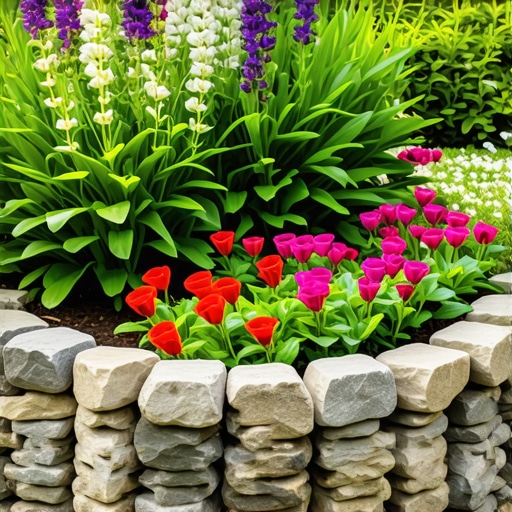
Professional natural stone edging requires excavating a structural trench at least 6 inches deep, installing a 2-to-4-inch compacted aggregate base, and selecting stones with high density to resist frost heave and soil pressure. A properly engineered edge serves as a root barrier and a permanent mowing strip for lawn care maintenance.
Most people think you just toss rocks in a line. That is how you get a weed-choked mess. You have to understand the physics of your soil. If you are dealing with heavy clay, your stones will shift like tectonic plates the first time the ground freezes. If you have sandy loam, the soil will wash right out from under the stones unless you use a geotextile fabric. You are building a foundation. Treat it like one. Don’t skip the compaction. Don’t eyeball the level. Use a string line and a transit level if you have to. It matters.
“A retaining wall doesn’t fail because of the stone; it fails because of the water trapped behind it.” – Hardscape Engineering Axiom
Selecting Your Materials: Beyond Aesthetics
Choosing the right hardscaping material involves analyzing the mineral composition and compressive strength of the stone to ensure it can withstand local freeze-thaw cycles and chemical exposure from fertilizers. High-density igneous rocks like granite or metamorphic rocks like quartzite are superior to soft sedimentary stones like cheap limestone which may crumble under acidic soil conditions.
| Stone Type | Density (lbs/ft³) | Durability | Best Application |
|---|---|---|---|
| Fieldstone | 150-165 | High | Rustic, irregular borders |
| Flagstone (thick) | 140-160 | Medium-High | Formal, stacked edges |
| River Rock (Cobble) | 160+ | High | Drainage-heavy areas |
| Cut Granite | 170+ | Extreme | Modern, high-traffic zones |
Avoid the big-box store