The Best Way to Hide Your Neighbor’s Ugly Fence
The Foundation of Visual Privacy: Why 80% of Your Screening Project Happens Underground
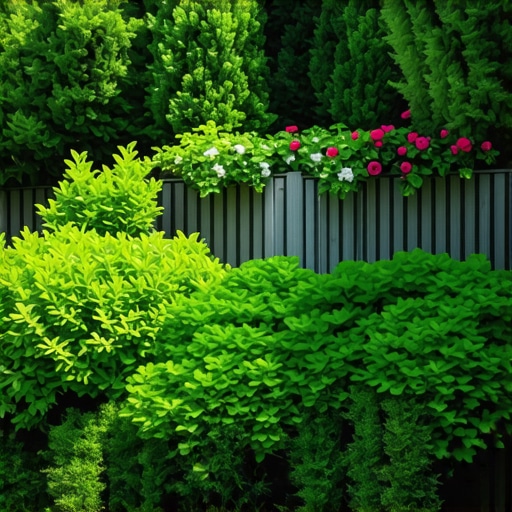
The best way to hide your neighbor’s ugly fence involves a strategic combination of layered horticulture and structural hardscaping designed to account for soil pH, wind loads, and root zone expansion. To effectively mask a boundary eyesore, you must prioritize soil remediation and site grading before selecting species like Thuja occidentalis or installing heavy-duty trellis systems.
I always drill into my new crew members: if you don’t fix the soil grading first, every plant you put in the ground is just expensive compost. I’ve seen guys drop ten grand on specimen-grade Skip Laurels only to watch them drown because the neighbor’s yard drains directly into that fence line. You can’t just slap a plant in a hole and expect it to cover a rusted chain-link or a graying, rotting privacy fence. You are building a biological wall. Treat it like engineering.
“A screening plant is only as resilient as its root-to-shoot ratio and the gas exchange capacity of the soil it inhabits.” – Manual of Woody Landscape Plants
The Physics of the Privacy Screen
Before you buy a single 15-gallon pot, look at the sun. Most homeowners fail because they pick a plant based on a tag at a big-box store without measuring the actual Phothetically Active Radiation (PAR) reaching that fence line. Is the fence casting a 6-foot shadow for eight hours a day? If so, your ‘full sun’ evergreens will thin out at the bottom, revealing the very fence you’re trying to hide. We call this ‘leggy growth,’ and it is the hallmark of a hack job. You need to calculate the height of the fence versus the angle of the sun to determine if you need shade-tolerant species like Taxus or high-light performers.
Species Selection: Engineering with Chlorophyll
To hide a fence permanently, you need to understand USDA Hardiness Zones and growth rates versus structural integrity. Fast-growing plants are often weak-wooded. If you plant something that grows three feet a year, expect to be out there with a pole pruner every six months or watch it snap in the first ice storm. Below is a breakdown of professional-grade screening options based on site conditions.
| Plant Species | Growth Rate | Root System Type | Best For |
|---|---|---|---|
| Green Giant Arborvitae | 3-5 ft/year | Fibrous/Shallow | Massive scale, fast cover |
| Hicks Yew (Taxus) | 0.5-1 ft/year | Deep/Dense | Shade, tight spaces, formal look |
| Nellie R. Stevens Holly | 1-2 ft/year | Taproot dominant | Security, year-round opacity |
| Clumping Bamboo (Fargesia) | 2-3 ft/year | Rhizomatous (Non-invasive) | Narrow footprints, modern aesthetic |
Don’t touch running bamboo. Just don’t. I don’t care what the internet tells you. Unless you are installing a 60-mil HDPE root barrier buried 30 inches deep with a 2-inch lip above grade, you are just inviting a lawsuit from that neighbor with the ugly fence.
How far from a fence should I plant privacy trees?
You must plant privacy trees at a distance equal to half of their mature width plus 12 inches to allow for airflow and maintenance access. For a standard Green Giant Arborvitae with an 8-foot mature spread, the center of the trunk should be at least 5 feet from the fence line to prevent foliage rot and hydrostatic pressure build-up against the structure.
The Hardscape Hybrid Approach
Sometimes you don’t have the 5 to 10 feet of horizontal space required for a massive hedge. This is where hardscaping meets horticulture. If you’re dealing with a tight side yard, you need a vertical plane. I prefer a custom-built cedar trellis or an offset ‘shadowbox’ panel system. But here is the catch: you cannot attach your new structure to the neighbor’s fence. That is a structural and legal nightmare. You set your own 4×4 pressure-treated posts, rated for ground contact (UC4A grade), and you set them in 36-inch deep footings.
The Drainage Mandate
When you install a dense row of plants or a new screening structure, you are changing the micro-climatology of your yard. Specifically, you are creating a windbreak and a water trap.
“Surface runoff must be diverted away from the foundation of any vertical structure to prevent soil saturation and subsequent footing failure.” – ICPI Tech Spec No. 2
If your yard slopes toward that ugly fence, you need a French drain or a dry creek bed running parallel to your new screen. Use 1.5-inch washed river stone and a perforated PVC pipe (not the cheap corrugated stuff) to move water away. If the soil stays boggy, the roots of your new screen will succumb to Phytophthora or other fungal pathogens. It will rot. Don’t skip the drainage.
Installation Protocol: The Professional Method
- Step 1: Utility Marking. Call 811. I don’t care if you think you know where the lines are. A severed fiber optic cable costs more than your entire landscaping budget.
- Step 2: Soil Testing. Get a soil probe. Check your pH. If you’re at an 8.0 and you plant Hollies, they will turn yellow and die from iron chlorosis.
- Step 3: The Trench. For hedges, dig a continuous trench rather than individual holes. It allows for better lateral root expansion and uniform drainage.
- Step 4: Root Flare Exposure. This is the most common amateur mistake. The root flare—where the trunk widens at the base—must be 1 inch above the finished grade. If you bury it, you kill the tree.
- Step 5: Bio-Stimulants. Skip the high-nitrogen salts. Use mycorrhizal fungi and humic acid to stimulate root colonization.
What is the fastest growing plant for fence privacy?
The fastest growing plant for fence privacy is the Leyland Cypress, which can grow up to 4 feet per year, but it is highly susceptible to Seiridium canker and bagworms. For a more resilient fast-grower, professionals recommend the Green Giant Arborvitae or Skip Laurel, which provide 2-3 feet of dense growth annually without the same level of disease risk. Always check your USDA zone before planting.
Long-Term Maintenance and the 1-Inch Rule
Once the screen is in, the work isn’t over. Turf grass is the enemy of a new hedge. It competes for nitrogen and water. Strip the grass back at least 3 feet from your plants and apply a 3-inch layer of triple-shredded hardwood mulch. Do not create ‘mulch volcanoes.’ Keep the mulch 2 inches away from the trunk to prevent bark rot. Water deeply and infrequently. Your goal is to force the roots to chase moisture down into the subsoil. In most climates, that means 1 inch of water per week, delivered via drip irrigation at the soil level, not overhead spraying which invites powdery mildew.
Remember, a screen is a living organism. It needs air, light, and room to breathe. If you pack them in too tight for ‘instant’ privacy, you’ll be tearing them out in five years when they’ve choked each other out. Do it right. Build it to last.
![Best 2026 Groundcover for Steep Slopes [No-Mow]](https://lawnmajesty.com/wp-content/uploads/2026/07/Best-2026-Groundcover-for-Steep-Slopes-No-Mow.jpeg)