How to Winterize Your Pond Without Removing the Fish
The Forensic Reality of Winter Pond Failure
I recently got called out to inspect a $45,000 custom ecosystem pond that had become a literal frozen sarcophagus for twelve high-grade Kohaku Koi. The homeowner followed a generic online guide that suggested simply throwing a floating heater in and walking away. They didn’t understand the hydrostatic pressure of expanding ice or the toxic gas buildup beneath the surface. When I arrived, the water smelled like rotten eggs: clear evidence of anaerobic decomposition that suffocated the fish long before the water actually froze through. Most people treat pond winterization as a chore, but it is actually a precise biological and mechanical engineering challenge. You aren’t just ‘closing’ a pond; you are managing a closed-loop life support system under extreme environmental stress. If you fail to manage the nitrogen cycle and dissolved oxygen levels during the freeze, you aren’t just ignoring your yard: you’re killing an investment.
Understanding the Physics of Winter Pond Environments
Winterizing a pond without removing fish requires maintaining a consistent gas exchange and protecting the thermal layer at the bottom of the water column. In depths over 36 inches, water reaches its maximum density at 39 degrees Fahrenheit and sinks, creating a stable zone where fish can survive in a state of torpor. Breaking this layer or allowing the surface to seal completely leads to a lethal accumulation of hydrogen sulfide and carbon dioxide while depleting the oxygen required for survival. It is a delicate balance of mechanical aeration and thermal management.
“The primary cause of fish mortality in winter is not the cold itself, but the lack of oxygen and the buildup of toxic gases under the ice cover.” – Ohio State University Agricultural Extension
How much oxygen does a winter pond need?
In cold water, fish metabolism slows down, but oxygen demand remains critical for basic biological functions. You should aim for saturation levels of at least 7 to 8 mg/L of dissolved oxygen. This is achieved by keeping a small area of the surface open, which allows gases to vent without cooling the entire water column too rapidly. Do not use a hammer to break the ice: the shockwaves can rupture a fish’s swim bladder. Use heat or aeration instead.
The Ground-Up Build: Winterization Hardware and Strategy
Proper winterization starts with the right equipment and a clear understanding of your mechanical load. You need to decide if you are running your main pump or switching to a dedicated winter aeration kit. In climates where the ground freezes solid, leaving a high-flow external pump running is a risk. If a pipe freezes and bursts, the pump will drain the pond in minutes, leaving your fish on dry ice. I always recommend a dual-approach: a low-wattage de-icer paired with a bottom-diffused aerator. The aerator should be positioned about 12 inches off the bottom to avoid mixing the warm thermal layer with the colder surface water.
| Equipment Type | Primary Function | Energy Use (Avg) | Best Use Case |
|---|---|---|---|
| Pond De-Icer | Maintains gas vent hole | 100W – 1500W | Extreme sub-zero zones |
| Subsurface Aerator | Oxygenates & circulates | 15W – 60W | Essential for all fish ponds |
| Pond Netting | Prevents organic decay | N/A | Autumn leaf fall protection |
| Winter Pump | Small scale circulation | 40W – 100W | Mild freeze zones only |
Pre-Winter Maintenance Checklist: The Cleanup Phase
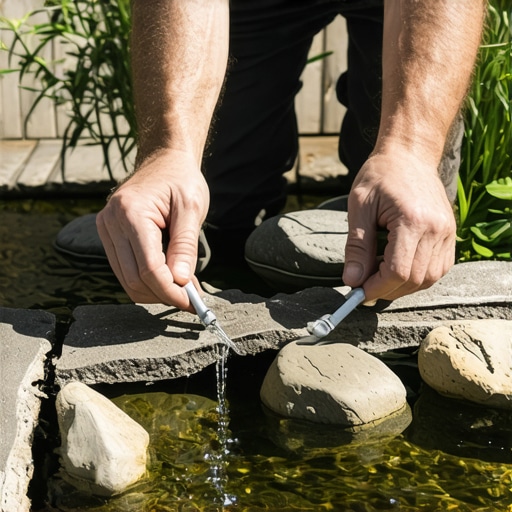
Before the first hard freeze hits, you must reduce the biological load of the pond to prevent oxygen depletion during the winter months. Any organic matter left at the bottom will rot. This rot consumes oxygen and releases ammonia. If the pond freezes over with a foot of sludge on the bottom, your fish are living in a toxic soup. Use a pond vacuum to remove muck and debris from the liner floor. Trim back marginal plants and remove any dying lily pads. This is not about aesthetics; it is about nutrient management.
- Remove Debris: Net out all fallen leaves and organic matter to prevent anaerobic gas buildup.
- Partial Water Change: Perform a 10-20% water change to dilute nitrates before the freeze.
- Switch to Wheat Germ Feed: Transition to cold-weather food when water temperatures hit 55°F.
- Test Water Parameters: Ensure pH, Ammonia, and Nitrites are at zero before the biological filter slows down.
- Position Aerators: Move air stones to a shallow shelf (12 inches deep) to prevent super-cooling the bottom.
“Adequate winterization of water features includes the management of the thermocline to ensure fish can seek refuge in denser, warmer water at the pond base.” – ICPI Hardscape Standards Manual
What is the best pond heater for cold climates?
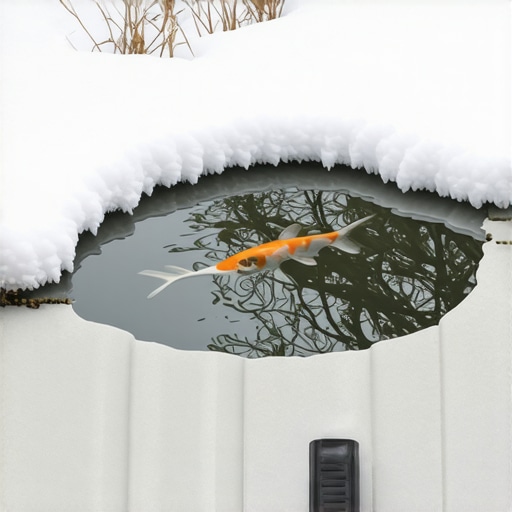
The best pond heater is actually a thermostatically controlled de-icer, not a full-scale pool heater. You only need enough heat to maintain a 6-inch to 12-inch hole in the ice. Look for units with a stainless steel heating element and an automatic shut-off feature. Using a 1500-watt heater in a 500-gallon pond is overkill and will spike your electric bill: stick to the lowest wattage that keeps the vent open for your specific zone.
The Science of Fish Torpor and Feeding
As water temperatures drop below 50°F, fish enter torpor. Their heart rate slows, and their digestive systems effectively shut down. This is why you must stop feeding them. Any food left in their gut when they enter torpor will rot, leading to internal infections or death. If you see your koi hovering at the bottom, motionless, do not be alarmed. They are conserving energy. Do not poke them. Do not try to move them. They are exactly where they need to be. In my experience, more fish die from overfeeding in late autumn than from the actual cold of winter.
Monitoring the Settling In Period
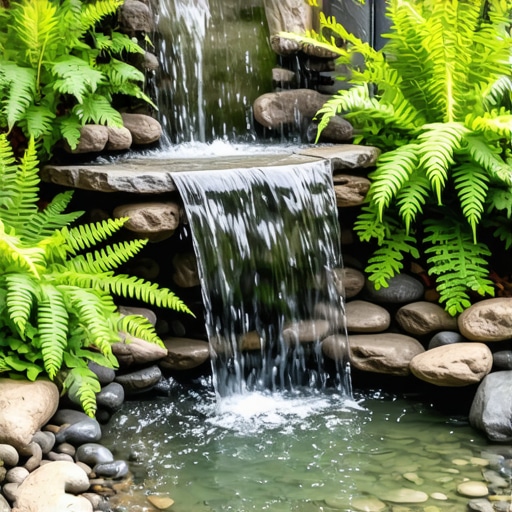
Once the pond is set, your job is daily observation. Check the air pump every morning. If the bubbles stop, the hole will freeze over within hours in a deep freeze. Watch for ice damming on waterfalls: if you leave your waterfall running, ice can build up and divert water right out of the pond liner. This is a common cause of winter water loss. If the water level drops, the ice shelf can collapse, crushing the fish below. In high-risk freeze zones, I tell my clients to bypass the waterfall and use a simple bubbler instead. It’s safer. It’s smarter. It keeps the water in the pond where it belongs.