3 Natural Ways to Clear Algae Without Killing Your Fish
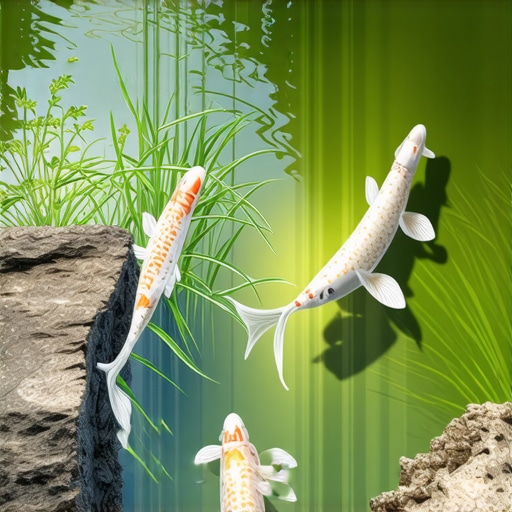
I always drill into my new crew members: if you don’t fix the soil grading first, every plant you put in the ground is just expensive compost. The same hard-nosed logic applies to water features. Most homeowners see green water and reach for a jug of copper sulfate or some high-octane algaecide they bought at a big-box store. That is a amateur mistake. You are not just ‘cleaning’ water; you are managing a pressurized biological system. If you dump chemicals into a pond, you kill the algae, sure, but you also create a massive spike in ammonia as that organic matter rots. This process strips the dissolved oxygen from the water, and that is exactly what kills your koi. It is a death spiral caused by lack of foresight. To clear a pond properly, you have to outsmart the biology, not assault it.
Understanding the Pond Ecosystem for Clear Water
To clear algae naturally, you must aggressively reduce nutrient loads like phosphates and nitrates while simultaneously increasing dissolved oxygen levels to support beneficial aerobic bacteria. This biological filtration approach starves the algae at the source, preventing eutrophication without harming sensitive fish species like goldfish or koi. It is about balance, not eradication.
“A pond is not a static feature; it is a metabolic process that requires a constant balance of dissolved oxygen and nutrient sequestration to prevent anaerobic decay.” – Aquatic Systems Engineering Manual
Algae is an opportunist. It thrives on two things: sunlight and waste. In the landscaping world, we look at the ‘N-P-K’ of everything. In a pond, the ‘N’ (Nitrogen) and ‘P’ (Phosphorus) come from fish waste, decaying leaves, and runoff from your lawn care routine. If your lawn is treated with high-nitrogen fertilizers and your pond sits at the bottom of a slope, every rainstorm is a fuel injection for an algae bloom. You need to interrupt that supply chain.
How much modified gravel do I need for a pond base?
For a standard 10×15 foot pond, you typically need 3 to 4 tons of cleaned river stone or modified gravel to provide enough surface area for nitrifying bacteria to colonize. This bacteria is your primary defense against algae. Without a proper substrate, the nitrogen cycle stalls. Don’t skip the wash-down. Dusty gravel will cloud your water for weeks.
1. Biological Nutrient Competition via Aquatic Flora
Using aquatic plants to clear algae is a strategy of nutrient sequestration where floating plants and submerged oxygenators consume the nitrates that otherwise fuel phytoplankton growth. By covering 50% to 60% of the pond’s surface, you also provide thermal shading, which lowers water temperatures and slows the metabolic rate of algae cells. This is a game of resource war.
[IMAGE_PLACEHOLDER_1]
I tell my clients that plants are just ‘biological sponges.’ If you don’t have enough plants, the algae will take their place. You want a mix of three types: floaters, marginals, and submergents. Floaters like Water Lettuce or Frogbit are the heavy hitters. Their roots hang directly into the water column, sucking up nutrients like a vacuum. Submerged plants like Hornwort (Ceratophyllum demersum) do the ‘underground’ work, releasing oxygen during the day and competing for the same minerals as the ‘pea soup’ algae.
Which plants actually consume phosphates the fastest?
Water Hyacinth and Anacharis are the most aggressive consumers of phosphates and ammonium in residential water features. In a high-nutrient environment, these species can double their biomass in under two weeks, effectively locking away the nutrients that string algae (filamentous algae) needs to anchor to your rocks. Be prepared to cull them; if they die and rot, the nutrients go right back into the water.
2. Barley Straw and Lignin Decomposition
Barley straw serves as a slow-release algae inhibitor through the process of oxidative decomposition, which releases low levels of hydrogen peroxide (H2O2) as it breaks down in the presence of sunlight and oxygen. This method does not kill existing algae instantly but prevents the growth of new unicellular algae cells, making it a safe, long-term preventative for fish-heavy environments. It is chemistry for the patient man.
You can’t just toss a bale of straw in the water and call it a day. It needs to be loose, contained in a mesh bag, and placed in a high-flow area—right near the waterfall or the pump intake. It takes about four to six weeks for the lignins in the straw to start breaking down. Once that process starts, the micro-doses of peroxide keep the water ‘crisp.’ If the straw starts to smell like a swamp, you have an anaerobic pocket. Pull it out. It should smell earthy, not putrid.
“The humic substances produced during the aerobic decomposition of barley straw act as a precursor to the formation of hydrogen peroxide, which is inhibitory to many species of cyanobacteria.” – Penn State Agricultural Extension
How long does it take for barley straw to clear a pond?
Expect a 4 to 8-week window for barley straw to become biologically active in a pond with temperatures above 50°F. In colder water, the microbial activity slows down, extending the timeline. It is not a ‘fix-it-fast’ solution, but it is one of the few ways to manage suspended algae without risking the mucous membranes of your fish.
3. Aeration and Beneficial Bacterial Inoculation
High-volume aeration increases the oxygen saturation of the water, which accelerates the decomposition of organic muck by aerobic bacteria. By installing a bottom-diffused aeration system or a venturi-driven fountain, you eliminate the thermocline and ensure that the entire water column is capable of supporting the nitrification cycle. More air equals fewer nutrients for algae.
Think of your pond like a compost pile. If it is wet and compacted, it stinks and stays cold. If you turn it and give it air, it breaks down. Most ponds suffer from ‘old tank syndrome’ where the bottom 6 inches is a black, stinking sludge of fish waste and dead leaves. That is a phosphate bomb. By pumping air to the bottom, you give the beneficial bacteria (like Bacillus subtilis) the oxygen they need to ‘eat’ that sludge. We call this ‘sludge busting.’ It is the most effective way to clear water long-term.
| Treatment Method | Target Algae Type | Effectiveness Timeline | Impact on Fish |
|---|---|---|---|
| Aquatic Plants | Suspended (Green Water) | 2-4 Weeks | Beneficial (Shelter/Food) |
| Barley Straw | Unicellular & String | 4-8 Weeks | Neutral/Safe |
| Aeration/Bacteria | Muck & Suspended | 1-2 Weeks | Highly Beneficial (Oxygen) |
| Chemical Algaecide | All Types | 24-48 Hours | High Risk (Oxygen Depletion) |
Can you clear pond water with air alone?
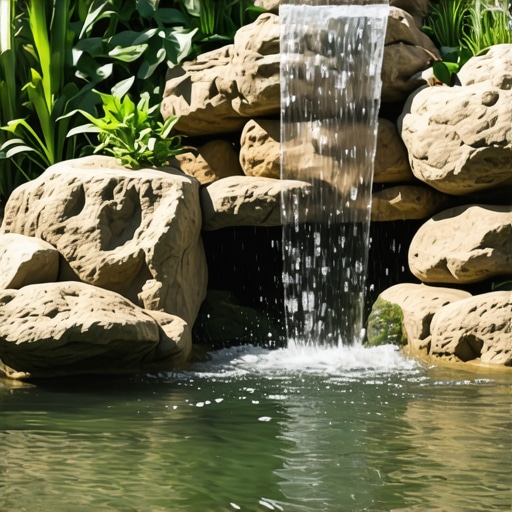
While aeration is critical, it rarely works in isolation for severe blooms. It must be paired with nutrient reduction. However, in a hardscaping context, a properly sized waterfall or spillway that breaks the surface tension can increase gas exchange enough to prevent the carbon dioxide buildup that certain algae species prefer. Don’t underestimate the power of a 2-horsepower pump.
The Master Landscaper’s Maintenance Protocol
Maintenance isn’t a chore; it’s a mechanical check. You wouldn’t run a diesel engine without changing the oil, and you can’t run a pond without managing the biological load. Follow this checklist to keep your water clear and your fish alive through the heat of August. It is simple, but it is non-negotiable.
- Check the Skimmer Daily: Remove leaves and debris before they sink and turn into ammonia-releasing sludge.
- Monitor Dissolved Oxygen: During heatwaves, water holds less oxygen. Run your aerators 24/7 when temperatures exceed 80°F.
- Test pH and Nitrates: Keep your nitrates below 20 ppm. If they spike, perform a 10% water change using a dechlorinator.
- Prune the Flora: Cut back yellowing leaves on lilies immediately. Dying plant matter is just algae fuel.
- Inspect the Base: Ensure no lawn fertilizer runoff is entering the basin. Dig a swale or install a French drain if necessary.
Landscape hacks will tell you to use bleach or specialized dyes. Don’t listen. Those are cosmetic fixes for structural problems. If you have an algae problem, you have a nutrient problem. Fix the cycle, and the water clears itself. It is a biological certainty. Treat your pond like the engineering marvel it is, and your fish will live for decades. Get your hands dirty and do it right.
![Why Your 2026 Backyard Pond is Green [Algae Fix]](https://lawnmajesty.com/wp-content/uploads/2026/05/Why-Your-2026-Backyard-Pond-is-Green-Algae-Fix.jpeg)
![Build a $200 Solar Pond Fountain [2026 DIY Project]](https://lawnmajesty.com/wp-content/uploads/2026/05/Build-a-200-Solar-Pond-Fountain-2026-DIY-Project.jpeg)
![Why Your 2026 Pond Pump is Making Noise [Easy Fix]](https://lawnmajesty.com/wp-content/uploads/2026/07/Why-Your-2026-Pond-Pump-is-Making-Noise-Easy-Fix.jpeg)