

7 2026 Shade Garden Layouts for North-Facing Walls
The Foundation of Shade Gardening on North-Facing Walls
Designing a garden for a north-facing wall requires a deep understanding of indirect light levels, soil moisture retention, and thermal mass. These layouts focus on sciophytic plants that thrive in 500 to 1,000 foot-candles of light, ensuring long-term structural integrity and aesthetic density without the risk of sun scald or dehydration.
I always drill into my new crew members: if you don’t fix the soil grading first, every plant you put in the ground is just expensive compost. Last season, I watched a guy spend five figures on Japanese Maples and Hellebores, only to stick them in a north-side depression where water pooled against the foundation. Within three months, the roots were anaerobic, the stems were mush, and the homeowner was out ten grand. You cannot fight physics. A north wall is a natural refrigerator; it stays cooler and wetter longer than any other part of the property. If your soil isn’t amended to handle that hydrostatic reality, your garden is a graveyard. We don’t just dig holes; we engineer biological systems. That means testing for bulk density and ensuring the percolation rate is at least one inch per hour before a single root touches the dirt.
“A retaining wall doesn’t fail because of the stone; it fails because of the water trapped behind it.” – Hardscape Engineering Axiom
Layout 1: The Woodland Edge System
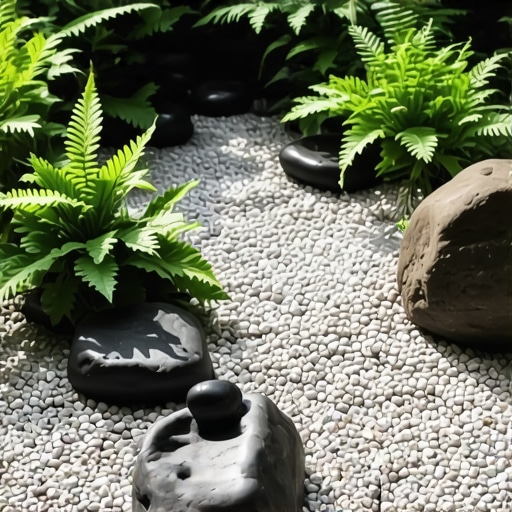
The Woodland Edge System utilizes Polystichum munitum (Western Sword Fern) and Asarum caudatum to create a multi-tiered ground cover that manages soil moisture through high transpiration rates. This layout is ideal for Zone 5-8 environments where damp shade is the primary environmental constraint. It will rot if you don’t use a raised bed. Don’t skip the drainage layer. By layering organic matter with expanded shale, we create a friable medium that supports the delicate rhizomes of woodland species while preventing the dreaded ‘perched water table’ effect common in heavy clay soils.
Layout 2: The Modernist Taxus Box
The Modernist Taxus Box employs Taxus x media ‘Hicksii’ to create sharp, geometric lines that provide year-round structure against the cool grey of a north-facing concrete or stone wall. Taxus is one of the few evergreens capable of maintaining high chlorophyll density in deep shade. We space these at 24 inches on center to allow for adequate airflow, which prevents the needle cast fungi that plague overcrowded shade hedges. This is a high-PSI structural design. It requires precision pruning to maintain the 90-degree angles that define the 2026 minimalist aesthetic.
Layout 3: The Textured Cascade
The Textured Cascade focuses on the interplay between Hakonechloa macra (Japanese Forest Grass) and Hostas with high glaucous wax coatings to create a sense of movement in stagnant air zones. By utilizing the yellow-pigmented cultivars, we maximize the limited light reflection available on the north side. This layout requires a 3-inch layer of double-ground hardwood mulch to regulate soil temperature. Water deep, but infrequently. You want those roots to chase the moisture down into the sub-grade, not sit in a shallow puddle of surface tension.
| Taxus x media | 800-1200 | Moderate/Dry | Fibrous |
| Hakonechloa macra | 500-800 | High/Consistent | Rhizomatous |
| Helleborus orientalis | 600-1000 | Moderate | Deep Tap |
| Heuchera Americana | 400-900 | Low/Moderate | Shallow Crown |
Layout 4: The Pollinator Shade Haven
The Pollinator Shade Haven integrates Tiarella cordifolia and Dicentra spectabilis to provide nectar sources in areas that typically lack floral diversity due to low UV exposure. Most people think pollinators only want sun; they’re wrong. Many native bees prefer the cooler micro-climates of north-facing borders during the peak of July heat. To make this work, you need to monitor the soil pH. These species thrive in a slightly acidic range of 5.8 to 6.5. If your north wall is leaching calcium carbonate from the mortar, your pH will spike, and these plants will yellow and die. Test your soil. Don’t guess.
Layout 5: Vertical Hydrangea Screening
The Vertical Hydrangea Screening layout uses Hydrangea anomala subsp. petiolaris to turn the wall itself into a living cooling fin that reduces the building’s ambient temperature. This is engineering, not just decorating. A climbing hydrangea uses aerial rootlets that need a porous surface to grip. If you have vinyl siding, don’t even try it. You’ll need a stainless steel cable trellis system offset 3 inches from the wall to allow for airflow and prevent wood rot on the structure. This layout provides massive leaf area index (LAI), which helps in localized stormwater mitigation through interception.
Layout 6: The Native Understory Matrix
The Native Understory Matrix is a high-density planting of Heuchera and Carex pensylvanica designed to eliminate the need for annual mulching by creating a ‘living mulch’ layer. We plant these in a triangular grid pattern at 10-inch intervals. This suppresses weeds through resource competition rather than chemical intervention. It is a biological shield. By the second year, the leaf canopy should be closed, preventing sunlight from reaching the soil surface and germinating dormant weed seeds. It works. Stick to the plan.
Layout 7: The Hardscape Integration
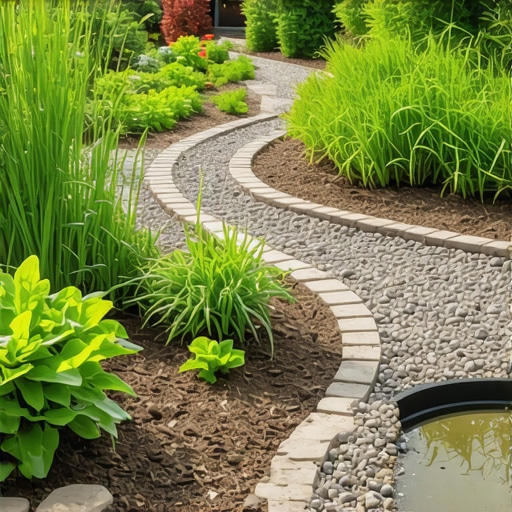
The Hardscape Integration layout uses flagstone steppers set in a bed of Leptinella squalida (Brass Buttons) to create a functional path that survives where turf grass fails. Turf needs 6 hours of direct sun to maintain metabolic function; a north wall gives it zero. Stop trying to grow grass in the dark. Instead, use 1-inch modified gravel as a base for your steppers to ensure they don’t heave during the freeze-thaw cycles. This layout solves the ‘muddy dog’ problem common on the shady side of the house while adding significant property value through permanent infrastructure.
“Agronomy is the study of plants in their environment; landscaping is the art of making that environment perform.” – Penn State Extension Manual
How much modified gravel do I need for a patio base near a north wall?
For a stable patio base near a north wall, you need a minimum of 4 to 6 inches of compacted 2A modified gravel topped with 1 inch of coarse bedding sand. Because north-side soils retain more moisture, skipping the gravel base will result in frost heaving and cracked pavers within two seasons. Use a plate compactor. Do it right or don’t do it at all.
Which shade plants thrive in clay soil against a house?
Plants like Carex, Hellebores, and certain Hydrangea varieties thrive in clay as long as the soil is amended with 20% organic compost to improve pore space. Clay soil on the north side is prone to compaction. You must avoid walking on the beds when they are wet to prevent destroying the soil structure, which leads to root suffocation.
- Conduct a 24-hour percolation test to check drainage.
- Install a 4-inch perforated PVC drain pipe if water pools.
- Amend soil with leaf mold and expanded shale for aeration.
- Apply a pre-emergent herbicide in early spring.
- Set irrigation for early morning to prevent powdery mildew.
Final Inspection: A north-facing garden isn’t a limitation; it’s a structural opportunity. By respecting the physics of water and the biology of shade, you create a cooling, high-performance landscape that outlasts any ‘mow-and-blow’ quick fix. Keep the root flares visible. Keep the drainage clear. Watch it grow.
![Build a $200 Tiered Garden for 2026 Slopes [DIY]](https://lawnmajesty.com/wp-content/uploads/2026/06/Build-a-200-Tiered-Garden-for-2026-Slopes-DIY.jpeg)