Build a $500 Retaining Wall to Stop 2026 Soil Washout
What is the best way to stop soil erosion on a slope?
The most effective method to stop soil erosion on a residential slope is the installation of a gravity retaining wall with integrated hydrostatic pressure relief. By utilizing compacted aggregate bases and perforated drainage pipes, you redirect water flow and physically anchor the soil profile against 2026 climate-driven washout patterns.
The Hardscape Autopsy: A Warning for the $500 Builder
I recently got called out to tear up a $30,000 patio that was sinking because the previous contractor failed to account for basic soil physics. The wall had bowed four inches outward. Why? Because they used dirt as backfill instead of clean stone. When that dirt saturated, it turned into a heavy slurry that the wall couldn’t hold. You might be working with a $500 budget, but physics doesn’t give discounts. If you don’t manage the water, the water will manage your wall. Every failed hardscape I have ever inspected share one trait: poor drainage. In the world of hardscaping, water is the only enemy that never sleeps. You are not building a fence; you are building a dam that must breathe.
“A retaining wall doesn’t fail because of the stone; it fails because of the water trapped behind it.” – Hardscape Engineering Axiom
The Engineering Blueprint: Why 2026 Matters
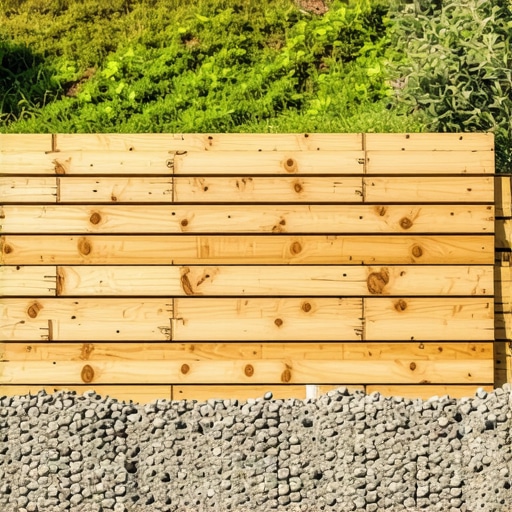
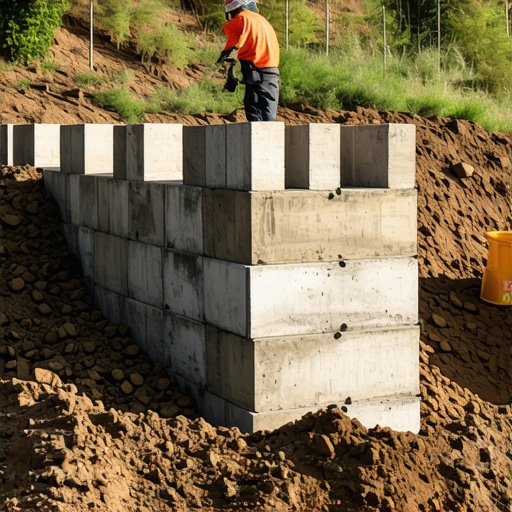
We are seeing a shift in precipitation intensity. Standard garden design from ten years ago is failing today because our ‘100-year storms’ are happening every eighteen months. To stop a 2026 washout, you need to understand the angle of repose. If your soil is a heavy clay, it has different shear strength than sandy loam. For a $500 budget, we are looking at a wall approximately 10 to 15 feet long and no more than 2 feet high. Any higher and you move into structural engineering territory requiring permits and geogrid. We are focusing on a segmental retaining wall (SRW) or a pressure-treated timber system. Timber is cheaper but has a finite lifespan of 15 years. Concrete blocks are forever if the base is right.
Material Breakdown for a $500 Erosion Barrier
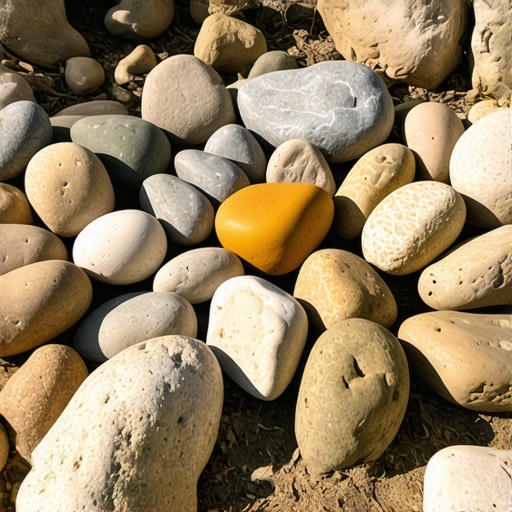
To stay under budget, you must source materials from local landscaping yards, not big-box retailers. Wholesale prices for modified gravel and #57 clean stone are significantly lower when bought by the ton. Below is the technical breakdown for a 15-foot wall.
| Material | Technical Specification | Estimated Cost |
|---|---|---|
| Base Aggregate | CR-6 or 21A Modified Gravel | $85 (1.5 Tons) |
| Drainage Stone | #57 Clean Crushed Limestone | $60 (1 Ton) |
| Wall Units | Tumbled Concrete Blocks (Seconds) | $280 (60 Units) |
| Drainage Pipe | 4-inch Perforated Corrugated | $35 (20 ft) |
| Filter Fabric | Non-woven Geotextile (4oz) | $40 (Small Roll) |
How much modified gravel do I need for a patio base?
For a standard hardscaping project, you calculate the volume by multiplying length by width by depth in feet, then dividing by 27 to get cubic yards. Most modified gravel weighs approximately 1.5 tons per cubic yard. For a retaining wall base, you need a minimum of 6 inches of compacted 21A stone. Do not guess. If your base is thin, the freeze-thaw cycle will heave your wall by February. Compaction is non-negotiable. You need a hand tamper or a rented plate compactor. The dirt should feel like concrete before the first block is set. If you can push a screwdriver into the base, it is not ready.
The Step-by-Step Ground-Up Build
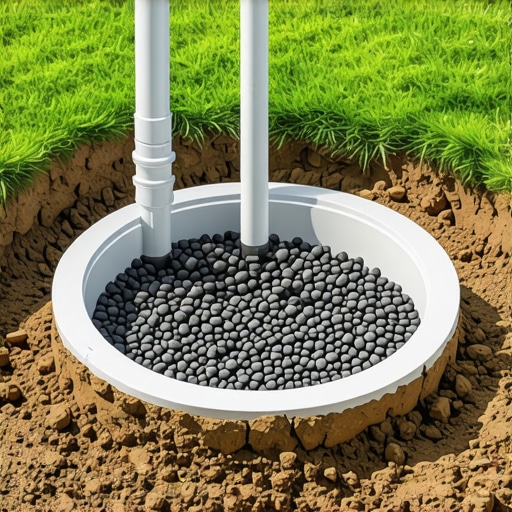
First, dig a trench 12 inches wide and 12 inches deep. This provides 6 inches of buried block for toe-hold stability and 6 inches of base material. Leveling the first course is the hardest part. If the first block is off by 1/16th of an inch, the tenth block will be off by two inches. Use a 4-foot level. Second, install the perforated pipe behind the first course. This pipe must daylight at the ends of the wall or through a ‘weephole.’ Third, backfill with clean #57 stone. Never use ‘dirt’ or ‘topsoil’ behind the wall. Soil holds water; clean stone lets it fall to the pipe. This prevents hydrostatic pressure from pushing the wall over. Fourth, use a non-woven geotextile fabric between the clean stone and the native soil. This prevents ‘fines’ (tiny dirt particles) from clogging your drainage stone. This is a common mistake in lawn care and DIY builds. Without fabric, your drainage system will fail in three years.
The Contrarian Truth About Weed Fabric
Most garden design blogs tell you to use weed fabric to stop weeds. That is a lie. Weeds grow on top of fabric in the mulch. In hardscaping, we use geotextile for separation. It keeps the structural layers from mixing with the organic layers. If your gravel sinks into the clay, your wall sinks with it. Use the fabric as a structural membrane, not a weed barrier. It is about soil mechanics, not aesthetics.
“Soil stabilization requires the separation of subgrade fines from the structural aggregate base to maintain load-bearing capacity.” – Penn State Agricultural Extension
Post-Installation Maintenance Schedule
Your wall is a living system. Check the drainage outlets after every major rain event. If water isn’t coming out of the pipe, it is building up behind the wall. Keep turf grass or groundcover at least 6 inches away from the wall face to prevent root intrusion into the joints. In lawn care, avoid using heavy mowers right on the edge of the wall; the lateral surcharge can cause the blocks to shift before the soil has fully settled. Watch for ‘fines’ leaking through the cracks. If you see mud, your fabric has failed or was missed.
- Verify utility lines via 811 before digging.
- Ensure a 1-inch ‘batter’ (backward lean) for every foot of height.
- Use masonry adhesive on the top cap stones.
- Maintain a 3-foot ‘buffer zone’ of no heavy plantings above the wall.
How do I calculate the surcharge load on a small wall?
In landscaping, a surcharge is any weight above the wall, like a parked car or a steep slope. For a $500 DIY wall, you cannot handle a surcharge. If the ground above the wall slopes up steeply, the pressure doubles. You must increase the base depth and consider a gravity-wall design with heavier blocks. For 2026 soil washout prevention, focus on the ‘toe’ of the slope. By securing the bottom, you stabilize the entire bank through mechanical soil stabilization. Don’t just stack rocks; engineer a solution.
![Build a $50 2026 Rain Barrel System [Save Water]](https://lawnmajesty.com/wp-content/uploads/2026/07/Build-a-50-2026-Rain-Barrel-System-Save-Water.jpeg)